Torah for now

Archive for the ‘Uncategorized’ Category

Haftarah for the Mothers, In Times of War.

There is much to be sad about in the world today, chief among them include the human proclivity and capacity for war. This sorrow and terror struck home for the Jewish communities around the world on October 7th of this year, and this sentiment perhaps could apply to any war throughout time. It has recently been veterans day, and it is stunning how many veterans there are, and I have known some, with PTSD, invisible injury in additional to the visible ones. The most heartbreaking are the broken hearts and bodies of children and their mothers. I have written this Haftarah to match the weekly Torah readings which connect to war or Biblical mothers and children Here is the recording in Haftarah trop. Haftarah is a selected reading from one of the Biblical books that were written later than the five books of the Torah, and this is written in the style of such Biblical books.

Some background: The Biblical mother Rachel, died in the month of Cheshvan in the Jewish calendar, which began this year in mid October. Rachel in Jeremiah is evoked as weeping for “her children” who have died. In the Midrash Rachel argues with G*d and evokes Divine sympathy for her children! Rachel is also associated with the Divine feminine/Malchut in the mystical sephirot.

Rachel Goldberg is the other Rachel referenced here, as the use of her name switches, based upon this video in which she tells her story at the United Nations on October 25th

It was in the days that Netenyahu ruled over Jerusalem that catastrophe befell 

And Rachel is weeping for her children, and she cannot be comforted.:

It was in the days when Hamas ruled over Gaza  that it happened the catastrophe

And mother Gaza is weeping for her children, and she can not find comfort.

Rachel told her pain to the gathering of the Nations,

My child kissed me good night and put on his backpack to attend a music festival

I love you, texted the child, I am sorry, and then  his phone went silent.

And the children took shelter from the onslaught

The Bedouin who was with them said, I will help, I will talk to them.

He went out to the attackers, and told them “we are all family, do them no harm!” And he was beaten the children that were left, bleeding were captured

Mother Rachel lifted him up, a ray/spark of hope in a broken world.

But Each day waiting brings her farther from life, shatters the heart a little more

Are you crying too? My child is bleeding and their bloods call to me from the earth.

And in the days to come, the mothers will find comfort and mother earth will be repaired , and usher in a day where children are reunited and none shall make them afraid

Speaking love to power: Avraham, Sarah and G8d

One of the most inspiring narratives of Torah is in this week’s parashah. You know the story of S’dom and Amorah, (Gemorah) The foundation of this inspiration is CHESED, loving kindness and Sarah, Abraham’s wife paves the way. So who are Abraham and Sarah really, and why do we care? Sefaria Source page

We care because we are the children of Avram Avinu (our father) and Sarah Imeinu (our mother). At the peak of the arc of the prayer service, the Amida, when we know we stand before The Holy One of blessing, we introduce ourselves – Hi G8d it’s me, I’m Avraham’s kid. The progressive Jewish movement has added Sarah’s name as well. I put these lyrics to the melody of Cuando el Ray Nimrod:

And Sarah is the model of faith and strength.

Sarah Imeinu, Madre Querida, Madre Bendicha, Emunah de Yisrael.

When Avraham was frightened, he said to Sarai his wife

Tell them you’re my sister, to save my very life

She spoke to kings and Pharoah, and held off their abuse

Whatever Sarah tells you, listen to her voice

A quick recap in our saga: Avram and Sarai are told, “Leave, Go and be a blessing – they go to Canaan and there is a famine, so they leave and go to Egypt. Sarai is stunning gorgeous, and Avraham is terrified. “Tell them you are my sister”. Pharoah takes Sarai to his Harem! Rashi says it was Sarai’s own strength that kept her from being abused. (He explains: על דבר שרי – means by the word of Sarai) — at her orders: she said to the angel “Smite” and he struck the Egyptians with plagues. (Midrash Tanchuma, Lech Lecha 5).

The scenario repeats with another king. Midrash is very dramatic “Throughout that night Sarah was lying on her face and saying: ‘Master of the universe, Abraham departed with a promise, and I departed only on faith. Abraham departed outside the cage, but I am in the cage.The Holy One blessed be G8d said to her: ‘Everything I do, I do on your behalf.’ Sarai has the faith, that Avraham lacks. In Shoni Labowitz’s words Faith keeps a balance between wisdom and reason, intuition and logic, simplicity and confusion…the word for faith is emunah in Hebrew.

A covenant is made between G8d with Avraham AND Sarah – go outside count the stars, if you can, and Avram and Sarai become Avraham and Sarah What is the significance of the adding of the H/ Hey to their names? I want to focus on Sarah’s naming for a moment, Rashi explains לא תקרא את שמה שרי YOU SHALL NOT CALL HER NAME SARAI which means “my princess”— a princess to me and not to others — BUT SARAH, is more general: she shall be princess over all (Berakhot 13a)

All of these things lead up to one of the most remarkable scenes in the Bible or anywhere. And G8d says to G8dself: וַֽיהֹוָ֖ה אָמָ֑ר הַֽמְכַסֶּ֤ה אֲנִי֙ מֵֽאַבְרָהָ֔ם אֲשֶׁ֖ר אֲנִ֥י עֹשֶֽׂה׃

When The Holy One was planning to destroy
The wicked city of Sodom he sent an envoy
Avraham, G8d Said, what can you say

Great love can balance judgement

Argue for another way

Avram avinu Padre Querido, Padre bendicho luz de Yisrael!

Avraham represents chesed, loving kindness in the sephirot.

What is different about Avraham and Sarah? Consider: it is chesed, loving kindness, Pure compassion, infinite love. It is said that Avraham’s tent was always open to receive strangers and to be giving. In chapter 21, Avraham and makes a pact at Beersheva. we learn that Avraham plants an eshel., to the everlasting One. Eshel, an unusual word in the Bible, is usually translated as tamarisk, a type of tree. The Talmud characterizes it as almost a hotel, in which Abraham runs to get whatever the strangers love most. And indeed Vayera opens with three strangers appearing on the horizon, a elderly Avraham recovering from circumcision, in the heat of the day, runs to serve them and wash their feet. It turns out they are messengers of the most high, one of whom will lead him to a mountaintop overlooking the dead sea. Chesed, Loving kindness is why G8d chooses Avraham and Sarah.

I’m about to destroy S’dom, their outcry has reached me, says G8d. Rape and murder have been their rewards for kindness. G8d and Avraham knows they are bad news. The Holy One prays, according to Midrash for Their love to outweigh Their judgement, and today G8d needs Avraham’s chesed

And Avraham rises to the test, arguing to save the city if there are 50,45,40,30,20 and finally ten righteous souls – at risk of his own life, speaking love couched in justice, to power.

An answer comes – for the sake of the ten I will save the city. What messages does this text send? Chesed would win if there are even ten righteous people. Margaret mead famously said never doubt that a small group of committed people can change the world, indeed it’s the only thing that ever has.

A midrash Avraham is travelling and sees a magnificent palace, and lit up and it’s on fire, a “birah doleket” Avraham sees the palace and asks Where is the master? It’s not possible that this magnificent palace has no master. And he’s also asking why is our world on fire?

Don’t paint with a broad brush, always give benefit of the doubt – there could be some good guys.

And if G8d and Avraham always wish for love to be stronger than judgement, shouldn’t we.

,

Noach, Comfort and Pain: How do we respond?

Noach, 5784

A joke:

An older Jewish man was crossing the street, and was knocked down by a car that approached too closely. The driver stopped, and ran over, calling 911 along the way. He approached the man, relieved that he seemed OK, and cleared the way for the ambulance. “Are you comfortable”, he asked. “I make a living”, replied the older man” Noach/ Noah’s name means “comfort”

My Grandpa Charlie loved terrible jokes, puns, particularly, and it turns out that the verses of Torah in Noach are filled with puns and palindromes. Noach’s Dad names him in Genesis 5:28 (Sefarai source page) “When Lamech had lived 182 years, he begot a son.(29) And he named him Noah, saying, “This one will provide us relief*relief Connecting Noah with Heb. niḥam “to comfort”from our work and from the toil of our hands, out of the very soil which יהוה placed under a curse.” Grace, in Hebrew, חן chet nun is the opposite spelling of Noach,נח nun chet, whose name actually means rest, not comfort. Y’nachamenu means comforts us, and regret is from this same root Y’nachem! G*d regrets and is sad, heart is pained, yityatzev about creation.

Also, Noach’s name from y’nachem, chontains cham – warmth or heat within it. Noach, comfort, Rachem -compassion from the word Hebrew “womb” to Chum/cham – warmth or heat. (Cham is In fact is is one of Noach’s son’s names. It’s comfortably warm in the womb, but too much warmth, just as too much passion, just like too much water, is dangerous.

And to draw attention to all the double entendres is a double trop mark on Noach’s name – two melodies in put to a very short word. Why all the word-play?Aviva Zornberg in her book “The Beginning of Desire” sees the Noach word scramble as an “uncreation/ de-composition” symbol. Another pun: What is Beethoven doing right now? Answer: Decomposing. (apologies)

Consider: in a world made by means of Divine Word, this fluidity can undermine the solid ground of creation.

Earth, air, fire and water, the four elements, parallel the four worlds of existence: Asiyah – physicality, the world of action, connected to earth; Yetzirah – formation, the world of emotion is connected to water; Beryiyah – creation, the world of the intellect is connected to air; and Atzilut – Divine inspiration is connected with fire.

These elements are out of balance, because of Human desires magnetically drawn to evil, becoming violent actions in the world.

What of G*d’s pain and sadness? It interestingly is a hyperlink to creation, in the pain of “growing up” and being kicked out of Eden, the woman’s curse is pain in childbirth, and Adam’s curse is painful hands from a land that is cursed in bringing out food. Lamech invokes this same word for pain in naming Noach. Is this perhaps how Lamech (a man) can birth a son? (Only kidding!)

Where does G*d’s pain come from? Humans, created as good, degenerate according to G*d. A quick recap of creation up to here

One of the first acts of creation was for G*d to create order from chaos (tohu vavohu) first day light and dark separate, second day the waters above separate from the waters below, third day dry land and polants. Each was created with words “let there be…”, and after each, G*d pronounces “Tov” – Good.

Skip ahead to the sixth day, from the dust of four colors, from the four corners of the earth, and Divine breath, humans are created. Now water is essential to life, and our #1 ingredient. But too much drowns.

Now G*d want’s to undo this order, release the chaos of the waters.

The fourth element is fire. Noach’s name if it comes from y’nachem, has cham – warmth or heat.

Noach, comfort, Rachem – womb like compassion may also be related to Rechem, and to Chum/cham – warmth or heat. In fact is is one of Noach’s son’s names. It’s comfortably warm in the womb, but too much warmth, just as too much passion is dangerous.

Earth, air, fire and water, the four elements, parallel the four worlds of existence:

Asiyah – physicality, the world of action, connected to earth

Yetzirah – formation, the world of emotion is connected to water

Beryiyah – creation, the world of the intellect is connected to air

and Atzilut – Divine inspiration is connected with fire.

They must be in balance, what has thrown out the balance?

There have been ten generations from creation to Noach.  Which has changed from Tov to Rah, from Good to Bad in the course of ten generations! How can that have happened. Aviva Zornberg in her book about Genesis, The beginning of Desire, entitles this section: “The collapse of G*d project”. She draws particular attention to the wordplay, scrambling of Noach’s name.  Just to draw attention to Noach’s name, the trope is crazy: look here, it says “pay attention”! Zornberg sees the word scramble as an “uncreation/ de-composition” symbol

We are still left with the question, what caused the collapse of the G*d project?

Humans, created good degenerate according to G*d,

Somehow violence has become the rule, and not just for humans, for all creatures, The earth was becoming ruined, and each creature was destroying its pathway on the earth. That magical space between creatures, the relationships went bad.

The Sefat Emet, writing about Rosh Hashanah asks the following: If at Sinai, G*d carved upon our hearts an eternal nekudah kedoshah, why must we pray and yearn each year: kotvenu l’chayim? Sefat emet reminds us what Cain learned – that sin has it’s erotic ddesire for you, and so you go for it, blocking, covering that holy spark. And so we must always be vigilant, always do teshuvah, always open our hearts! Otherwise entropy and complacency sets in.

We see degeneration of democracies across the world. Like microbes evolving resistance to antibiotics, we know we must be ever vigilant, and not to take for granted our gifts. Antibiotics were life giving, we took them for granted, used way too much, inappropriately, and know the microbes are resistant, the gift spoiled.

Noach means comfort. Can there be too much comfort? Did the craving for comfort drive the degeneration of the human world?

According to quote investigator Chicago humorist Finley Peter Dunne wrote a popular syndicated column featuring the distinctive voice of Mr. Dooley.The following appeared within a 1902 column titled “Mr. Dooley on Newspaper Publicity”. Newspapers serve to comfort the afflicted and afflict the comfortable! I’ve heart the same quoted to explain how faith tradition serves us.

Too much comfort, making your comfort a core value at the expense of compassion is not a good thing. Too much comfort is called complacency.

Complacency strains the strings on the American work ethic value. Don’t be complacent, urges our society, Do something! Yet Pirke avot says coaches us with the wisdom of who is rich? The one who is happy with their lot. In other words, and this is a mantra of mine, the practice of Gratitude is a pathway to true happiness,

A story by Dr. By Dr. Robert Biswas-Diener A researcher in the field of positive thinking around the world went to Kolkata, India (or Calcutta) to research happiness in one of the radically impoverished communities of the world. ‘was everyone miserable all day long, he wondered?

But a scholar took warned “Be careful,” “People are going to hate your research. If you find that the people there are happy, they will criticize you for it. Specifically, they will say that you are painting a picture of the poor as being complacent.”

research by a team at the University of Virginia : are happy people complacent.would be less motivated to address society’s problems? …using a sample of more than 2 thousand people of all ages, they focused on environmental concerns. They discovered that unhappy people were prone to worry about the climate but not necessarily more likely to engage in more environmentally friendly behaviors. By contrast, the happiest people worried the least worried and were the most likely to take action!

Btw, the study in India revealed worry, and also high self-esteem, stable relationships, and also moments of joy enough to motivate them to affect change.

So comfort is good. Noach was a righteous dude, and walked with G*d, only the second connection since expulsion from Eden. And Noach finds grace/ hen in G*d’s eyes. R Rami Shapiro’s book, amazing chesed, says that grace is like the sun, a gift of shefa that always shines down. It’s like love

Midrash Tanhumah explains G*d’s relationship to Noach with this story. “This is like one (echad) who was traveling along and saw another traveler (echad) and sought his company. To what extent? Til he formed bonds of love with him” Echad + Echad in gemaatria 13 + 13 = , also Ahavah, love adds up to 13, 13 + 13 = 26, which is the gematria for G*d’s name YHVH

From this love, according to the same midrash, Noach learns the feeding schedule of the animals, how to keep them alive.

One last link to pain and what how we respond. In B’resheet, last week’s parashah, the first murder was the response to pain. G*d rejects Cayin’s offer and accepts his brother’s. Cayin, the first child is furious. His “face falls.” G*d then reaches out to Cayinn “Why is your face fallen?” G*d asks?

Cain never answer’s G*d question.

There are no more words.

Even Noach doesn’t talk to G*d.

What if Cain had given voice to his rage, or if Noach had discussed the situation with G*d,

And with the lack of words, destruction begins.

The universe is young, and G*d in pain and sadness destroys creation.

Does this mean we should be like this, destroy when we feel sad or hurt?

Well, NO!

The ending of Noach comes a promise never again to destroy with water! The rainbow is that sign.

From Grace and love, we must learn the “feeding schedule of the animals” This earth is a teva, an ark in space, lonley and precious.

Earth Day 5783

Earth Day, A Jewish Holiday?

A meditation:

I invite you to take a deep breath. listen to your heart beat and the fluid rush through your veins. 

Feel the solidity of the bones. Imagine the organs each supporting one another. Supporting your life.

More than the sum of their parts. Shechinah lives in you.

Breathe again As you breathe out follow that breath, it is a part of a greater organism. Ecosystems are nested within biomes, and ultimately the biosphere, the living earth.  The Greeks called her Gaia. The parts of the system support one another and become more than their sum – which is miraculous, magic, at every level. 

The whole earth is filled with Her presence. She is Shechina, or Malchut in Jewish tradition, the most immanent of the feminine sephirot, or facets of the Divine. Perhaps you have met and felt her essence in the beauty, awe, and wonder of natural world, or in being in loving presence with others, in soaring melody and harmony, or when your child was born.

We come from the earth, and from a people with their roots in heaven and their hearts with the land.

We are also nearing a Holy day not often recognized by Jewish tradition, Earth Day. I suggest we adopt this day Jewishly in ritual. Yes its origin is secular, but we are Jews, we do it all for L’Dor VaDor, for our children we are commanded to choose life.

A feminist, earth-based perspective may be just what is needed,to pull back from the brink of a looming catastrophe which we are perpetuating, or not(!) with every choice we make.

This image has an empty alt attribute; its file name is image.png

We read in Gen 3:23) So God יהוה banished humankind from the garden of Eden, to till the humus from which it was taken:(24) The human was driven out; and east of the garden of Eden were stationed the cherubim and the fiery ever-turning sword, to guard the way to the tree of life. Link to Sefaria Source Page with text

A Tree of Life! What if each and every service where Torah is read can help to Turn our awareness to the roots of Judaism in the feminine.

 Eytz chayim, the tree of life was in the center of the garden.


In being banished from that garden we were also banished from tree, Eytz chayim and estranged from the Goddess. Or were we? The worship of Asherah, the Goddess persisted in biblical times and today is hidden in plain sight: Torah, and the Wooden rollers are Eytzei Chayim hi, if only we would engender the Hebrew as it is written: She is a tree of life

Then there is the psalm we sing each time we take out the Torah. And isn’t it intersting how we parade her around and kiss her? What if we returned the pronouns that were written for the psalm?

Tree of Life MWolfson

Eytz chayim hee, she is a tree

Offering us both life and wisdom

Eytz chayim hi, lamakazikim bav’tomhecha me’ushar

Her truths aren’t always very simple

Deep ones are not easy, but sublime

Her roots reach high into the heavens,

with her wisdom you will shine,

With the help of words Divine she has borne us

Seeds of truth spring up from her

With the sap of love she still feeds us.

We must serve and return this care

Eytz chayim hee

Live righteously

who will remain after you to repair this wondrous world?

Proverbs 3:13-20

(13) Happy (ashrei) is the man who finds wisdom/chochma
The man who attains understanding/ bina. (14) Her value in trade is better than silver,
Her yield, greater than gold. (15) She is more precious than rubies;
All of your goods cannot equal her. (16) In her right hand is length of days,
In her left, riches and honor. (17) Her ways are pleasant ways,
And all her paths, peaceful. (18) She is a tree of life to those who grasp her,
And whoever holds on to her is happy (ushar).
(19) The LORD founded yesod aretz the earth by wisdom/chochma
He established the heavens by understanding bina; (20) By His knowing the tehomot (the depths) burst apart,
And the skies distilled dew.

The Zohar believes that oneness underlies all things, even pagan goddesses. Yet the mystic of the time knows the Jews cannot recognize this. So, the Zohar says, in the world to come, we will be allowed to call the Shekhinah by Her name -Asherah. Then, She will be one and Her name will be one. R Jill Hammer

In Zohar, the masculine “seed” impregnates Bina, wisdom, who becomes the cosmic womb. In Sefer Yetzira, Chapter 3:2

Three mothers: Aleph, Mem, Shin

A great secret veiled and mysterious…

From them come fire, water and air,

Enveloped in male and female

R Jill Hammer translation

Wangari Mathai, a heroine of mine, founder of the Green Belt Movement, and winner of 2011 Nobel Peace Prize writes: ““Today we are faced with a challenge that calls for a shift in our thinking, so that humanity stops threatening its life-support system. We are called to assist the Earth to heal her wounds and in the process heal our own – indeed to embrace the whole of creation in all its diversity, beauty and wonder. Recognizing that sustainable development, democracy and peace are indivisible is an idea whose time has come”

To rescue the Goddess just might connect us to the earth once again.

From the Mother Tree by Suzanne Simard
The Mother Trees.
When Mother Trees—the majestic hubs at the center of forest
communication, protection, and sentience—die,

they pass their wisdom to their kin, generation after generation, sharing the knowledge
of what helps and what harms, who is friend or foe, and how to adapt
and survive in an ever-changing landscape.

It’s what all parents do.

It’s what Jews do, L’dor vaDor


Aleph Kallah 2023

Hello dear friends

I’m leading a one-day workshop at ALEPH: Alliance for Jewish Renewal’s Kallah! Join me from July 3 – 9 as we tap into our souls, bathe in meditative sound, and explore how Science and Torah connect and collide. You won’t want to miss this!

Learn more about the one-day workshops (including mine!) at www.aleph.org/kallah/workshops 

Purim and the Mishkan: Fractals of Hidden Holiness

What mask will you wear this Purim? Will it hide or reveal your inner essence?!

What is the value in mystery, in Hiddenness? Should we hide, or brightly shine our innermost magical essence?

This coming week we will celebrate the holiday of Purim, and in the Torah these weeks we read of the Mishkan. In this week’s parashah, Tetzaveh we add a ner tamid, an eternal flame. What could Purim and the Mishkan have in common: They both teach us the same thing: about Hiddenness and Revealing.

Rav Hisda taught his daughters (Shabbat 140b) to be modest, withholding parts of their beauty to create mystery and desire, by holding a hidden pearl in his hand! And yet… enforced modesty certainly can be a tool of oppression. Shall women instead wear their sexuality on their sleeve as freedom of expression: Where does the balance lie?

Are you an extrovert or an introvert -On zoom do you reveal or conceal your image? What is the difference? Perhaps extroverts display their innermost thoughts to others. 

Einstein said: The most beautiful experience we can have is the mysterious. It is the fundamental emotion that stands at the cradle of true art and true science.

I’m a big fan of the first Harry Potter book. Harry Potter is first found hidden in the cupboard under the stairs, his power frightening to his muggle Aunt and Uncle they abuse him. His brilliance and power emerge from humility.   The evil Voldemort’s power is also hidden in…. oh I don’t want to spoil. Secrets in families destroy, repressed dreams wound. What happens to a dream deferred? asks the poet, Does it dry up like a raisin in the sun, or does it fester…?  We learn both from Torah of the Mishkan and the book of Esther that hiddenness must be balanced by revealing our brilliance

The Mishkan is the traveling spiritual home of the wandering Israelites. It contains beautiful things outside – brilliant tapestries and a menorah. In that way it is like the homes in Daniel Pinkerton’s story, the big orange splot! It also contains beautiful things within: golden articles,including two cherubs/ Keruvim surround the golden arc of the covenant in the center, the Holy of Holies. Opinions differ as to what they looked like, but they were graven images of figures human or animal. So….How do the arc of the covenant and the golden Keruvim differ from the golden calf? Perhaps because the arc and keruvim are hidden, only to be seen once a year by the cohen hagadol! And it is not even those golden items that are sacred but the invisible spaces between them. The space between them is rich with the relationship between G*d and us. When we behave in holy ways towards one another, they turn toward one another and embrace! The spaces between particles of the universe like me and you,  are where Shechinah, The Holy Indwelling presence is activated. And that word Shechinah is related to “Mishkan”

We have built a Mishkan so that our hidden Divine beloved can dwell amonst us.

There are so many places of Hiddeness in these words of the Mishkan whose design fills the second half of Shemot. The Torah herself is likened in the Zohar to a hidden princess. https://kavvanah.blog/2016/03/ because her deeper meaning teases and evades us. Even Moshe himself must mask, returning from his second trip up to Sinai so aglow he must veil.

In the Purim story also much is hidden. Esther herself is a beauty who is hidden in the land of Shushan. G*d’s name is hidden, not found in the book. The edict to destroy the Jews is at first hidden from Esther, everything is hidden from the bumbling king.  Even the name Esther is from the root word Nistar: hidden. and hidden in Nistar is Nes, Miracle! 

So much of our hearts (and those of others) and the universe itself is hidden to us, but we know they are real! Our emotions such as love and fear, are often hidden. Hiddenness and mystery can be stunningly beautiful

But this hiddenness must be balanced. Esther’s shyness is balanced as her power must be revealed, as Harry Potter’s magic is. What balances the hiddenness of the Holy of Holies? The menorah and and stunning tapestries revealed in Terumah last week, the eternal flame, revealed in this week’s parashah, Tetzaveh provide that balance. Built in the likeness of a tree, made of hammered gold, the menorah  blazes as do the colors of the materials of the Mishkan.  The Mishkan design revealed on Moses’ Second Sinai perhaps shows G*d’s willingness to meet B’nei Yisrael where they are at: Build Me a sanctuary, not so I can dwell in it, but amongst you!

Science reveals to us that the universe is built on fractals: repeated patterns in nature from the tiniest to the grandest scales  Science can reveal the hidden and sublime realities of our word: from quarks and atoms to cells and galaxies: it’s all amazing. Midrash Tanchumah (source below) says the Mishkan design is likened to the creation of the universe itself. Tetzaveh reveals outer clothing of the Cohen Gadol, and that G*d spark of B’nei Yisrael (Or HaChaim above) And the eternal flame (proverbs 20:27) can be the G*d spark within us: our innermost beauty and power. Rav Kook says the design of the Mishkah provides structure for the ways we can connect to the sublime Divine,  bridging those fractals of Holiness!

The mishkan is both the design of the universe, and of the hidden chambers of our souls.

Our Dreams and visions

may be Hidden from view

let them weave a beautiful tent

where our souls can be true

Come with me to that canopy

made of stardust and light

we can become whole

in sublime design of the soul

We yearn to Carry our Dreams

through the journey of years

But how can they survive

through the all the fears?

Cut the cloth from love,

Measure out seams with care

cast jewels of joy on the breast plate

and light an eternal flame

Our Dreams and visions

may be Hidden from view

let them weave a beautiful

tent where our souls can be true

Come with me

to that canopy

made of stardust and light

we can become whole

it’s sublime design of the soul

But off on the side

is a dark & fearful room

Hurt, anguish emptiness and gloom

Into that place let the golden tree of life bloom

If we can embrace that place too,

a soft gentle breeze blows right through

to fan our ner tamid to blazing blue

and yellow and purple and scarlet hues.

Helps us know what’s hidden

is really true, is a spark of You Oh Holy One!

Dedicated to my chevrutah for this drash: Kathilyn Solomon and Jessica Litwak

Yom Kippur, Protect what you love!

We protect most what we love, perhaps only what we love. I saw this sign in Alaska’s Denali Park 

There was once in my life when I was moose Mama.  My oldest daughter was only 2 year old, and we were on a plane to Florida visiting grandma.  And some fellow who was drunk was annoyed that my child’s chair was leaned back reached out his arm over the chair toward her curly locks. I stood up and said  and in a voice that I’m not sure where it came from announced YOU DON’T TOUCH A HAIR ON THAT CHILD’S HEAD. We protect what we love! I would have taken a bullet for my children, like Kevin Costner in the bodyguard

So many in our world are vulnerable and need our protection.   Children who are hungry because of poverty, disease, war and storm. children who are in danger of gun violence,  and the earth herself as a state is besieged, species are becoming extinct at the highest rate in 67 million years, the climate is changing, which  threatens not only the creatures of this gorgeous planet, but the our children and our future.  Inequity and power hunger leads to the tragedy of war.  We are supposed to guard and to serve the earth and protect our children. But if we only protect what we love, how can our hearts be the big enough – what if you don’t have family to love, or worse your family is abusive. And how can we love beyond our own tribe.   Here’s a wacky Idea: we can cultivate love with romance novels and love songs.

Did you know there is such a thing in the Bible? It is called Shir haShirim, the Song of Songs. Academics say it is a mashup of ancient love songs that is at the same time very human, at times erotic  And thousand years has been a powerful expression of the loving Relationship of The Holy One and the Jewish People. We sing it to express our love of the Holy One, and according to Ezra ben Solomon, 13th century mystic This is “The song which the Holy One …recites daily.” So our tradition is offering an answer to how to cultivate enough love to protect this earth and our children: Love the mysterious, loving creative power of the cosmos, which means to fill heart with love!

If you were to collect popular love songs to mash-up and create a modern song of songs about both human and Divine love, what songs would you include? Song by England Dan & John Ford Coley

Name your price

A ticket to paradise

I can’t stay here any more

I’ve been from shore to shore to shore

If there’s a shortcut I’d have found it

But there’s no easy way around it

Light of the world, shine on me, Love is the answer

Shine on us all, set us free

Love is a theme in our Torah reading today as well

We will read today in Torah הַעִדֹ֨תִי בָכֶ֣ם הַיּוֹם֮ אֶת־הַשָּׁמַ֣יִם וְאֶת־הָאָ֒רֶץ֒ הַחַיִּ֤ים וְהַמָּ֙וֶת֙ נָתַ֣תִּי לְפָנֶ֔יךָ הַבְּרָכָ֖ה וְהַקְּלָלָ֑ה וּבָֽחַרְתָּ֙ בַּחַיִּ֔ים לְמַ֥עַן תִּֽחְיֶ֖ה אַתָּ֥ה וְזַרְעֶֽךָ׃

I call heaven and earth to witness this day: I have put before you life and death, blessing and curse. Choose life—that you and your children shall live—

The Spanish medieval Commentator Ibn Ezra explains:

That What is meant by “you and your children may live means” explains that to live is to love. He says!

And the next verse is a teaching to love the Source of Love and Life itself

לְאַֽהֲבָה֙ אֶת־יְהֹוָ֣ה אֱלֹהֶ֔יךָ

The awe we spoke of last night is only half of faith. The other half is Love. Love: the magic in the universe, The energy of support zinging back and forth in the spaces between the parts of things: family members, community members, it’s where G*d is present, in the vibrant spaces between.   

And The Holy One sings a song of love for us: Ahavah Rabba, we are loved by an unending love.  This teaching to love G*d is Echoed in the Shema/ V’ahavta. Empowered by love, we are to love G*d with all our heart, with all our soul and with all our all. The s’fat Emet writes: This raises a difficulty: how is it appropriate to command love? love must be freely given!  Rabbi Kenneth Cohen speaks of those who suffer, and cannot love G*d, He then goes on to say that v’ahavta is not a command, but a future tense. An aspiration, a prophecy,

Is it possible to love G*d NOW in the present tense? Even through our suffering?

The poster child of Grace in the Bible is Job. Job is a righteous guy who loves G*d a lot! He’s also very successful and wealthy. G*d is portrayed in very human terms, and with one unusual trait: the need for human love.

This trait is the reason we were created, say the mystics. The adversary, Satan, exploits this weakness, and says to G*d: “Job only blesses you because you’ve been so good to him. Let me at him and he’ll sing a different song.” And G*d accepts the challenge and permits Satan to do as he wishes, but forbids him to physically harm Job. Satan kills his ten children, and destroys all his wealth.  Job still blesses G*d. So Satan pushes further, let me hurt his body and he’ll curse you.  G*d allows this.  Job’s friends hold on to the view that Job must have done something to deserve this, but Job holds his ground, knowing he’s been a righteous guy.  He curses his own life, but never curses G*d, He only pleads for an answer, a reason. And so G*d appears to Job, and says “where were You Job, when I created the fearless Leviathan of the universe?”  Pulling out the awe card.

As I studied Job, I wondered aloud, is Loving G*d the same as loving life? Job curses his life and the day that he was born, but will not curse G*d.  Perhaps the difference is that to curse G*d is to curse the whole of existence itself, as to love G*d is to love existence itself, in all its messiness, as well as its beauty. To wish, in your suffering, that you had never been born is one thing, but to deny the beauty of children, and flowers and waterfalls and mountains, and goodness: to curse them all, and to wish they never were? That does not seem like an option. L’chaim is the Jewish toast, “to life”!

Rebbe Shlomo Carlebach, who fled Austria as a teen, during the years leading up to the war and the holocaust would occasionally return to Germany and Austria to give concerts.  People asked him “how can you do it, don’’t you hate the Germans and Austrians for what they did?” He would reply “If I had two hearts, I would hate them. Since I only have the one, I choose to fill it with love.”

Suffering only exists in contrast. We know pain because we have known ease, apathy because we have known joy. We experience loss because we knew love, we recognize injustice because we envision a better world. I have no easy answers, but I know that suffering is a part of life, and sometimes from suffering, blessing can even emerge. It can be a crucible, inspiring empathy, forging a better human being.

I, like on in every 5 Americans have a disability. Facing my disability and discomfort and fear that goes along with it has forged within me mindfulness, generosity and empathy.  I do know this: That a heart filled with gratitude and love is a better way to live: For me that’s what it means to love G*d – to fill your heart with love for others, for life, and for creation. Also to discern: Psalm 97 teaches     שנאו רע אהבי יי  That to be a lover of G*d is to hate evil. We cannot control the scary things of the world, but we can have influence over our response. Torah suggests that the most productive, creative response is to love. V’ahavta.

Rabbi Abraham Isaac Kook, the great 20th century Israeli mystic and visionary wrote a poem, his version of “song of songs” It describes four levels of song, also can be levels of love.

The first level for some may be the hardest: to love yourself! We are can be  own worst enemies. Try this meditation with me: Imagine that you are light.

Begin with a tiny spark in your heart, with each beat of your heart the light expands, first filling your chest, and then expanding to fill you, and then spilling out of you until All around you  in every corner, etc.. (~Azriel)

You are made of light and love,  Know that you are beautiful. You must be, there is G*d in you.                                                                                                                                                                                                                                                       In spite of the flaws we try to fix during these Holy days.

Once you are able to love yourself, Look at a neighbor or friend nearby. Imagine that light within them,  it is here too! The second level of love is to love the beauty in our community! We sing the Song of our tradition (the letters ‘ישראל’ can be rearranged to form the words שיר א-ל — the Song of God), Let love bind our community, we are more than individuals, more than the sum of our parts.

Now picture in your mind someone                                                                                                                                                                                                                                                                                                                                                                                                                                                                                                                                                                                                                                                                                                                                                                                                                                                                                                                                                                                                                                                                                                                                                                                                                                                                                                                                                                                                                                                                                                                                                                                                                                                                                                                                                                                                                                                                                                                                                                                                                                                                                                                                                                                                                                                                                                                                                                                                                                                                                                                                                                                                                                                                                                                                                                             Who is difficult to love, who is as different from you as can be. Find the same divine light.  The third level is to love all humanity. Imagine sending love out there.

The fourth level of song, the fourth level of love: There is one who rises even higher, uniting with all creatures, with all worlds. Filling the Universe with song;

What if together we could sing all these levels of love together in harmony

Together they are the song of G*d, the song of ultimate love, the song of songs.

And through this widening circle of song and of love, we know what we must do, to protect the ones we love.  Because We only protect what we love, and the time is now.  Choose life and love

Kol Nidre, A time for Awe!

It is possible to turn fear into awe

For most of my life I have had a fear of heights. Perhaps like me, you have found that fears get in the way.  On a trip I was planning several years ago, I really wanted to go zip lining. I began imagining the experience, and somehow, to my delight, I did it! I guess I’m afraid of falling, not heights. My secret is I never once looked down. It was amazing, it felt like flying as I imagined! The beginning of wisdom, says Proverbs, is Yirat HaShem.-  Yirat is an interesting word in Hebrew, the same word meaning two different, yet connected emotions: fear and awe. From Proverbs we learn “The beginning of wisdom is fear and/or awe of the Holy One”. I knew those ropes, harnesses and pulleys were safe, and knowing I was safe I was free to feel the awe! Fear is helpful, preventing us from harming ourselves and doing something really dangerous. Fear of consequences prevents us from unethical behavior. Whether it is fear of legal, karmic, natural or Divine consequences.  The beginning of wisdom is Yirat HaShem.  Some degree of fear is helpful, but too much can paralyze, can limit.

Fear is also a powerful motivator. Political races are won by those that arouse fears in the populace. Fear of people that are different has motivated pogroms. Fear can be the pathway to “The Dark Side” according to the wisdom of Yoda (whose name in Hebrew means “to know”).  But fear can be turned to awe. Take a minute to name something silently that you fear. Picture it. Breathe in and acknowledge the fear. There is likely an excellent reason you are scared of this: remember the beginning of wisdom is fear. Breathe out, and as you do, try to release some of that fear that has a hold on you.  Breathe in and out again harder and imagine yourself giving this fear up to the Heavens. “It’s just too much for me oh Holy One, please, You take it!”

These Holy days are called the Days of Awe, not the Days of Fear. The process of Teshuva, return or Repentance has the power to Return us to the Awe we are born with.

To cultivate a feeling of awe we have done many things tonight: the music, beautiful setting, majestic words of our prayers. Another way to cultivate awe is to remember other times we’ve felt awe in our life. What experiences in your life have left you a feeling of jaw-dropping awe?

This past July NASA released the first images capture by the James Webb telescope. The images were from a patch of sky the size of a grain of sand held up in your hand against the night sky. There were thousands of distant galaxies within that tiny piece of sky. The mass of the dense cluster of galaxies acted as a gravitational lens to magnify an even more distant part of the universe.  Light generated by those more distant galaxies, travelling at 186,000 miles per second took 13 billion years to reach our eyes. We are looking at events that happened almost at the dawn of time.  Can you stretch your imagination that far? It is Inspiring just to try

And yet are we too busy to look up at the night sky, the vast Universe and wonder?

Or perhaps your awe-spot is watching nature’s miracles, rainbows, waterfalls, storm clouds. I know a young woman, Dani, she and her husband went backpacking in Ireland this spring, and they came to one town graced by an enormous double bow spanning the valley.  As the entered the town they said to the innkeeper, wow, did you see that amazing rainbow? “Darlin’ we get those every day,” was the reply.

Or perhaps you find awe in the birth of a child, a miraculous event for sure. Also a day’s work for a maternity ward nurse. And then the child grows and hold their head up and smiles, and talks and takes those first wobbly steps. And we get to experience the world anew. Unless we’re too busy:

A child arrived just the other day
Came to the world in the usual way
But there were planes to catch, and bills to pay

Learned to walk while I was away
And was talking ‘fore I knew it, and as he grew
He’d say “I’m gonna be like you, dad”
~Harry Chapin, Cat’s Cradle

Ahhh, to see the world through the eyes of a child.

As young children, we see the world with eyes of wonder, life is wonder-ful.

I find it so sad when that curiosity, that sense of awe and wonder is lost in children. How can we hold on to the wonder, can we consciously cultivate it?

I am fortunate to have raised three of my own children, and to have seen the world through their eyes. As a teacher, I get to share the wonders of nature and of living creatures: of how every heartbeat is a miracle and we are made of stardust, literally. In every moment of our life, there is mystery and magic at the heart of existence.

Science and spirituality can work in synergy to deepen experiences, to live in gratitude and awe at the wonder of each moment. I find inspiration in the magic of relationships in the world: Parts coming together becoming much more than the sum of their individual parts the magic of life.  Life is not a parts list. The difference between life and death is not a missing part, but interactions which stop or go astray. The synergy that is created from no-thing – but rather from the relationships in the spaces between the parts. When there is synergy in a band they create an amazing sound. Loving and supportive relationships create a family, or a synagogue community – that is so much greater than the sum of the parts.  In Jewish tradition the Divine presence herself, Shechinah dwells between 2 or 3 or ten people studying Torah.

The great 20th centuryRabbi Abraham Joshua Heschel z’l’ urges us to live our lives in wonder, “Our goal, he says “should be to live life in radical amazement. ….get up in the morning and look at the world in a way that takes nothing for granted. Everything is phenomenal; everything is incredible; never treat life casually. To be spiritual is to be amazed.”

And Maimonides, the great Scientist, Rationalist, of his time says and I agree, that G*d is simply beyond understanding or compare, (yet haven’t I seen You everywhere before?)  Unknowable, mysterious, we yearn to know the Holy composer of this universe, and in the yearning, to find connection.

So perhaps you just don’t feel amazed. What if you are burnt out, the passion for the things you loved a memory, tired, discouraged, struggling to find meaning. A story: There was a student of a Rebbe who was going through a dry spell. The young man was going through the motions, but could find no inspiration in his prayers or his study.  He approached the Rebbe for help- how can I get my mojo back?. The Rebbe said, I cannot help you, only The Holy One can, and I know a place in the forest where when you ask your question you will get an answer BUT you must pay particular attention to the pathway, or you will be hopelessly lost and not find your way back.  And so the two men went. And the Rebbe accompanied him into deep the forest, and left him alone to commune with G*d and nature.

The student heeded the Rabbi, paying particular attention to the pathway –Soon he became totally absorbed in this task. He began to notice things , the way his body was responding to the exertion, his heartbeat responding, it felt pretty good to be alive!. He began to notice things in the forest as well: the lush mossy ground, the majestic trees the sweet calls of the birds.  When he emerged from the forest he was smiling.  So, nu, asked the Rabbi Did the Holy One answer you.   I forgot to ask, I was so involved with the pathway.   The student was so involved in the NOW of living, he was finally alive in the present moment, being fully present, fully himself. “Then I think you have received an answer my son! Said the Rebbe

Even A. Einstein famously declared we do have a choice in the way you live: to “Live your life as if nothing is a miracle, or everything is a miracle.” The sciences reveal a nearly infinite level of complexity underlying the most seemingly ordinary things, as do the mystics. 

Perhaps our obstacle to living in amazement is that  We think we have seen it all before: it’s just a star, or a rainbow, it’s just another kid on the block. We can even become callous to tragic events, “it  is just another school shooting”-G*d forbid!

According to tradition we already knew all this amazing stuff before we were born.

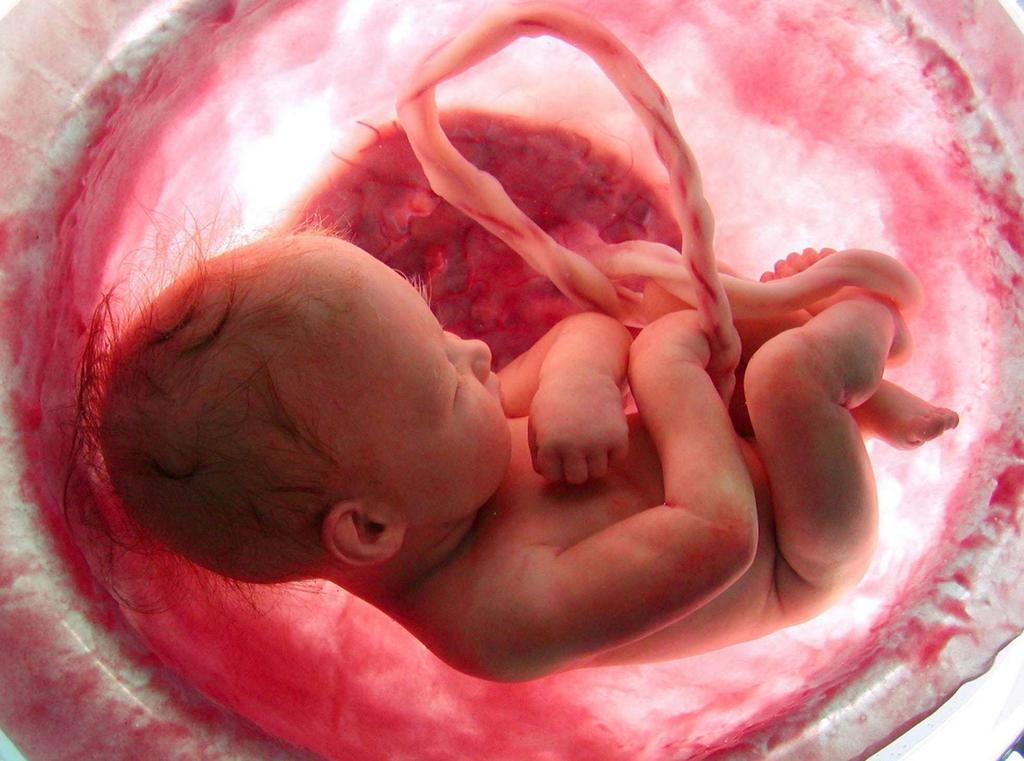
The Talmud explains that the tiny light accompanies each child from the bundle of energy/ souls of the universe into the womb and that light remains as a protective angel until birth. And with that light, the tiny fetus can see to the ends of the universe, but upon birth the angel taps the child and they forget, we spend our lives relearning all the amazing things we knew. Socratic method in teaching is asking questions to draw out our innate wisdom.

Teshuva is returning to THAT, to childhood wonder.

What are you afraid of?  Only the beginning of wisdom is fear.  It is possible to turn the fear into awe. Perhaps the destination of wisdom is awe. We must access the “Awe” of life,

Teshuvah is returning and turning the fear into awe.

A poem

This witchery of life..

It is more than bones

More than the wrist with its individual pulse,

It is praising,

It is giving

Until the giving feels like receiving ~Mary Oliver

AMAZED

May I stay amazed, for all of my days

In all of the ways   of the world’s turning

Amazed at what I’ve got, and not what I’ve not

All soon forgot  in the world’s turning

Rosh Hashanah 5783

“Cuanudo el Rey Nimrod” Avram avinu, padre querido, padre bendicho, luz de Yisrael” This song tells a fascinating midrash!

When my oldest was a toddler and we transitioned from a crib to a bed, she would sometimes get up in the night and want to climb into our bed. I’d let her bring her sleeping bag in to be near me. Eventually as a parent you want to make them feel safe in their own bed.  Stories helped, and lullabies, and the bed time Shema. It helps the monsters in the closet and under the bed and other such fears disappear into fantasy.” The world is a safe place, it’s ok to go to bed, we tell them”

We are giving our child the gift of Bitachon.  It means the trust and faith that things will be OK. For much of my life, this trait/middah was my greatest challenge, I yearned for more of it. As I reassured my children, some of it rubbed off on me. But the world really is a scary place, and I worry for their safety.  I yearned to have more of the trust that, in the words of the RDMLK Jr “the arc of the universe is long but it bends toward justice” or the belief in a loving G*d.  The complete lack of bitachon can lead to anxiety, depression, and hopelessness. Just as this lack is crippling, can there be too much of a good thing, too much Bitachon? I think Abraham/ Avraham avinu had perfect trust, and that because it was perfect, he was flawed.

We will read in the Torah this Rosh Hashanah as we do each year of Avraham andthe binding of Isaac, of a father that almost sacrifices his son. Not just any father, but our founding father, whose name means father of nations who is traditionally identified with the property of chesed, purelove. What does this legend we read each year teach us? One thing I know with perfect bitachon, it does NOT it teach us to sacrifice our beloved children for our faith. Perhaps the essence of Judaism is , “it’s for the kinder, for the sake of the children. R Yitrz Greenberg famously writes that this is the whole point, that in amidst ancient cultures who sacrificed their children to the gods, we would not.

So who is this Avrahav Avinu? We knowfrom Genesis that he was the son of a prominent man named Terah, Did you remember that Terah was an idol maker and that the child Avram smashed his father’s idols? It’s not in Torah, you won’t find it anywhere. It’s in legends called midrash

Midrash is a collection of our legends that fill in the missing details of Torah. The midrash continues, flashback to a star in the sky that foretells the birth of a our holy renegade by advisors to the mythical king Nimrod. They tell him a boy is about to be born who would challenge his power. Nimrod then ordered the midwives to kill all the boy babies. His mother, Terah’s wife hid her pregnancy and when her time to deliver came, gave birth in a hidden cave. After a day the child spoke to her and told her to return home, that he was going to be taken care of Divinely as a servant of the Holy One! So she abandoned the child and went home. When She returned 3 weeks later, the child had grown up and had figured out there is only One G*d, that all is One. He was brought to the palace of Nimrod, where this pipsqueak of a boy indeed challenges the king’s worship of fire. You must admit, that takes confidence- bitachon. The boy argues “But the rain puts out fire, shouldn’t we worship the rain? OK, sure, said Nimrod. But the clouds make the rain, should we not worship the clouds? OK, sure said Nimrod. But the winds disperse the clouds, should we not worship the winds? OK sure, said Nimrod. But a person can resist the wind…ENOUGH, see if, your G*d will protect you now, said the Despot, and throws Avram into the furnace, and Avram survives, emerges unscathed!

Next we hear of Avram , he married a beautiful princess named Sarai he leaves the land of his birth, and his father’s house to a land that G*d would show them. Again

 bitahon! Inspired to follow G*d  without knowing the destination, trusting things will be OK. But Avram does NOT have perfect bitachon yet: he was not always able to keep fear away: tell them you are my sister, he said to Sarah, I’m afraid they will kill me, you are so beautiful. (I know, a terrible thing to do to Sarai, but perhaps she was the stronger of the two!) It turns out G*d was with them, and Abraham’s love and faith would grow. At Sodom, he was strong enough to put his life on the line by arguing truth to power: will not the judge of all the earth do justice? Abe challenged. And the answer: for the sake of ten righteous I will spare the city! His understanding and trust that G*d is loving, strengthens even more.

Still, he years for children, and G*d has promised him descendants as many as the sands on the shore and the stars in the sky.  Isaac, whose name means laughter, was a loved, and yearned-for child.

I Imagine, Abraham and Sarah felt overwhelming love when Isaac was born -a child in their old age- past any expectations. The love must have been pure unconditional, love without boundaries

Then Abraham is “put to the test” we are told. Take your son, whom you love, Isaac, and offer him up as a burnt offering.  Perhaps Avraham had perfect faith in a loving G*d that would save Isaac as he himself had been saved. And that’s the flaw. He didn’t argue, though he’d argued with Nimrod and G*d. He didn’t consult with anyone but G*d, not his wife, not Isaac, only the Donkey knew where they were going. What did he say during those three days?  He tied his son on the altar, and reaches out the knife. He almost does the deed, at the very last minute his ears were opened. Avraham, Avraham!  Midrash says the knife melted from the angel’s tears, not the father’s tears.  Then Avraham lifts up his eyes. But was all disaster averted, Isaac lives, but separates from his father. They do not meet again until Avraham is buried. A relationship is severed. Sarah dies also, 2 relationships severed.

Avraham’s perfect trust is too great. That kind of certainty can cause Crusades, and suicide bombers.

We are not named the children of Avraham, but the children of Yisrael, A name given to Jacob when he wrestled with a “divine or human” being all night long and prevailed. A name meaning G*d-wrestler. That wrestling,  and longing is a healthy, necessary thing. “when we are absolutely certain we’ve arrived we are lost” 

Too much certainty that things will be just fine, leads to complacency and inaction. We lose that fear which is “reshit chochma” the beginning of wisdom.  “We’ve been through troubles before, everything will be fine” we say, and go about our business.

I no longer struggle with bitachon. Now I focus on savlanut, patience 😊 It feels like a miracle to me to not have this demon on my back. To what do I credit my success. One  part is my return and embrace of our heritage and connection to a loving G*d and loving community.  But I am well aware the needs tikkun,  repair

Activist Rabbi Jaffe writes in his book (lent to me by a friend) Changing the world from the inside out, that each of us is somewhere on a continuum of bitachon.

Activists inspire me – they help me hit the sweet spot, of bitachon.

One such person is Greta Thunberg. Born in 2002, in Sweden, she became despondent upon learning of climate change. In her despondency she stopped attending school, this depression went on for a year. She had very little bitachon. Until she found a pathway to hope: becoming a child activist.  “no one is too small to make a difference” she said, and this quote is on the bottom of my syllabi at school. She sat with a sign, alone, in the snow outside the Swedish Parliament. Until more students joined, and there was an army of kids.  Then covid hit. Greta advocated for equitable vaccine distribution, and her foundation donated a ton of money to that cause. Greta chides us – we need to act as though our house is on fire, she says, because it is.  My own children, in their activism inspire me.

As do my friends who support me, Last summer, with Chaya’s help, New Jersey had a Jewish Climate activist voice through Dayenu, the call for climate justice.  Two high school children activist, Sarah and Shawn were there, four Rabbis blew Shofar.  We can all do something. Try it, along with the Shema, it may help you sleep better, help you find a sweet spot of Bitacchon

If we continue to be complacent, it is they we will suffer.  We are on the mountain top, our children are in danger.  Will our ears be open when the angel’s cry and call our name? Will we lift our eyes to the alternative? There is still time.

May are hearts open to the cry of the shofar, it’s calling our name.

Shofar word art!

Erev Rosh Hashanah 5783

SERMON

Do you have a nick name, pet name, are you known by different names in different settings? Perhaps you have a name only someone special calls you. My favorite nickname as a little girl was Zeiss punim, only my grandpa called me that, with such love. It means sweet face in Yiddush. For someone with an “ugly duckling” complex it was a bath of love and healing. At work I’m Professor, and  I’m known as Mom to three beautiful young people. My daughter did not change her surname when she married…. Does it matter?

A poem

  Years ago,

I heard about a young woman

Whose parents named her

Achzava.

She walked through the world

bearing this

unutterable weight:

“Nice to meet you, my name is Disappointment.”

She was the tenth

beautiful

girl

given to parents

who longed for a son.

Their hope died

The day she was born.

A stillbirth,

you could say,

but she was

still born –

like the rest of us —

breathing

crying

gulping for air.

When she turned 18

She changed her name.

I have always wondered

What changed then —

And what didn’t.

(Rabbi Sharon Cohen Anisfeld 

President, Hebrew College)

Sticks and stones can break my bones, but names can never harm me? Is that true? The hurtful nicknames that Children and politicians call one another perhaps show most strongly THERE IS SUCH POWER IN NAMES!  You call someone’s name and they turn to you.  What name would you choose for yourself if you could:  a name that would reflect your essence?  , I have recently fully embraced my Hebrew name, Miryam.  Miryam, sister of Aaron from Torah changed bitterness “mar” into blessing with her music, and a sweet water-well Midrash teaches, followed the Israelites through the wilderness – Miriam’s well.  Our parents name us, a gift reflecting their hopes and aspirations for their child. I but Miryam captures my essence! I know now that I always was, Miryam-but I’m used to Margo.

We earthlings are quintessentially namers, isn’t that what language is? In Genesis of the Torah, humans were given two tasks. Their first job in the garden is Ovda v’Shomra, to serve and to keep the Garden. And then G*d says “It is not good for the Earthling to be alone, so G*d does…what?  Yes, brings all the animals to come to Adam, and to name them!

I want to talk about a naming, it comes up a lot during Services. A name that seemingly need no introduction,  it’s been around for thousands of years, ladies and gentlemen I introduce:  G*d!

But that word, G*d is so filled with the Baggage of childhood, and centuries of nations abusing the name in quest of their own agenda.

According to my teacher, R Marcia Prager, “G*d comes from a German word meaning the love-filled magnificent, mysterious power of creation in the cosmos”  If your surname in German is Gott, it also means “goodness” hmmm, interesting.

There are of course, many names for the love-filled magnificent mysterious power of the cosmos, but you may not have realized how many, or how diverse or how much those names have changed over the eons of Jewish time and culture

Here are just a few of the many names for the Majestic, loving  creative power of the universe.

HaShem, interestingly means “the Name”!

Among the most ancient is Yah, as in Halleluyah, meaning praise Yah. Spelled with just two Hebrew letters, a yud and a Hey, the hey has a dot within, meaning it should be pronounced with a breathy H sound.  In the song at the sea, the Israelites sing Ozi v’zimrat Yah!  Yah, you are my strength and my song!

The full four letter name of G*d Yud hey vav hey is the interweaving breath of the planet, whose name comes from existence itself – haya hoveh, y’hyeh.  The Talmud says the world is sustained for the breath of children. Think of that first magical breath a newborn takes to bring oxygen deep inside.  “breath of life”. This name is unpronounceable except by breathing.  When we see these four letters in the Torah or prayer book we don’t try to pronounce them. 2000 years of Jewish tradition has substituted the word Adonai, so as not to invoke G*d with the power of that name, G*d forbid we take it in vain.` Adonai is often translated as “my Lord” but Adonim are also the joining pieces connecting the poles of the portable Sanctuary of the ancient Israelites, so “My Connector” might be a valid translation. In progressive communities, the letters may be rearranged to HVYH, “havayah” which is a reminder a homonym of Ahavah, love in Hebrew.

Melech – This name is used a LOT during High Holy Days.  is related to the Hebrew word Malchut, which is paradoxically two opposite meanings at the same time.  Often translated as king, better translated as Majesty it is at the same time the most humble of the Ten Facets of G*d of the Mystics of Kaballah, the feminine aspect, the Presence of G*d, also called Shechinah. Avinu means father. So when we sing “Avinu Malkenu, are we really calling on our Father and Malchut, Mother?

Shechina – from the word to dwell, is the Feminine, immanent, womb-like compassionate Presence.. She was banished in Deuteronomy, and boldly “resurrected” in Danny Matt’s words by the Kabbalists, who embraced Her as one of the Ten facets,  incorporated into the One.

And there are so many others, at least 72 names for G*d: Ein Sof -unlimited One, Ribbono shel Olam, teacher of the world,  El and Elohim, a plural name, Ruach ha-olam, many from the Bible, some from Rabbinic sources such as Talmud, as well as Kabbalah I mentioned.

The fact that there are so many names gives us a choice.  I ask tonight, What is your understanding, your name, for the Holy One of Blessing, based you’re your ideals, enhanced by, intuition, heart longings and imaginings. You need not choose just one, but choose. That is a big ask in this crazy word, understandably so. But the payoff can be huge: it is the potential to have that Power in your life.

In her book “Miraculous Living” R Shoni Labowitz, Z”L” also a Buddist urges her readers to choose “what their image of G*d needs to be. So many people perpetuate the G*d image of their parents or grandparents, even though that image may not be a dynamic force, relevant to their lives.  They put the God of their parents in an old box and keep it hidden in a vast mountain of …..rules.  Over time, few, if any, remember the box, nearly all remember the rules. Rare are those who desire to dig deep enough to unlock the box and release G*d from the old images”

The box is filled with treasures untold

The name we choose makes a difference.

We humans, fractals of G*d, created in the Divine Image, likewise have names.

Which name reflects your essence,? Which calls to the G*d spark in you?

EACH OF US HAS A NAME by Poet Zelda, translated by Marcia Falk, Melody by Miryam-Margo Wolfson

Each of us has a name
given by God
and given by our parents

Each of us has a name
given by our stature and our smile
and given by what we wear

Each of us has a name
given by the mountains
and given by our walls

Each of us has a name
given by the stars
and given by our neighbors

Each of us has a name
given by our sins
and given by our longing

Each of us has a name
given by our enemies
and given by our love

Each of us has a name
given by our celebrations
and given by our work

Each of us has a name

Given by the sea

and given by their death