Torah for now

overcomeThis week we celebrate the birth day of the Dr. King and we read of Moses’ father in law, the Midianite Priest Yitro (Jethro). And some things seem to come together in outrageous coincidence.

I love singing with the singers of the Baptist church for many reasons. First of all because they are just nice folks, and it feels so great to find common ground and build bridges, especially when it’s the hate that gets all the press. Secondly, I love the music and the musicians. The current music director is Brother Jack Blanton: Minister of Music, and he packs a huge and jazzy sound. Deacon Michael Wells conducts straight from the heart. And we can learn so much from their powerful, direct and passionate pouring of their souls into the music. Nothing tepid about it.

Their Pastor is inspired, the Reverend John Armstrong. He lost his young, beautiful wife tragically in 2010 and almost lost his life himself from a very recent illness, but he is the antithesis of bitter. Gushing about the blessings and the healing that he has enjoyed, about the meaningful and potent life can be, on the joy of praise, and of reaching out to help another, he brought tears to my eyes. We have so much to learn from our Friends of a different faith, and much to gain in embracing them in common pursuit.

In an outrageous coincidence, this week’s Torah reading, which dramatically includes the Ten Commandments, is named Yitro, after this the leader of another faith and culture. And yet it this foreigner/ kin that teaches Moses how to handle leadership by delegating! Tradition says we were all there at Sinai, and I could swear I saw Brother Jack, Deacon Wells and Pastor Armstrong there too next to Yitro!
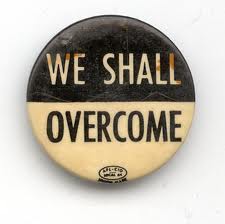
One more thing: during the service we sang the old spiritual “We Shall Overcome“, and the Pastor spoke a bunch about overcoming, as did Dr. King. I noticed for the first time, that the word “Overcome” is built from the root “come”, although we think about it as a forward “going”. To what are we coming, when overcoming? Coming home? To one another? To truth and spirituality? I just know it’s better Hand in Hand!

This Friday evening and Saturday is called “Shabbat Shirah”, the Sabbath of Song, because the Biblical Song of Freedom and redemption at the shores of the Sea are chanted. Only song will do. Here is a living room recording  on Soundcloud of the my song-experience of that moment. Trapped, death all around, the only way out is heavenwards. (This song originated in this blog two weeks ago, but has changed)

Ozi: Every Beat of my Heart

M. Wolfson For Shabbat Shirah 5774

Return and return and return,  waves whisper upon the sand

Light flashes, scatters off iron, and horses and warrior men

I am caught between that wave and an impossible  land,

Moses, our hearts reach out to you.  Don’t be afraid he cries, “Lo Tira-u!”

Chorus

And the fear and the awe  in me crash, freezing space and time

I lift my eyes to the heavens so blue: there find hope, so sublime

Open to possibilities, inspiring Truth in my mind

If ev’ry beat of my heart is a miracle, why not here and now?

Ozi v’zimrat Yah:

Soon the wind starts to roar; takes my breath away, bringing tears to my eyes,

Holding my little ones close, praying: hear their cries

The Calvary horses all stomp,  the whites of their eyes mesmerize

And the force of the wind pushes water off sand, in surprise

Going home, I am free !  Ozi  v’zimrat Yah Ozi

BRIDGE: If You are my song I am strong; The melody, sets me free, strengthens me, ozi v’zimrat Yah Ozi!

From the depths

Once again, inspiration comes from study with R. Ori Har of Aleph. Many thanks!
We all know the story of Noah’s ark, right? Speaking for myself, the answer is “Wrong!” , (and maybe I never really will). So what’s weird about this 100 meter long, 3 story cruise ship is that in all it’s hugeness, there is no light or air except from a single small window, and we in that boat are scared, adrift and nauseated. The demands keep us enfolded always in responsibility and darkness and trying to meet needs. There is only one opening for air and light. We are magnetically drawn to it. It seems the only thing worthy of our attention. It alone has the power to uplift, to save, to inspire us, linking us to worlds beyond our narrow one. I am hypnotized by that light, impaled and tethered to photons from worlds far away and beautiful.  R. Ori teaches via the Baal Shem tov, that the way to be connected and uplifted is through words, which have the power to both lift and create (as the world was created through “word”)  Words that are animated by passionate, musical prayer.  I resonate powerfully with this metaphor: how often have music and/or prayer been so brilliant, they outshine “reality”!

And yet, back in the darkness, and stench, and the nausea of that ark is: life. Not only life, but life’s only remnant and hope for continuance (and we know that life is “good” and “very good”). I don’t really want to go back down there, yet the ray of light that I am tethered to and inspired by is meaningless without that return.
Our world is in trouble now as then. Our actions to one another often inflicted enough pain to darken life and hope. We wound natural systems and creatures that, beautiful and worthy in themselves, we further need to sustain us. We despoil a planet. This planet itself floats as did that ark – but made of water, we float in space, housing the only remnant of life as far as we know or can reach in the universe.
So, I need to find a balance of working in the muck and tethering myself to life. But it takes courage to really work in the muck – these folks are my heroes. And it that stab of light can be elusive….
But maybe there’s another level. Although we stayed in that (d)ark a really long time, (almost a year, what with flooding and waters surging and returning), it wasn’t forever. The real next level is emerging into the light. What you really need faith for, is to know hat times of darkness will end, so that you no longer have to choose between life and light. Whether the darkness is personal depression or dark times, it takes courage to know things will be OK soon. The job of that light coming through is to remind us, to keep us tethered to that knowledge. If we despair, we won’t feed the animals, or ourselves, and so much will be lost- maybe everything.

 A psalm strongly connected for me begins Mi-ma’amikim, “from out of the depths, I call to you” (psalm 130) – maybe that would be my prayer from inside the boat. I heard  the words beautifully sung a year ago by Cantor Angela Buchdahl on the Shabbat following Hurricane Sandy, and the flooding and power outages that were the reality that week.  Maamikim by Idan Raichel project’s song, a love song derived from the words of the psalm – it is beautiful: powerfully connecting love to the call from the depths.

WithinMyWalls

A moment to soar

redsea-450pxThat moment of our crossing the sea, our birth day. What did it feel like, smell like, sound like? What was the score of our liberation? This week’s Torah portion lays the foundation with the names of our liberation from slavery. I am blessed to study, distance learning with Aleph‘s Reb Ori Har, who taught us wisdom from the text on crossing the sea: Pharoah drew close, he drew US close to the Heavens, to our Creator. Ori asked her students to close their eyes and be there. (I did not close them, but somehow was there). I was at the border of freedom, at the mouth – but the breath, the word has not yet escaped time’s lips. The salt air, the mud, the reeds, and a stiff breeze all assault skin.  Eyes tear and I hear the lambs bleat. Then the horn of war blasts and all becomes insanity. The sun glints on weapons – and the waves, which seem like knives too.
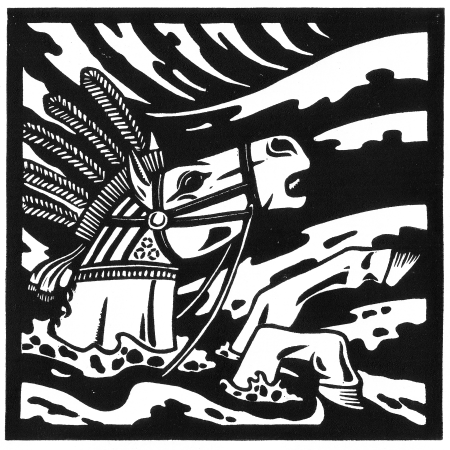
But what I really remember were the horses. Sweat steamed off them, and foam from their mouths, and terror in their eyes as their riders urged them on. Waves crash, children scream, and so do those horses. And there was no way out for them or me. Time stands still. I look up to the heavens. Everyone does. There is One way out, only upwards – and i finally can see the source of that light that glints off the animals flanks and the waves and the steel. I am aware and in awe. And here a ladder stretches with it’s foundations in the sand and it’s head reaching for the heavens- it is entirely made of light. Why did I never see it before? I feel as tall as the ladder. I hear Moses calling: “Lo tira-u” – do not fear, and fear and vision collide. And then the wind blows so hard, and my body splits the wind whipping so hard that some of my breath blows away, and my skin pushes into flaps. Ruach, wind, spirit, nefesh, breath – is within and without. Water is also within me and without. And the water pushes off the sand, and I will be free.

Return and return and return,  waves whisper upon the sand

And the light crashes and scatters off iron, and horses and warrior men

and I am caught between that wave and a very hard land,

where can I turn? my soul cries upward to You.  Don’t be afraid he cries, “Lo Tira-u!”

Chorus: And the awe and the fear crash in me, freezing space and time

I lift my heart to the heavens so blue: there find hope, so sublime

Let me open to possibilities, inspiring True in my mind

If ev’ry beat of my heart is a miracle, why not this, why not You, Mi Chamocha ba-elim Yah?

And the hard wind pushes my skin, and takes my breath away, can barely breathe, Ruach Elohim!

I hold my little ones close, don’t take them, please oh please

And the horses sweat and they snort, the whites of their eyes mesmerize

And the force of the wind pushes water off sand, going home, I am free, so surprised!

Ozi, v’zim’rat Yah Ozi!

Chorus

Mandela

Nelson Mandela, his memory is for blessing.
We never thought Apartheid would end.
Perhaps there were those, world weary that knew that might makes right, that history is written by the winners.
The leader of the revolution placed in a wind swept, hopeless stone prison island had every reason to be embittered, bereft of hope… but he was not. He had every reason to be vengeful, for a life withered like a “raisin in the sun”, but he was not. Released from prison after decades to rule in optimism, even joy, he embodies hope  over despair.
Jane Goodall, heroine of mine travels the world trying to imbue people of different cultures and values with courage to reverse habits of  despoliation in order to preserve beautiful natural worlds so that we can pass them to our children and they can be sustained. Despair is the enemy of such change, so Jane carries with her four symbols of hope. They are:

1. a stone from the Berlin wall, which no one ever thought would come down
2. Mr. H, a stuffed animal given her as a gift. It belonged to a Marine named Gary who became blinded at the age of 25, and never lost hope, becoming a magician to make kids laugh
3. a leaf from Nagasaki, grown from a tree which budded following the atomic devastation
4. a stone from Robben Island prison, from which no one thought Mandela would emerge whole in spirit to see Aparthaid end, but it did.

So in tribute to Nelson Mandela, these words borrowed from Emily Dickinson

Hope is….
Hope is the thing…
Hope is the thing, Mandela.
Hope is the thing with feathers,
That perches in the soul.
And it sings the song without words,
And it never stops at all.

Hope is the thing, Mandela…

Grandparents

Today was a sort of grandparents’ day in my Hebrew school. The kids, grades K-2, were to learn about welcoming guests. I invited many of our senior congregants to visit and tell a story from their childhood. We made place mats, prepared a welcome song, set dishes and cups, and decorated a cake to be served with green and blue sparkly gel. We acted out the Torah drama of an elderly Sarah and Abraham running to serve travelers who were really Messengers on high, delivering news of impending parenthood. Their laughter turned real with the birth of their son, Isaac. We read a story of a boy and spider traveling to Israel, welcomed upon arrival and return. And then our guests began to arrive, and the excitement was in the air. Each child greeted adults, showed them to a chair, served them refreshments, and listened to stories of another generation. One guest shared a photo of her own grandmother with whom she lived in a small apartment shared by many. Another was born in Palestine, before it was Israel, and grew up in Buffalo NY, where a rite of passage for the boys in his synagogue was to climb a nearby church spire. Many shared warm memories of Shabbat meals and afternoons. And a connection was made across generations that I will remember well.  I really miss my own grandparents, they were my messengers on high. Telling stories, creating holiday meals, making me feel like a princess, like the world was for me. My own daughters are approaching an age that makes grandparenthood a potentiality in my own life, and it’s a sea change in prespective…

I did not realize when I set this program up, that the Torah portion for the week is about grandparents, parents and children. The parashah, Veyechi, opens with Jacob/Israel’s second life, the one in Egypt, after he’s found out that Joseph was alive, and his soul was restored by knowing this. He lived in Egypt for seventeen years, (same number as Joseph’s years when he was abducted) when the days of his death were drawing near. He not only has found his beloved, favored son again, but now has two grandsons by Joseph: Ephraim and Menasheh, and he tells Joseph he is adopting them as his own(!) and will bless them.  It must be happiness squared for Jacob who never expected to see Joseph again. Jacob has many other grandchildren, but none are accorded this honor.

Among all Jacob’s grandchildren, one girl is listed, Serah, daughter of Asher. The legend of Serah is extraordinary: it is said she is the one who told Jacob that Joseph was alive by creating lyrics and playing the harp so the shock would not be too great. She was then blessed by her grandfather, with the blessing of immortality! She moved to Egypt with her family, saw Joseph’s bones buried in the mud beneath the Nile, and then when the generation freed by Moses 400 years later needed to exhume Joseph’s bones to fulfill that promise to return him to Canaan, it was Serah who told Moses where to find the casket.

So after grandparents’ day, I tried to imagine what that scene in the tent was like, with Serah playing the harp. I imagined she was a favorite of her sad grandpa, playing to soothe the demons of this man with only half a spirit left. Perhaps she had already known that Joseph was still alive, but feared to tell him. Perhaps there were scraps of rainbow cloth for her. As she began her song that day what did it sound like? A minor start, falling melody, changing to a gentle major?

A favorite son has father Jacob, fair or form, but he did part from us. Stronger even than death’s angel, a dreamer, alive within our hearts; Yes, Joseph our beloved dreamer was to Egypt swept. He rose and told the dreams of Pharoah, in majesty was kept. He rules the kingdom, saves from famine, and calls us to his side. Arise grandfather and rejoice, beloved Joseph is alive.

Slowly grandfather Jacob lifts his eyes, accustomed to only looking down. What is this you say, Serah, is your song true? I know you would not break my heart, little Serah, you have always served me well. Can it be? Oh my beautiful girl, (how did I never see that before) it is too incredible to believe! You have restored my very soul. You know once I was open to the voice and the ear of the Almighty – I saw a ladder where heaven and earth touched. By that power I bless you , a life for a life returned, may you live and never die, my Serah.

300px-kanizsa-triangle.svg-tm

Giving thanks

Next week I am singing in an interfaith Thanksgiving service. The pastor of the host church has asked for members of the various faith communities to step forward in expressing Thanks Giving of an unusual kind: being thankful for their faith tradition itself. The assignment is to answer in just 2 or three sentences. The request was greeted at first with silence of the choir members. “That’s really hard to do, especially to explain to outsiders,” commented one singer. It reminds me of the challenge to Rabbi’s Hillel and Shamai: “if you can explain your tradition to me while standing on one foot, I will convert,” announced the seeker. Shammai sent the stranger away, annoyed, but Hillel accepted the challenge. “What is hateful to you do not do to another. The rest is commentary: go and study,” responded Rav Hillel. I decided to give this challenge a try, so, while standing on one foot, here is why I’m thankful:

I am so very grateful for this Jewish tradition, it has given me my life
It is a time machine: memories of delicious and melodic Holidays at Grandma’s bless my children’s lives as I teach them of their heritage
It’s treasury of wisdom gives me roots & grounds me, informing me how to give, and love, and see with eyes of radical amazement (in the words of Rav Heschel)
And In Becoming a part of its music I have found my voice and my heart’s wings.
Thank You
(I will put my foot back down now)

Alone

Jacob is finally going home. It’s been twenty years since he fled a brother swearing vengeance, and that same brother is approaching with 400 soldiers. Jacob must literally come face to face with his past as trickster, lier and thief. It is getting dark, and his entourage has made camp. Herds of animals, four wives, twelve children, riches, guards and servants. He calls for Rachel and Leah and his eldest sons. “Pick up stakes, move out across the river. Right now!” he commands. “Also, we must split up for safety into two groups. I am staying behind tonight, and will cross the river to meet you all in the morning.” As the boys leave to orchestrate the night crossing, Rachel and Leah linger. “Jacob, it’s the hour of the wolf and the ruffian. If you stay alone tonight who knows what will emerge from the night to consume you?” they whispered in fear. “I cannot keep you safe until I emerge from this darkness that weighs my spirit. I need to find some insight this night, I need to find…some strength. I know I cannot cross until I face….” his voice trailed. The women nodded, departing.
Perhaps this was the scene that preceded the Torah’s famous wrestling match. Jacob remained alone, and yet a man wrestled with him until the dawn was beginning to rise. The desperate wrestler displaced Jacob’s hip from his socket, but Jacob would not release his hold. Jacob will limp his whole life now. The mysterious stranger begs to be let go because dawn is rising (a river demon? an angel? his brother? himself?) “I won’t release you unless you bless me!” is Jake’s response. The man not only blesses him but renames him Yisrael, “wrestler with God” and so Jacob releases the man. He names the place of the struggle Pineal: face of God, and declares that his soul has been saved. He now is able to cross a river and find the road home, confront and enable reconciliation with his twin brother.
A song by Dave Wilcox, “Farthest Shore” puts into reality a need to be alone before crossing the rivers in our path. In this alone-ness we have the potential to find our values, our self. Jacob separates himself from all his possessions, his powerful sons, his defenses. Interestingly he fails to mention his daughter Dina in the list of things sent across. This dismissal, this lack, is mirrored in Dina’s being alone soon, and hurt, and then disappearing from this family. In this song, “Farthest Shore” the composer loses a home to fire. In this past year many on the Jersey and New York shore were similarly displaced from their possessions. Those I know found strength in family and community, in the aftermath of disaster.
Farthest Shore by David Wilcox

We were there in the wood by the water.
Left our pack up against the willow tree.
We dove right in keeping just what we were born with,
Our memories, knowledge and our dreams.
As I swam far away from our possessions,
I imagined they were gone forever more.
And for once I was glad that all I treasured
would still be with me as I reached the other shore
So let me dive into the water, leave behind all that I’ve worked for, except what I remember and believe.
And when I stand on the farthest shore, I will have all I need.
When the blaze turned our cabin into ashes,
where we slept warm now the sky lets in the rain
I found the strings and the frets and rusted latches,
but I will never hear that old guitar again.
These four walls are only in my memory,
these stone steps rise to nothing in the air
One last look and I’m headed to the river,
to wash my hands and try to say this prayer:
Let me dive into the water, leave behind all that I’ve worked for, except what I remember and believe.
And when I stand on the farthest shore, I will have all I need….

sound file and complete lyric

In this Place

My student Manny (name changed) spoke up from the back row. We were discussing mental health issues in a Biology course. “I have PTSD”, he quietly shared with us. “I’m a Marine, and I was in Afghanistan.”
PTSD: post traumatic stress disorder. Memories are strongly linked to emotion. From the zillion moments we experience each day, memory of those that impact our emotions serves to help us avoid danger and remember the pathways to paradise. But sometimes we’re overwhelmed and re-live memories too intense to handle.
A fearful journey my young student has undertaken. Can God be in those horrific places, in the darkness of terror?” The kid is going through a really rough time. It’s a hard question to answer. Another journey from ancient times:

Running from Beersheva to Haran, from a watered oasis to return to the place Grandfather left so long ago, Jacob lies down for the sun has gone, to dream a dream.  And Behold there is a ladder with its feet in the earth and it’s head in the heavens, and there are messengers/angels going up and going down. And God stood over Jacob and spoke to him! Promises. “I am with you” Jacob awoke. Truly God is in this place and I, i did not know.
Awaken.
Each place in time and space can be filled with God.
If we dream and let the dream inspire so that we become aware.
And we are ladders. Our feet rooted in this good earth. And there are angels of God in us – messages that originate in our rootedness and make their way to our loftiest hopes and ideals, if we let them.  We need to be rooted, and to be angels for one another, that we must dream and reach for the heavens….
And Jacob felt fear and awe when he awoke.
And my student, Manny felt fear, and is struggling to find the angels, and to know that God is with him. Though the universe hums with potential, and God’s presence can be in any place or time we allow divinity to enter,  maybe war and cruelty drive that away.
Jacob eventually returns from his exile to the promised land. He is with his own family now: to face his demons, to wrestle and to become humble. Broken, and limping, but he can return.  I wish Manny victory over the demons he wrestles with, to return, to make space for the divine in his life (and I wish we would stop making overwhelming situations into which we send our sons and daughters).

Music for this parashah: Noah Aronson’s This place: it’s stunning! or my own: Between  Archives: Between, Nov 2012

Costumes

I am writing this on Halloween, as the Torah portion involves costumes, and tricks and perhaps a treat.

“Listen to my voice” whispers the mother of twins to her youngest, Yaakov. She is talking to a son she loves without qualifications. “Dad is blind, you are the one that must be blessed by him. You are the one prophesied to carry on in this family and rule” “But Dad will know it’s not me, and he will curse me…” And so Momma Rivka gives her son a costume: Hairy arms, and her other twin’s best robe, and a meal to ply Dad with. Father Isaac hears: The voice is the voice of Jacob, but the Hands are the hands of Esau. Who are you, my son?! Jacob lies, “It’s me, Dad, your oldest son, the one you love. and Isaac ignores the voice of truth, of Jacob and is tricked.  And so is Big Brother Esav “Don’t you have a blessing for me too father?!!! “Your brother stole your blessing, and he’ll stay blessed” Seriously?  I will kill him, vows big brother Esav. (This is a vow the very first brother, Cain kept). Always grabbing, pretending to be what we are not. And it wasn’t even Halloween!  Isn’t honesty best – this could easily have led to murder! And yet in spite of their parents’ mistakes, in spite of lies and tricks, Brothers do not kill each other.  To whose voice do we listen. Only to the voice of love.
A story: A farmer raised two sons in the way of the field – plowing and planting and harvesting – always together, and of supporting one another. The boys grew to men, and the oldest married and had a family, and the younger remained single. Sadly, the father died, but he left the farm to both sons equally. The older son lived in the house with his family, and the younger in a cabin on the far side of the farm. They did all the farm work together: plowing, weeding and harvesting. And they always split each harvest exactly in even halves.  One night the younger could not sleep: It’s really not fair to my brother to share the harvest equally,he thought, he has a family to feed, he needs so much more. So, in the black of night, he carried bundles of grain across the field, as much as his arms to carry, and sneaked them into his big brother’s silo.  On that same night, big brother could not sleep either.  I have so much, I’m blessed!  he thought.  A family to help me and take care of me when I grow old. My little brother has nobody! It’s not fair that we divide the harvest equally.  And so, can you guess? He also sneaked out and carried as much as his arms could to place precious harvest in his brother’s silo.  Each brother, the next morning was shocked and confused to find their stores still full. And so the next night this sneaking around at night was repeated. And the third night. And on the fourth night, somehow, in the dark they ran into one another. What are you doing here! each asked, but then light dawned on them, and not just from their lanterns! When each realized that his brother had been doing the same as he, they dropped their bundles, embraced and cried tears of love and gratefulness! And the legends of our people say that it is on that hill, in the place that would one day become Jerusalem, that God instructed Solomon to construct the Temple, so that rules of love and kindness could spread through the world. Because of the love of two brothers. Going back to our trickster, Esav will not kill his brat kid brother, love will triumph, that’s the treat.