Torah for now

Choose Life!

Cheshvan, 2781

See, I set before you this day blessing and curse, life and death,… Choose life therefore, so you and your children may live! Commands the Torah!  Why should the Torah have to command this? Don’t we all want to live? Ah, you know as I that we do unskillful things with which harm ourselves and even our children. We can be our own worst, unforgiving critic.  Why do we do this to ourselves? Maybe because we hide our true self: truth can be hard to face, when we doubt our true potential and we settle for less than life affirming choices.  I myself apparently was an expert in hiding truths from myself, this year, my mother’s illness forced me to face childhood hurts for the first time in my adult life. And , although it’s an ongoing struggle, the honesty and tears helped find my way to forgiveness and acceptance. Jay Michaelson’s book, The Gate of Tears helped. Jay is a Rabbi, meditation teacher and scholar writes that we hide truths to protect ourselves.  I came to see that “coming out of the closet” is not just for queer folks but for everyone. I was astonished at how many closets I and other people seem to have. People closet their spirituality, their joys, their life histories, their talents; loves…transgressions… they bury their essential selves, …And of course, their sadness. I think I was afraid of the sadness, the tears. Ironically they were the pathway to heart opening, healing and forgiveness.

Emet, being true to yourself is much harder for some folks. According to the Amer Pediatric Society Among non-binary youth, 41.8 percent of respondents stated that they had attempted suicide at some point in their lives. Many transgender young people experience family rejection,   bullying and harassment, or feel unsafe for simply being who they are – But also, Somehow, many of these children choose life in spite of all the negative forces.

In “Through the Door of Life” “Joy Ladin, prof at Yeshiva U. Writes  suicide had been my duty as a child; now it was my obligation as an adult. She writes of a failed attempt with a knife, and of the day she chose life. She had packed her car and was leaving her family, and wrote: …Driving away, my Jerusalem stone with its ancient injunction drove with me: And therefore choose life….my life insurance policy’s waiting period on suicide was up in two weeks. At almost the same moment, I had become free to begin or end my life.  As I crossed the bridge that separated the region in which I could now walk publicly as myself, from the region in which I had agreed for my wife’s and children’s sake, to shroud myself in maleness, the tears turned into sobs, the sobs into howl, the howls into screaming, shrieking prayers not to survive this act. …I would always be someone who had driven away from those I loved to become myself. My family shrank behind me, shining and distant and fragile as a raindrop on a leaf.. Ahead of me lay nothing – nothing I knew,, Nothing I could imagine, no one I had every really been.  I stopped screaming. I stopped crying. I stopped feeling. A friend was flying in to help me learn to live alone was due in a few hours, and, after all the damage had been done..  It wasn’t any life I would have chosen. But I had chosen life. (Gratitude to my children/ my teachers one of whom gave me this book as a gift)

Perhaps G!d is the force that says choose life.   Instead of the eye of judgement, self or other, what if we could see with G!d’s eye of rachamim. What if we believed in transformation and the possibility for total change?  We could begin with self compassion, embracing our true self.

There is an amazing story of the power of total transformation from the Talmud: Once a gladiator in the arenas of Rome, Reish retired or escaped, I don’t know which, but what do you do after gladiator? Like prisoners today, released with $20 in their pocket, He turned to crime and became a leader of bandits. One day he was walking by the river, and saw a form of striking beauty swimming in the river. Drawn, mesmerized by beauty He put weapons and armor aside and entered the water. Muscled and scarred he swam to the beauty, came near, and his jaw dropped. “you’re a dude” he may have said, in surprise. It was Rabbi Yohanan gone out for a swim, who somehow was not afraid, but looked into Reish’s eyes to see something there. Perhaps he saw the brilliance, or the turning away from intended mischief! “Your strength can be for Torah.” he suggested, opening in Reish’s imagination another path. Yochanan saw the potential for complete teshuvah, transformation.

Reish Lakish didn’t miss a beat, saying that Rabbi Yohanan should devote his beauty to women. In response Yochanan offered an interesting deal to keep the men together: that if Reish were to repent, he  could marry R. Yohanan’s sister, who was “even more beautiful than me.” And this was done.   Reish Lakish was inspired to give up his old life and devote himself to the pursuit of Torah The transformation was almost immediate. When he tried to go back and collect his weapons, he couldn’t pick them up! The two became brothers-in-law, friends, and study partners. Each brought different point of view to their study. They were sparring partners b’shem shamayim! Until one day they weren’t. There is not a happy ending here. Perhaps the arrangement was not so perfect after all. Once someone has transformed, it is forbidden to remind them of the person they used to be. The argument that caused the breach was over  was the law of ritual purity of weapons, the question of when is the raw iron, transformed into a weapon rendered impure. Rabbi Yohanan said when it was first forged. Reish said not until it was hardened and sharpened. Rabbi Yohanan snarkily said that a bandit knows the tools of the trade.

Reish Lakish cried why are you abusing me?!. RY’s response – I’m the only reason you’ve been redeemed from your prior evil life! Worse even than reminding Reish he took the credit for Reish’s Teshuvah

Both Reish Lakish and Rabbi Yohanan were devastated. First Reish died and then,  Rabbi Yohanan then became depressed. And soon died a broken man.  What does it mean to deny teshuva and forgiveness?  it could be the loss of life itself.  If there is no hope of transformation how do we go on living? (Gratitude to my teacher R’ David Vaisberg who introduced me to this piece of Talmud)

There was another guy who could not forgive, and who therefore denies life.  On Yom kippur we read of the reluctant prophet Jonah who ran away from G!d. But what exactly does it mean to run away from the source of Life, Light and compassion? In fact, under that gourd that withers after Nineveh is forgiven, Jonah asks for death, and citing G!d’s grace love and compassion rejects these, as if to say to G!d “I knew you’d forgive them, you’ve ruined everything” 

I think that Jonah was always seeking death, because that’s what it means to run from the source of Life. I wrote this song using the notes of the shofar for the intervals. I thank my teachers this summer who inspired this song: Rav Ruth Gan Kagan, and her amazing class on the Thirteen Middot, and Rabbi David Ingber, in whose class on Reb Tzodok haCohen, reminded us that Jonah went to sleep in the midst of the storm, and the deeper meaning for this sleep. When overwhelmed we close our eyes, R’ David said, and that the Zohar teaches that Jonah’s story is an allegory, we are all travelers in life’s rickety boat .

JONAH (music linked to the title)

What does it mean to run away from, the source of life and light?

How could you go to sleep Jonah in the middle of this storm, this tonight?

Even in the belly of the boat in the pit of despair,

there can be light Jonah, if only you’ll awaken!

Awaken your heart to compassion, open, to feel again

Return to embrace your true essence,  commit to healing the land

Choose life

Oh the storm is raging Throw me overboard, And you’ll be safe,

I will find a haven, sleeping in the waves

Even in the belly of the fish, in the pit of despair

  there can be love Jonah, a pathway to repair

Chorus

Don’t give up on us Jonah

There’s no part of us beyond reclaim

Grace love and compassion, are the magic of your mission.

Somehow through the tears,  we can find connection

To creation and to the space/ the face of G!d!

Adonai, Adonai El rachum v’chanun

Erech apayim v’rav chesed, v’ emet

Notzer chesed laalafim,

Nosseh avon vafesha v’chata v’nakeh

Chorus.

Jonah’s journey to choose life for himself meant the possibility of life for all of Nineveh. We are Nineveh today. A quarter million pounds of carbon dioxide are released to the atmosphere each minute.

Some of our actions bring great harm not only to individuals but to the earth herself, in the pursuit of “greed is good,” we are stealing our children’s future, burning up this beautiful planet, burning up its wondrous creatures. Shechina (G!d’s feminine presence) herself is wounded, crying Wake up! Thinking things will never change, & not forgive ourselves for these actions. is a deadly response.  There is a warning in the ten commandments that  sins of the parents carry to children so we’d better get it right for them

When we say this problem is too hard to change, aren’t we just being realistic about our limitations? According to a teaching of the Baal Shem Tov we are simply not living up who we are destined to be, ladders between heaven and earth. This of self doubt is a sort of spiritual laziness, keeping us from being agents of transformation. We are being like Jonah, not choosing life. We are failing to recognize our potential, that “what we do matters”. Like Jonah, we’re full of judgment, and we can’t find our way out, we don’t fight for our own lives.

It’s not for himself that Jonah woke up. Giant storm is raging outside, and he climbs into that boat to got to “sleep” like we’re sleeping right now. It’s not for his life, but for the innocent sailors he gets up, and then what does he say?. “throw me overboard” From the moment Jonah has run away from God, he’s already in the belly of despair, suicidal from a place of judgementalism, and “things will never change”

W all despair sometimes. I thought I  could not change until I found myself healing from old hurts, I thought our society could never change and then I saw a virus make us stop in our tracks, in order to save life, AND EVERYTHING CHANGED, we are capable of change, and we must, if not to save ourselves, then for the sake of the children.

We, like Jonah can wake up.

Life can be saved.

God is the magnetic field who pulls the world back home, with the force of teshuvah (repentance). Home, our magnetic north Is the chen, chesed, and rachamim – the essences of the 13 middot/ attributes of the Divine. And after  the storm grace that returns

So choose life like Joy did, like the young Reish Lakish , and as a reluctant Jonah did with G!d’s help.

Choose life so our children can live!
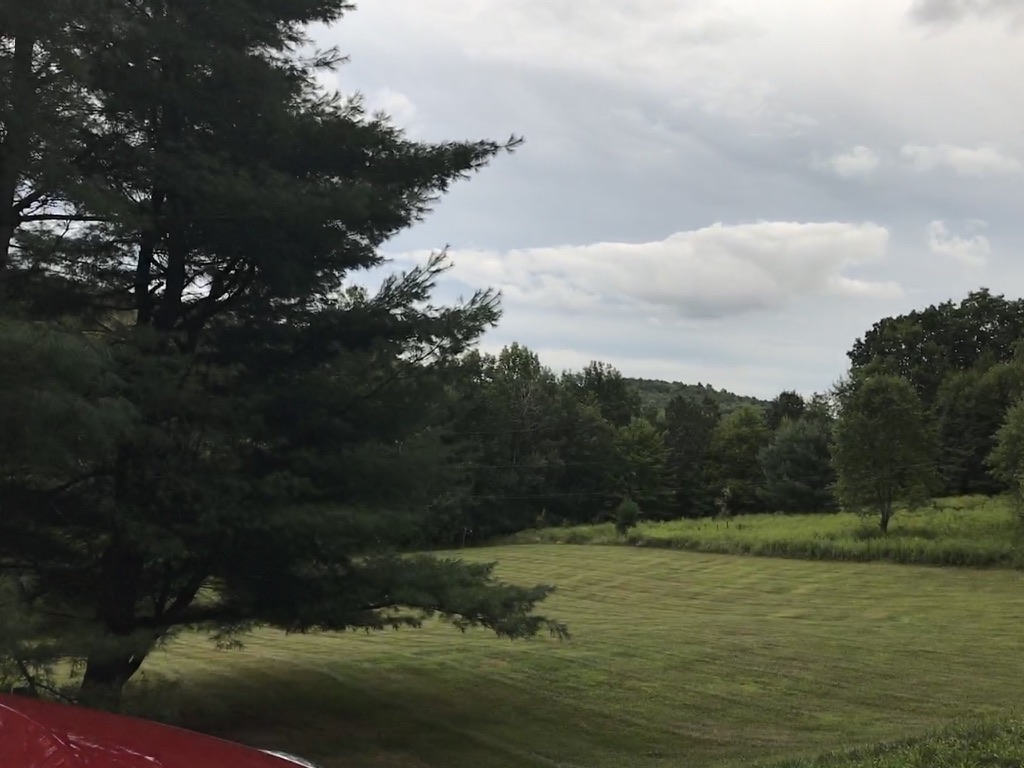
Sukkot is one of my favorite holidays! We get to be outdoors, decorate the Sukkah (booth) look through the leaves to the sky, and usually invite company (OK not this year) The picture below is my sukkah.

The holiday is nicknamed “Time of our Joy!” Paradoxically it is also a time when we ask for salvation. The Hoshanot are an acrostic prayer said during Sukkot, carrying the Torah, dancing in circles, and waving the lulav, and asking for salvation for the earth and the people. Rabbi Zalman Schachter Shalomi wrote this version in English almost 30 years ago, and we need it now more than ever, as our own and our children’s existence is threatened by greed and power structures we humans are perpetuating. Each day is thematic for what was created on that day, and on the seventh day, all of the “Save us” prayers are said. In Israel, this is connected with prayers for rain, and willow branches beatn on the floor seem to be pulled from ancient memory of rain rituals. After all, willows only grow where there’s lots of water! The melody is mine, simple, and repetitive to encourage participation, The words are mostly Reb Zalman’s, ending with a new version of Hoshiya et Amecha: Save Your People.

Here are the words

Rabbi Zalmon Schachter-Sholomi, 5753 

For the first day

Hosha’na for the sake of 

the Aura of life 

the Brilliant beams of Light 

the Crystal Clarity of Your Light 

the Dynamics of Dazzling Light 

the Effulgent excellence of Your Light 

the Fiery Photons of light 

the Glory of golden light 

the Halos of hope and light 

the Illumination of Your Light 

The joys of sight 

For the Second Day 

Hosha’na for the sake of 

The Karmic separation of sky and water 

The Luminosity of Your sky

the Majesty of the sky 

the nourishment coming in rain from Your sky 

the Orient and Occident in the sky

the Purple sunset of the sky 

The Quality of purity of Your sky 

The Range of Radiance of the sky 

The Stretch of the firmament of Your sky 

The Treasures of rain that pour from the sky 

For the Third Day

Hosha’na for the sake of 

the Ubiquity of the Plants 

The Variety of Your plants on earth 

the Wellness of the Plants 

The Xylem and phloem of healthy Plants 

the Your lovely Yucca plants 

The Zucchinis and the  Zinnias 

the Aspen trees in Your vast Forests

the Beautiful Berry bushes 

the Chlorophyll to catch the sunlight

The Date Palms covered in Your Dew

Hosha’na for the fourth

Hosha’na for the sake of 

the Earth our Precious Planet 

the Faraway distant stars 

the Galaxies in Your universe 

the Horizons of the sky 

Infinity of Your vast space 

The Joyous music of the Spheres 

the Komets and Asteroids 

The luminous Leo constellation 

the Moons around Your Planets 

the Nebulae & neutron stars 

For the fifth day 

Hosha’na for the sake of 

Owls and all 0viparious life 

The Perches and Your piping Plovers 

The Quails and the Quahaug 

The Robin’s song and Your Red Snapper 

Seagulls and streamlined Swordfish 

Turtles and Your Turtle Doves 

Univalves and spikey Sea Urchins 

Varieties of Your Precious Plankton 

Waterfowl and wondrous Whales 

Yellowtail tuna and Your yellow perch 

For the sixth day 

Hosha’na for the sake of 

The Zebras and zebu cows

The Aardvarks and Armadillos 

The Bears and Your soaring Eagles 

The Children and the wild Chimpanzees 

The Deer and Your Dromedaries 

The Elk and mighty Moose 

The Fawns and Families 

The Giraffes and peaceful Gorillas 

Humans and Your healers

For the Seventh day 

Hosha’na for the sake of of 

Letting our lovely Earth know rest 

Letting Your Earth heal 

Letting our Earth recover 

Loving Your Earth in peace 

Letting people find their center 

Letting people find rest and freedom 

Letting Your children play in peace 

Living Shabbat in Mindfulness 

Loving others and ourselves, Loving others as ourselves

Hoshiyah, et Amecha, 

may we be worthy of salvation

Hoshiyah, et Amecha, may we have the courage to save creation

Hoshiyah, Ur’em v’nas’em, ad ha-olam

Sustain and uplift us to save Your childrens’ wondrous world 

Hoshiyah, Ur’em v’nas’em, ad ha-olam

Sustain and uplift us to save our childrens’ wondrous world

Jonah

Friday Elul 29, 5780

Jonah

On Yom kippur we will read of the reluctant prophet Jonah who ran away from G!d. But what exactly does it mean to run away from the source of life, light and compassion? In fact, under that gourd that withers after Nineveh is forgiven, Jonah asks for death, and cites the thirteen middot, as if to say to G!d “I knew you’d forgive them, you’ve ruined everything” 

I think that Jonah was always seeking death, because that’s what it means to run from the source of Life. The song below uses some notes of the shofar for the intervals. I thank my teachers this summer who inspired this song: Rabbi Ruth Gan Kagan, whose amazing class on the Thirteen middot inspired this assignment, and to Rabbi David Ingber, whose class on Tzodok haCohen, teaching about awareness, reminded us that Jonah went to sleep in the midst of the storm, and the deeper meaning for this sleep is this: When overwhelmed we close our eyes, R’ Ingber said, and the Zohar teaches Jonah’s story is an allegory, we are all travelers in life’s rickety boat. This opening lyric, with nine beats of the t’ruah, is a question from that study.

Here are lyrics from my new song: Jonah, which includes the the 13 attributes of G!d. Here is a vocal recording.

What does it mean to run away from,

the source of life and light?

How could you go to sleep Jonah

in the middle of this storm, tonight?

Even in the belly of the boat,

in the pit of despair, there can be light, Jonah,

if only you’ll awaken

Awaken your heart to compassion,

open, to feel again

Return to embrace your true essence, 

commit to healing the land

Choose life!

Oh the storm is raging Throw me overboard, And you’ll be safe,

I will find a haven, sleeping in the waves

Even in the belly of the fish, in the pit of despair

there can be love Jonah, a pathway to redemption

Chorus: Awaken your heart to compassion, open to love again

Return to your true essence, commit to healing the land, Choose life…

Don’t give up on us Jonah

There’s no part of us beyond reclaim

The Grace love and compassion,

are the magic of your main mission.

Somehow through the tears, we can find redemption

We might see the face of G!d…

Thirteen Attributes and Chorus

I aspire to be more awake in the coming year!

Approaching Rosh Hashanah 5781

Sunday, Elul 24th  on Truth

Emet means truth in Hebrew, and it  is one of the 13 Middot, attributes of G!d. I have been studying the Thirteen Middot all summer with Rabbi Ruth Gan Kagan. Each Middah is a powerful place in the Divine constellation, that has its resonance in the human soul.  It is said the truth can set you free, through some deep soul searching I’ve just this year healed from childhood hurts I’d denied for decades in my relationship with a family member, and found my way to forgiveness. It is quite liberating! I gained much healing from tears I shed, and this book, Jay Michaelson’s The Gate of Tears was helpful. Jay is a Rabbi, meditation teacher and scholar of religion with a Ph.D in Jewish thought. I share a brief writing from his book on hiding the truth.  I came to see that “coming out of the closet” is not just for queer folks but for everyone. I was astonished at how many closets I was living in, and how many other people seem to have. People closet their spirituality, their joys, their life histories, their talents; they hide loves, transgressions, virtues, and tribes; they bury their essential selves, as if burying something is the best way to preserve it. And of course, their sadness. There is shame around sadness as if it’s a sign of failure- like you’re not doing it right. Even though so many contemplative and philosophical traditions say that sadness is a sign that you are  doing it right.

Monday Elul 25th

On Humility and Emunah faith.

I have found that living a spiritual or observant life is a conscious choice in today’s world.

The Kabbalists explain that in creation, to make room for material existence, G!d withdrew. Perhaps that’s why it can be difficult to find G!d’s presence in a sometimes fractured world. So to choose to life in faith can be an act of beautiful humility. But there are times we feel G!d’s presence so powerfully, like the moments of awe at the mountains, or the moments our babies were born, and that knowledge becomes even more humbling. And empowering. At our most difficult, heart breaking movents, surrendering and reaching for resonance with the gevurah/ strength and the rachamim/ compassion for self and friend can be a soul saver. I find that at these moments of constriction, I must stop and focus on my breathing, surrendering ego and anxiety. My mantra has been to Breathe in gratitude, Breathe out love,  breath by breath, moment by moment.  As Matisyahu wrote in Surrender

We run for the mountains, we will run for our lives
See our nations enslaved with no sign
I surrender my vision to your glory
This a story of a silent sky
And the ancient eyes, new baby blues
All brown her eyes
And I surrender to your glory

Surrender

Tuesday, Elul 26th

A fun song today, but first a riddle: How is Yom haKippurim like/ca Purim? The answer can be found in the thirteen middot, which I am studying with R’ Ruth Gan Kagen. The middot are thirteen attributes, or essences of G!d, and also the words revealed to Moshe in the cleft of that rock when he begged to see G!d’s face. Chanting these words is said to have the power to awaken G!d’s forgiveness with rachamim g’murah, complete compassion. This rachamim g’murah in the face of sin is so radical, it threatens the foundation of the world, which, in Pirke Avot (1:18) is said to rest on justice, truth and peace. Also in Pirke Avot, chapter 4, which I am studying now with Joe Rosenstein, the answer to “who is strong?”אֵיזֶהוּ גִבּוֹר, הַכּוֹבֵשׁ אֶת יִצְרוֹ is is “he who can control his inclination (for harm)”. Therefore, when Rachamim g’murah overrides Divine judgement, G!d is showing the ultimate strength: over inclination. Divine mercy and One-ness then blur the lines between good and evil on this day. This is true of only one other Holiday, Chag Purim, where we drink until we cannot distinguish between “blessed be Mordechai, and cursed be Haman”. This Selichah g’murah only deals with sins between us and Hashem, sins with humans, you must seek their forgiveness.   Perhaps the punishment for sins with G!d is to live a life without the Presence in your life, without that source of meaning and kedushah.

Today I share this wonderful, but admittedly party-like song,

From Now On as we resolve in the new year, that from now on….What will your resolve be?

A man learns who is there for him, when the glitter fades and the wall won’t hold.

From the rubble what remains can only be what’s true

If all was lost there’s more I gained ‘cause it led me back to You..

And from now on, these eyes will not be blinded by the lights. From now on, what’s waited for tomorrow starts tonight And let this promise in me start

Like an anthem in my heart

From now on, from now on. 

And we will come back home again

From now on from The Greatest Showman

Wednesday, Elul 27th

Lawrence Kushner teaches that “love is a verb” He writes:  How do you love people? You do things which don’t necessarily benefit you…In this sense, every favor can be the beginning of love or at least its repair. Each favor is a gift of self that says “You mean more to me than me. I may not understand your motive; it is enough for me to know that you desire it. 

I believe “love is a verb” is the heart of the Shema, and why it becomes our mantra each day. How do you love G!d as commanded in the Shema? I think by loving life, and this beautiful world and its inhabitants. To do this “with all your heart” admittedly is a challenge. But perhaps if that’s my resolve when I awaken, and being at home or taking my walk, then when I lie down at night, I can look back at my day and measure it “with love” as Larson ( reminded us. What if * radical listening, love and awareness of unity would be with us as we woke in the morning, and as a prelude to dreams at night, and punctuated moments of transition like when the colors of the sky mixed at sunset? I feel the Shema as a call to bring more love, first allowing it into my own heart, then as a resolve to bring love as a verb to the world each and every day with a full heart.  In loving acts our hearts and lives and the lives we touch will be fuller.

I’ve shared this before, my meditative “B’chol L’vav’cha”

Thursday, Elul 28th On Believing in yourself.

I have learned an amazing teaching of the Bal Shem Tov (excerpted below) that when we say in humility “There’s nothing I can I do, things will never change” it is not really humility, but a surrender of the recognition of our potential, that “what we do matters” and that we are B’tzelem Elohim, if we believe in ourselves.

סולם – תורת הבעש“ט

you need to take note

And esteem yourself

As a ladder standing on the ground,

Whose top reaches the heavens.

And all of your movements

And words and deeds….

Leave their imprints on high.

Whereas if you think to yourself:

‘Of what importance do I think I am,….

With such an approach you go

With a stubborn attitude

And fool yourself thinking

That you will have peace…

This is not the case.

For through your positive deeds

You veritably cleave to the blessed holy One

And when you are being compassionate in this world

You arouse the Divine attribute of Compassion in all worlds.

 Amud Hat’fila 137

Toldot Yaacov Yoseph Ekev

Based on a translation by r’ Menachem Kalus

This sentiment is also beautifully expressed by the poet Alden Solovy, recorded here with an original melody in

 Soul Shine
Let your soul shine
In your chest.
Let your heart sparkle
In your eyes.
Let joy
Fill your limbs with radiance.
Let love
Fill your hands with splendor.
You are the instrument
Of G-d’s music,
The tool
Of repairing the earth.
You are the voice
Of wonder and awe,
The song
Of hope and tomorrow.

This gift,
This majesty within,
Is not yours to keep.
It is not yours to hold.
It is not yours to hide.

Let your soul shine
Luminous, elegant,
Brave and true,
A beacon of praise,
A lantern of song,
A summons for holiness
To enter our lives
And this world.

Let your soul shine.
Set it free.
Set it free to fill the space
Between the here
And the unknown
With abundance
And with blessings.

© 2019 CCAR Press from This Joyous Soul: A New Voice for Ancient Yearnings

The Tenth of Av

Yesterday was Tisha B’Av, the 9th of Av. I have come to the conclusion that the reason Eicha, Lamentations is an alphabetic acrostic is to lead us from sorrow, out of the pits of despair and into love. The ninth of the Hebrew month Av always comes in the height of the summer, in oppressive heat, made worse these days by climate change. It is a day in which Jews give themselves permission to mourn the sadness in the world by reading a book from the writings called Lamentations, which is probably written by the prophet Jeremiah. I have written before on the character of Sadness in the animated movie Inside Out, and how crucial it is to honor Sadness in order for joy to “come in the Morning” (psalm 30) for Reily, the main character. Love this movie! So three things:

  1. Lamentations is the saddest book of awful things that happen to people in war; this described the pain suffered by women raped, and men killed, and cannibalism, in a poetic acrostic! Jerusalem is personified, and she argues back (at times) that she doesn’t deserve this fate. All these terrible things still happen in the world, unfortunately, and so are relevant for our sense of empathy and mourning man’s inhumanity to man. However it reflects a harsh, judgemental view of God as meeting out punishment that I cannot abide – G!d as a murderer, rapist, this is something that has no reality for me. I have read this translation and commentary of Eicha for the past three years by Rabbi David Mevorach Siedenberg of Neochasid.org.
  2. There are two basic ways to approach the writings in the Bible, and I am not the only one by a long shot that holds both of these, sometimes conflicting approaches at the same time. And perhaps to not wrestle with and consider both leads to a form of intolerance and extremism! So back to my comment on Lamentations above, I can take the words of lamentations on many levels, and look to the text as permission to mourn the awfulness in the world sometimes, without literally having to accept that God intentionally punished Jerusalem and made people suffer because they worshiped idols. I can apply modern feminist text study to show the unfairness of the implication that women deserve violence for unfaithfulness, even though this was a prophetic male attitude of the times. I can take personal hope from the hopeful verses found in Lamentations about repentance and the power of forgiveness in the universe, and in each other. I have found this journey to be profoundly healing. My thanks to R’ Shulamit Sapir for these and more insights
  3. And finally, out of the catstrophy of the destruction of the Second Temple, the prophets could have said, “that’s it, God has abandoned the People”, they did not. Instead they ushered in, with the help of the Rabbis of the 1st century, a re-imagined future, creating a Judaism based upon study, righteous acts, and prayer. It is very hopeful for me in this world challenged by climate change, by oppression of people of color, by the threats of war, nuclear and otherwise, that we can similarly, out of the madness and suffering of our times, believe in the power of God’s forgiveness, and the strength and goodness of the righteous in humanity and usher in a more just and loving world. And so on the full moon in four days, it is a time to celebrate love, as Lamentations is an acrostic to lead us out of despair and into love.

Dear Sister: My book speaks to you still, do not give up hope.

This is my book, ours, not theirs. Remember, this is not the Book of Naomi or of Boaz. This book is for us, we who struggle, strangers in a land we didn’t grow up in. We can’t go back to our home, so we go forward, moved by love, and hope of a new life. We walk, and walk  and walk, sometimes frightened, sometimes with courage. Perhaps they will never accept us as equals. It doesn’t matter -what choice have we  but to follow our hearts and our hopes. This wandering is dangerous, I know some who have been cut down, but this we who survive to hold our life more precious. I promise not to forget those who have been lost along the way. I hold no judgement for my sister who returned home, but there was no home left for me.

Then there are the cynical ones like Naomi. I pray for her brokenness to heal, and by the force of my love perhaps she will. She never wanted Elimelech to move from home, but he had babies to feed. She tried to talk him out of moving, and knew they’d all be punished for disobeying her God. So when they all died, she had spent ten years waiting for this as just desserts. I tried to tell her, “no!” this is not the true G!d, this power of vengeance.  But her inner guilt made her unreachable, inconsolable. I try to teach her faith and to look to the heavens to find hope there.

We can love people who look ever so slightly different,  who speak another language, why can’t they return our love? Is it through our own failure that we feel we’ll never be one of them? But we are the same inside. We know this who break the boundaries and love outside our group. We have the same blood and the same spark of life. And when we bear a child that bond becomes indelible in our families. And this love brings redemption. Always remember that we are in the right, this is my book, not the book of Naomi or Boaz.

My Shir Mashup

This is my own personal Song of Songs,  Shir ha-shirim, a playful attempt that I pass along to my own children on the central importance of love in life. It is almost entirely a mashup of other songs, as the original Song of Songs may have been, with an original blessing in the first and last paragraphs. My grandmother taught me to cook. The most important ingredient, she explained is love.

Prologue  by England Dan and John Ford Coley

Name your price

A ticket to paradise

I can’t stay here any more

I’ve been from shore to shore to shore

If there’s a shortcut I’d have found it

But there’s no easy way around it

Light of the world, shine on me, Love is the answer

Shine on us all, set us free, Love is the answer

Chapter 1

The beginning, The young woman (from Song of Songs)

My dove in the clefts of the rock, hidden by the cliff

Let me see who you are, let me hear your voice…

Isn’t she lovely  (Stevie Wonder) Isn’t she wonderful,

Isn’t she precious, only one minute old,

I can’t believe what G!d has done, through us G!d’s given life to one

Isn’t she lovely made of love

Your eyes are like doves, I gaze to see…

The world in a grain of sand and heaven in a wildflower

To hold infinity in the palm of your hand, eternity in an hour ((William Blake)

When I look at you my child I vow to tray and keep you safe

I pray that G!d will be with you always

May G!d bless you and keep you, May G!d face you and grace you.

My the light of G!d shine down upon you little girl,

May you be blessed with wholeness with peace. (Wolfson from Priestly benediction)

Chapter 2 The Young Man

Yesterday a child came out to wonder(Joni Mitchel)

Caught a dragonfly inside a jar

Fearful when the sky was full of thunder, and tearful at the falling of a star

And the seasons they go round and round, and the painted ponies go up and down

We’re captive on a carousel of time

We can’t return, we can only look behind to where we’ve been

And go round and round and round in the circle game…

Dreams become the glue that bind the universe,

they can help you know the difference between the blessing and the curse (R’ Joe Black)

So now years spin by and now the boy is twenty
Though his dreams have lost some grandeur coming true
There’ll be new dreams maybe better dreams and plenty
Before the last revolving year is through

Chapter 3, First Love

I adjure you, O daughters of Jerusalem, by the gazelles or by the hinds of the field, that you neither awaken nor arouse the love until it is ripe (song of songs)

But tell me of your dreams my love that I might know your heart

Dreams of the young man Julia and Ira Levin, Child in Space

We’re all atoms dancing face to face

And the bond that we can see between us

Keeps us in this place

While the left hand wrestles with the right =

Belly goes hungry, eyes shut tight

If I should reach across the great divide

Our tears will become nourishment and heal us from inside

And the darkness will fade

Chapter 4 Take me with you, let us run together

– Dreams of the Young Woman

Merger Poem by Judy Chicago

And then all that has divided us will merge

And the compassion will be wedded to power

And the softness will come to a world that is harsh and unking

And then both men and women will be gentle

And then both women and men will be strong

And then no person will be subject to another’s will

And then all will be rich and free and varied

And then the greed of some will give way to the needs of many

And then all will share equally in the Earth’s abundance

And then all will care for the sick and the weak and the old

And then all will nourish the young

And then all will cherish life’s creatures

And then everywhere will be called Eden once again

Epilogue

What’s love got to do with it? What’s love but a sweet old fashioned notion? (Tina Turner)

In answer:

As I grow old, I know I am blessed

to walk among the hills and the lilies,

surrounded by light of life and family and love.

This love and this light is beautiful, and endless, intense and unfathomable.

And I know the journey has been filled with enough goodness to uplift my soul

and the spaces between us have been alive with the Presence.


Inspired by a brilliant prompt by my teacher, R’ Shulamit Theide who saw the connections between our current crisis of fear and the crisis of the Jews of Sushan in the Persian Empire

And it happened in these days, in a land Far away from the Provinces of Persia, in a far Eastern forest, The Dictator and Ministers decree that even more forests should be burned to clear the land for new coal mines. The bats in the forest desperately try to escape the blaze, and for a moment it appears they had found safety nearby. But the burns were too much for them, and they fell to the earth. Nearby, small boys gathered the tiny bodies of the bats, and cut them up to give food to their hungry families. And a virus entered the boys through scratches in their skin.  The children did not get very ill, but the virus mutated once again and was transmitted by their droplets. It was a new virus, and many adults became very ill. Some died. The plague had begun. It appears that the Dictators and Ministers had forgotten the command to serve and guard the earth (B’resheet 2:15)

And it came to pass in the land of Persia in the days of Ahashverosh, and his prime Minister Haman, that it was heard that some outsiders were dying of plague. But the nobles were busily engaged in showing the riches of their provinces, and would not heed the needs of the outsiders. And Persia acted too slowly, until many died. It appears than on that day that the commands to love the stranger, were forgotten.

And so the ministers, who could not rescind their original mistake then proclaimed a new edict: that all should return to their dwellings, and that the safety of all would finally be considered, because, it finally occurred to them, we are all in this together.

It is/was a time of a topsy turvy world. The status quo was/is being shaken to its core. People are in danger through no fault of their own, and G!d seems to be behind the scenery. But it is the Holy One who built the set and the enlivened the actors, and remains hidden in this long-ago drama being played out again today.

Then as now, those with the least power will have their security ripped from them: wages, or health care, those on the fringes will be the most terrified.

The Ministers, corrupt and otherwise, who are in charge, are giving orders, and the world must obey. Our fear takes center stage as the motivator in our lives – so folks do obey, but it’s no way to live, this fear.


And life is different than it was before, and this does not come without insights.

How much of the life we live is just our mask: the events we go to, the positions we hold, become the face that we hold up to the world? When it is all stripped away – it’s just us, fragile human beings whose power over nature and events was just an illusion.

Vayera 5780

Vayera

I chose to read the verses of Vayera in which Abraham parts from the messengers/angels, and stands alone with God and has this amazing, unprecedented conversation with the Divine – what was the motive, and what the connection to the angels/ messengers

But first,  a story of a person who had a radical leaving of all they knew behind. My Grandma, Gussie, Tova Gittel. She was terrified so she went to have her fortune read by a Gypsie, only then would she travel. She crossed the great Atlantic in search of a better life, landed in NYC on Ellis Island, and lived on Delancy street, where she would marry my Grandpa Meyer, a young baker from the same town, and they would blaze a new trail in a new land. I stand on their shoulders.  Interestingly, there were no Jewish mystics she could ask for a fortune. Yet our history as a people started with such a renegade, one who took a radical leaving, but aimed for the highest order mystical experience – Avram’s first cause his Lech L’chah, radical leaving to a land that G!d self would show him. But the land was in famine, and promises by G!D of a land and family seemed in vain. More encounters with the Divine – Avram despairs of ever having a land and children, until G!D sends Avram Hachutza – outside to count the stars if you can. Then there’s a prophecy of future slavery, and finally Avram despairs no more, but enters into a Brit Milah – a painful but intense show of bitachon., gets a new name: father! And the Hey of G!ds name added to his  What were these mystical experience like for Avram?

I’m taking a course with R’ Orna Tibugoff of Sydney in Kaballah, and this week we studied Angelology of the Pseudepigrapha  – some of which were in the name of Abraham. We learned that there was a pattern or recipe:  The mystical traveler would aim high – for an encounter with G!D, and often Travelling in the heavenly realms often involved Angel guides messengers on high, sometimes the angels would provide heavely or earthly sustenance – food for the traveller

But Avram’s experiences had always been direct, no angels. Yet he his sitting at the opening of his tent and sees three people approaching. You’re old, recovering, what would you do?

Yet we know what Avram does. Does he know they are angels? What do you Think?

(ג) וַיֹּאמַר אֲדֹנָי אִם נָא מָצָאתִי חֵן בְּעֵינֶיךָ אַל נָא תַעֲבֹר מֵעַל עַבְדֶּךָ:


“He said, ‘My lords, if it please you, do not go on past your servant’” (Gen. 18:3)


“R. Yehuda said in the name of Rav: greater is the mitzvah of receiving guests than even receiving the face of the Shekhinah” (Shabbat 127a).


R’ Jonathan Slater, Institute Jewish Spirituality in the name of  Rabbi Meir Leibush … of  Bucharest “This means: great is the mitzvah of serving guests, as it is the means by which we might experience the presence of the Shekhinah…


(ח) וַיִּקַּח חֶמְאָה וְחָלָב וּבֶן הַבָּקָר אֲשֶׁר עָשָׂה וַיִּתֵּן לִפְנֵיהֶם וְהוּא עֹמֵד עֲלֵיהֶם תַּחַת הָעֵץ וַיֹּאכֵלוּ:


“He took curds and milk and the calf that had been prepared and set these before them; and he stood over them under the tree and they ate” (Gen. 18:8)


The food that Abraham served them must have been the “angel food” (cf. Ps. 78:25; Mekhilta Vayasa 4; Yoma 75b) to which they were accustomed, the food and blessing that provided their vitality and sustenance. Abraham standing over [as the conduit for the flow of blessing to them] became the vital force and food that sustained them, just like food for people. As it says: “he stood over them – and they ate.

R’ Jonathan Sacks “Abraham, father of monotheism, knew the paradoxical truth that to live the life of faith is to see the trace of God in the face of the stranger. It is easy to receive the Divine Presence when God appears as God. What is difficult is to sense the Divine Presence when it comes disguised as three anonymous passers-by. That was Abraham’s greatness. He knew that serving God and offering hospitality to strangers were not two things but one.

In one of the most beautiful comments on this episode, Rabbi Shalom of Belz notes that in verse 2, the visitors are spoken of as standing above Abraham (nitzavim alav), while in verse 8, Abraham is described as standing above them (omed aleihem). At first, the visitors were higher than Abraham because they were angels and he a mere human being. But when he gave them food and drink and shelter, he stood even higher than the angels.

Is it any wonder that Abraham who knew that G!d’s face could be seen in the face of the stranger would try to change the unfairness of the world –. Here’s his chance not just to experience the Divine but he will risk his own life in this famous dialogue – after the angels leave him standing alone with G!d

The contrast with is with S’dom itself – what is their crime (abusing strangers for fun)

I don’t know if I agree with R’ Sacks about Abraham as the father of monotheism – more the father of ethical theism. The world can be harsh – last year the 737 max that crashed took the souls of many of the UN’s best and brightest souls. And hurricanes, tornados don’t distinguish and it’s not fair that the wicked and the righteous be treated the same!

So why does Abraham risk his life for the strangers of S’dom? And what is the nature of his querries?

Is it an argument

A negotiation,

Or honest questions to plumb more deeply the nature of G!d

A Rabbi Joe Black mashup – Ayecha and Shalom Alechem

Abraham will encounter an angel one more time in his life, and it will be the last Divine encounter.

Walking hand in hand upon the mountain

Weighted down by lumber and  a knife

Abraham remembers Sarah’s laughter, and for a moment he fears for Isaac’s life

But he shudders with the wind, fills his head with faith, struggles with a different point of view. He reaches deep inside to find the handle of the blade

Abraham, G!d screams, where are you?

Ayecha, where are you, are you hiding from your fate or from your sin

Ayecha, where are you, for the answer to G!d’s question lies within.

How could he know that the song he wrote, would mean so much to her

Who was it told him where to put that note in a place the soul could stir

Every action has an impact, it lingers in the air

A word, a glance a touch comes through in answer to a prayer

All I know is, we relinquish any ownership or claim to any words of insight we provide in heaven’s name

We could not contain it no matter how we try

We are merely messengers, messenger on high

Shalom alechem…

Thank you Rabbi Joe, you’ve been a malach!

I begin with a favorite story, I learned from R’ Ed Feinstein’s Capture the Moon

Story of Heaven and Hell

Meir was such a noble man in life, always a kind word and act. After a long illness, He was not ery surprised one day to wake up and find that he had died! Where are we” Asked Meir to the malach that was near “You were such a mentsh, I was instructed to ask you where you’d like to go for the afterlife” said the malach.  “Can I see first” asked Meir. “Very well” So they got into an elevator and descended for what seemed a very long time. Suddenly the elevator filled with the aromas of delicious foods. The door opened to reveal banquet tables filled with steaming posts of stews and soups, piled high with steaming hot platters of deliciousness. Yet the people there were gaunt, emaciated , sick and wailing a most terrible sound rose from some, whimpers from others.

It seems that very long-handled spoons were the only way to access the food, which would frustratingly spill as the people tried to feed themselves. Such hunger, the frustration of the falling morsels.

This is hell, explained the malach.

Oh, said Meir!

May I see the other place?

And so the elevator rose higher and higher until once again the aroma of delicious food began to seep into the car.

The door opened once again to a scene of banquet tables set the very same way, Once again the only tools were extremely long handled spoons. But this time the people were smiling, singing, laughing, and a look of great health glowed from them.

Can you figure out what made the difference?

Yes, in this place they fed one another!

This is heaven, explained the malach.

I believe we make earth a heaven and hell during our lives

This wonderful tale makes it easy to understand how acts of chesed help create a heaven here on earth, and lack of them create hell

Bechukotai is a parashah of blessings and curses: Blessings if we follow G!d’s ways, curses if we ignore the ways of Mitzvah, not of chesed. So which is it, mitzvah or chesed. And what’s the difference?

There’s a TV show my kids introduced me to called “The Good Place”  (spoiler alert next these 2 paragraphs) Eleanor wakes up in the afterlife in a place masquerading as heaven, but it’s a personally designed hell. There are four mortals in this particular hell, which they turn into heaven by helping one another time after time, and even falling in love, It’s a modern version of the fable.

But at the end of last season it turns out that no souls have gone to the real Good place for hundreds of years due to the unintended consequences of the technology and the way we live our lives – each morsel of food travels 1500 miles to reach our mouths, and uses fossil fuels to get there. There’s industrial farming that’s harmed the earth too. I don’t know how it’ll continue!

Perhaps the difference between mitzvah and chesed is to be found here: Mitzvah includes our relationship with the earth as well as other human beings.

One of the verses read today : chapter 27

In the jubilee year the land shall revert to him from whom it was bought,

We hear again and again of the Yovel, Jubilee

In last week’s parashah, Behar,(chapter 25) we hear of the Yovel, Jubilee, Keratem droor b’artzchem, proclaim liberty throughout the land for all the inhabitants, not only for humans. On Shabbat, Shmitah and Jubilee, the earth itself shall be heard, and honored and the farm animals and the wild animals too. Though we read of it last week, the Yovel pops up again and again in this week’s parashah. I think it is crucially connected to the blessings and curses.

As we have Shabbat here today, the land is also to have a Shabbat, a shmitah and a yovel.

But we are not listening to, or honoring the land or its creatures.

Instead, we are taking it all, every day, every year. Everything we do from the moment we wake up has consequences for the earth. If we let continue the ways we have started, we will create a hell, we are creating a hell on earth. A world of injustice with chasms growing wider between haves and have nots. Further a world of global warming, of storms and fires and droughts and rising seas.

We are running out of time. There are fewer and fewer wildernesses, and wild creatures. Our home that gives us food and water and air is burning as we burn fossil fuels, and the curses of Behukotai are becoming very real. There are solutions, but not the will, or in this country even the awareness to act. According to R’ Arthur Waskow, these are consequences predicted in Torah, the land taking its rest by harsh curse

From R’ Arthur Waskow’s Shema

If you hush’sh and then listen,
yes hush’sh and then listen
to the teachings of YHWH/ Yahh,
the One Breath of Life,
that the world is One,
all its parts intertwined,
then the rains will fall
Time by time,…
The rivers will run,
the heavens will smile,
the good earth will fruitfully feed you.

But if you turn away,
chop the world into parts
and choose parts to worship —
gods of race or of nation,
gods of wealth and of power,
gods of greed and addiction;

If you Do and you Make,
and Produce without pausing;
If you Do without Being —

Then the rain will not fall,
or will turn to sharp acid;
The rivers won’t run,
or flood homes and cities;
The heavens themselves
will take arms against you:
the ozone will fail you,
the oil that you burn
will scorch your whole planet
and from the good earth
that the Breath of Life gives you,
you will vanish;
yes, perish.

But can Mitzvah then and chesed that can make a Heaven on Earth?  Yes these, but with one more important, simple, beautiful way: it’s through the children, making the world better for them, that we can make this world a Heaven. Judaism’s focus is on the children after all. The very worst curse in the parashah is that we will consume our own children! Moses says the reason for the miracles of Pesach are so that you can tell your children on that day…

And it turns out, the children are doing their part! There is a wonderful lesson in a young teen in Sweden by the name of Greta Thunberg, here on the TED stage, who was so upset when she learned about climate change that she, at first, stopped talking, or going to school. She then decided to launch a lone protest as action. This protest has sparked tens of thousands of children to raise their voices in school strikes around the world

And what can we do about it individually?

All we can do is… all we can do. That is our worth as a human being

In today’s parashah we learn that there is a shekel value to each life, of a man or woman!

Lev 27:1

Speak to the Israelite people and say to them: When anyone explicitly vows to YHVH the equivalent for a human being,

Woah, that caught my eye – what could be the equivalent to a human being?

Isn’t each soul worth the whole world?

In Kaballah and Ecology, Rabbi David.M Seidenberg there is a rich discussion of human value due to having the tzelem Elohim – the image of God within us.

“For my sake the world was created” from Bavli, a comment about the G-d fearing individual “R’Shimon ben Azai says… The whole entire world was not created except to join to this one/ l’tzavot l’zeh”

Siedenberg interprets: The world was created to become connected with the righteous ones of humanity. Connection, more than hierarchy, characterizes humanity’s unique place in relationship to the rest of Creation…

And according to a Hasidic teaching Simchah Bunam, one must always have two slips of paper, one in each pocket “The world was created for my sake” in one pocket, and “I am dust and ashes” in the other pocket, for balance

R’ Nachman of Breslov explained..”since the world was only created for my sake, I need to see and look into repairing the world, tiqun olam, at every moment to fill the needs of the world.

And humans are not the only creatures with value or tzelem and our value lies in connection

How do you measure the worth of a human being?

I found more insight from the song “Heaven’s Eyes” from the animate movie A Prince in Egypt

A single thread in a tapestry
Through its color brightly shines
Can never see its purpose
In the pattern of the grand design
And the stone that sits on the very top, Of the mountain’s mighty face
Does it think it’s more important
Than the stones that form the base?
So how can you see what your life is worth

Or where your value lies?
You can never see through the eyes of man
You must look at your life
Look at your life through heaven’s eyes
Lai le lai lai lee lai lai

And how do you measure the worth of a man, in wealth or strength or size,   By how much he’s gained or how much he gave?

The answer will come, If you look at yourself through heaven’s eyes.

When I look at my life through heaven’s eyes I know my value lies in connection and in doing what I can to make the world better for the children. I pray that with God’s help I can.   I pray,  use me! For Chesed, Mitzvah, with an eye toward the children.