Torah for now

Archive for December, 2024

Why the 8th Day of Chanukah Should be a Holy Day Again.

When I was a kid, Chanukah was barely celebrated. We lit a menora, and at Grandma’s house got a plastic dreidel (top) filled with chocolate coins. I was taught that Chanukah, which is not mentioned in Torah, is a minor Holiday, enlarged today by it’s proximity to Christmas in America. I propose that it is an ancient, eight day celebration of the winter solstice, that was celebrated by lighting candles at a dark time.

There were once FOUR, rather than three pilgrimage holidays, where one would travel to Jerusalem and give animal and produce sacrifices to the Levites to share, celebrate, give thanks and to support the priestly and Levite class who did not own land. The winter in Canaan however was the rainy season, and the wheels of the wagons would get stuck in mud. Due to the difficulties of travel, this Festival was moved! Tacked on to the prior fall Holiday, Sukkot, it still retains remnants of being a full festival. It is called Shemini Atzeret. It is a separate Holiday from Sukkot, with its own festival blessing. The Festival songs, Hallel, psalms 113-118 are sung in full on each of the eight days of Chanukah! Shemen means oil, as well as being from the root that mans eight. This festival may well have celebrated the oil which lights the dark and cold. Rejecting a solstice celebration, and unable to make the trek to Jerusalem, Chanukah became reduced, replacing a winter festival with a lesser festival of lights.

Atzeret means stop, rest,  just be, and let love filling the spaces within and between (asu li Mikdash v’shachanti b’tocham). I am convinced that this was once, and should be celebrated again on the 8th day of our winter festival, not an addendum, or even a culminating addendum to the fall.  The connections to winter are many, such as the reading of Kohelet, the connection to shemen/oil, which lights our way in the winter darkness as well as our menorahs, and the word Atzeret meaning pause, which the winter weather causes us to take. See this interview with Katherine May on Wintering in a 2021 (covid year) podcast on the power of the winter pause to replenish our inner light.

Chanukah The light of G8d is hidden twice, Firstly, The light of YHVH, or creation, the ohr ganuz is lost and found in the Torah. The light of G8d (Shechinah) expelled with the Temple’s destruction. This light (or both lights) are returned with the kindling of Chanukah candles, perhaps a reflection of the menorah of the mishkan (Tabernacle)! The Mishkan we must rebuild to hold The Holy One’s light is our breathtakingly beautiful, awe inspiring and life-giving planet, that has been beleaguered viciously close to the point of no return. The light of expanded consciousness had to be withdrawn, perhaps G8d knew we would weaponize it. Having discovered the nuclear strong force, we have weaponized it. The light of G8d is more loving, warmer. The eight lights are Holy sparks to inspire the rebuilding of a peaceful and life sustaining planet

There are 70 days from Simchat Torah to Tevet 2nd, the eight day of Chanukah. Perhaps one for each of the other 70 nations, which are gone now that it’s just us and G8d, or the 70 bulls (one per day) now just one sacrificed.

This year three of us studied on the eighth day of Chanukah.  What a joy! I will continue to look for the light of the 8th day, Shemini Atzeret.               

Vayigash, Come close and Cry: To Love is to risk Loss

~Diego Baez Excerpt from poem “inheritance”

When my child came into this world she didn’t rock mine or turn it upside down but flipped it inside out, it felt not like a burning fire but like a new chamber opening in my heart. A fourth dimension….

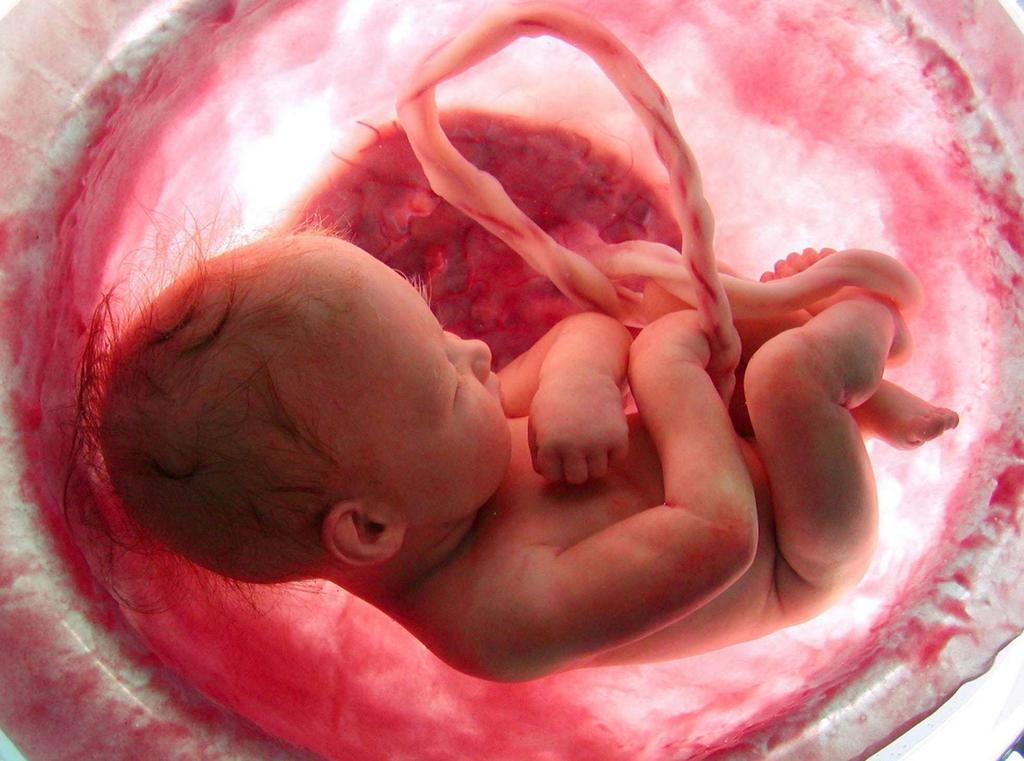
It is unimaginably painful for me to think about losing a child, let alone two! Jacob faces such a loss. In this week’s parashah, Vayigash, Judah almost inexplicably approaches the grand Vizier of Egypt, ie Joseph in disguise, and admits all the secret sordid story of selling their brother into slavery. Told that Benjamin would be enslaved (after finding the planted silver goblet in his sack) Judah says “take me instead” explaining that his father’s heart would be broken. Joseph is so moved, he commands all his staff to leave, cries, and unmasks: “I am Joseph your Brother, does my father live? R’ Shai Held points out that by dismissing his staff, he is vulnerable, it’s 11 against one. Rashi’s (French Medieval commentator) comment, is that he could not bear to shame his brothers by exposing their misdeeds at the expense of his very life! Why would Judah do this, after the brutality of his former life? The humanizing of Judah had everything to do with the birth and loss of his two sons. His admission of a hidden act with Tamar, taking responsibility sets the stage for his stepping forward to Joseph. Tamar, showing incredible courage, when Judah commands her to be burned for being a prostitute, refuses to shame Judah (In a nutshell: she is pregnant with Judah’s child, she tricked him into fathering when he abandoned her to being a “chained woman”/ aguna, after his sons, her husbands, died) Instead she coolly shows the cord, staff and seal of Judah, and explains “this is the father” Judah pronounces, “she is right” He is able to have EMPATHY “em- pathos” to be with someone in their suffering, and make it impossible to break his father’s heart again. To really love is to risk loss. Perhaps that’s why Jacob cried when he kissed Rachel. It is why Joseph cried, for all he had lost, and was his to regain. The ultimate cord of connection, the umbilical cord, never really completely d i s a p p e a r s. To study fully, check out the sources on my Sefaria page . Writ large, this bringing of parents and children aligned in empathy could change the world! “A world of Peace, war will cease, I can see you are me in disguise, gonna wipe the tears from your eyes…”~Ira Scott Levin

Just Breathe for Qohelet/ Ecclesiastes

I  spent a day last week with one who was dying, body failing, spirit hovering. The hospital machines whirring and spinning, some would soon be removed. “Breathe” urged the loved one to the dying one, when every breath was painful effort. “Breathe” and for him she did for a few more days.

Hevel, merest breath”, is our life, says Qohelet, (Q1:2) Biblical book of wisdom. Yet merest breath is a Divine gift, and cannot be forced.    “It sucks, said the loved one” “Yes” I replied, validating his sorrow and anger.  “Only love is as strong as death,” (shir ha’shirim 8:6 )I suggested, but his need/desire was too great to let go.

  We seek insights on what it means to be alive and in relationship with others. In the ancient Biblical words of Qohelet we find  wisdom to help us gain perspective and understanding of the enormous issues of where G8d is in the passage of time and mortality, and why bad things happen to good people in the presence of a loving G8d. This gift of wisdom is not unique to Jewish literature and also appears in the ancient Chinese wisdom of Lau Tzu’s Tao te Ching. Of the beloved’s strong need for his wife’s breath “…free from desire, you realize the mystery, caught in desire, you see only the manifestations, Yet mystery and manifestations arise from the same source. This source is called darkness. Darkness within darkness, gateway to all understanding” (TTC 1).

The fact that we are here, as unlikely as that is, is a miracle, as are love, and beauty and goodness. These we attribute to a loving G8d.  However, coming to terms with mortality, the inhumanity of some human behavior, illness and suffering can powerfully challenge us. “no amount of effort can make right something truly perverse, and things that are lacking almost never manage to come into existence in a real enough way to count” (Q1:15) says Kohelot, in the gorgeous melody of a trope that paradoxically lifts our spirits. These words validate our fears, acknowledging their weight and their shared human concerns. All people in various cultures who have sought wisdom must deal with such questions. We perhaps reject, as I do, a G8d that micromanages, and can make our team win with supplications or animal sacrifices. Just having lived to pursue goodness may have to be enough. In trying to control and fix the world, we have separated ourselves from it, and created ecological ruin. The technology that protects us, uses resources, creates waste, destroying the natural environment, which we are meant to be a part of, Just as the technology that prolongs death destroys dignity, and we must let go in the end.

In this week’s parashah, Yaakov, who has been the heel-grabber, tries to manipulate things to “win” at life, will finally wrestle with his demons and his intense desires to dominate his brother. He will let his family and wealth  cross over to offer them up to his brother, and there see the face of G8d. Perhaps this can only happen wrestling with the Source  in the darkness. In the mystery he will be blessed with disability and re-Named, yet the Tau warns us. …the Name that can be named is not the eternal Name (TTC:1)

  Qohelet, much like the Tao te Ching, says the world can’t be tampered with, or “you’ll ruin it”,  that the Master sees things as they are without trying to control them (TTC 29)…lets them go their own way. Our technology is “shaping clay into a pot, but it is the emptiness inside that holds what we want.”  (TTC 11)  Qohelet recognizes the  “helvel/emptiness inside”. The river of time and events “flows into the sea, yet the sea is never filled” (Q 1:7). It cannot be stopped, we cannot fight it. The spectre of death is also a(n) hevel/emptiness, but one which gives life infinite meaning. The value of humans is not what we can get out of one other, but is in their bonding. Qohelet says “two are better than one…if the one should fall down, the other one can at least help him up…if someone attacks two can fight (them) off (Q4:9-12).  It is brothers that we need!

 In Jewish tradition, Qohelet is read during Sukkot, our week-long festival spent outside, in a fragile hut, unprotected, and open enough to see the stars, and find our perspective in the larger world. We read Qohelet to know that life is ephemeral, and precious: “Do whatever you can manage to accomplish in this life, because in Sheol you fill find no activity, no reckoning, no knowledge and no wisdom, and that is precisely where you are going!”(Q9:10) 

Similarly, the wisdom of the Tao is reflected in Chinese paintings which offer a different perspective, of human beings as a small part of a much larger creation. We can be liberated by giving up control of things beyond our strength to the heavens, in the words of Qohelet: banish worry from your heart, and regret from your flesh, for childhood (life) lasts as long as a breath. Then when we return to our dwellings, perhaps our roof will be unable to separate us from G8d. Our gratitude will be richer for our blessings, and a full harvest, or even death will not harden our hearts. If he can let her go, their love can survive beyond her body.  Perhaps the harmful dramas will abate as we relinquish control. Rather we can be generous with ourselves and others, to “send our bread out onto the water….(and) sow (all) our seeds and not desist even in evening” And emerge into the day and declare “how sweet the light and how good for the eyes to see the sun!” (Qohelet 11:1,6, 10, 7) .

If I can let you go as trees let go
Their leaves, so casually, one by one;
If I can come to know what they do know,
That fall is the release, the consummation,
Lose what I lose to keep what I can keep,
The strong root still alive under the snow,
Love will endure – if I can let you go.