One of the most profound phrases of Torah, is that “it is not good to be alone”. We live during a time of a loneliness epidemic, which impacts our health, our sanity, our ethical character – without empathy there can be no morality. (Vivek Murtha: Our epidemic of Lonelness and Isolation) I believe the source of human loneliness is hinted at in Genesis chapters 1 and 2. Archeology further reveals about earthlings standing upright as the first step toward evolution of humanity. To be human is to toggle between being upright and lonely, and to being humble and in relationship. In Kaballah, even the Holy One humbly withdraws (tzimtzum) to make room for relationship with others. Furthermore I think this toggling reflects the current disconnect in humanity between those who wish to dominate in aquest for more and more power and those who wish to be humbly in relationship with one another, with the land and her creatures. Sources here
In Genesis, chapter One, earthlings (adam in Hebrew) is/are created from the mud of the earth (adamah), and Divine breath. The midrash (Avot DeRabbi Natan on Gen 3:15) sites “standing up” qum in Hebrew as one of the major steps of human creation (sixth hour) Standing is one of the ways we’re like the Angels. Furthermore the primordial human, was really like G8d – stretching and seeing the universe! After the earthlings ate from the tree of knowledge of Good and Bad, The Holy One squished humans down to size. They could not longer stand before G8d, and no longer had standing in Gan Aden – the Garden of Eden. And of course Cayin (Cain) “rose up” to kill his brother, whose bloods cry out to the Holy One from the ground. Then Cayin had to wander, could not stand.
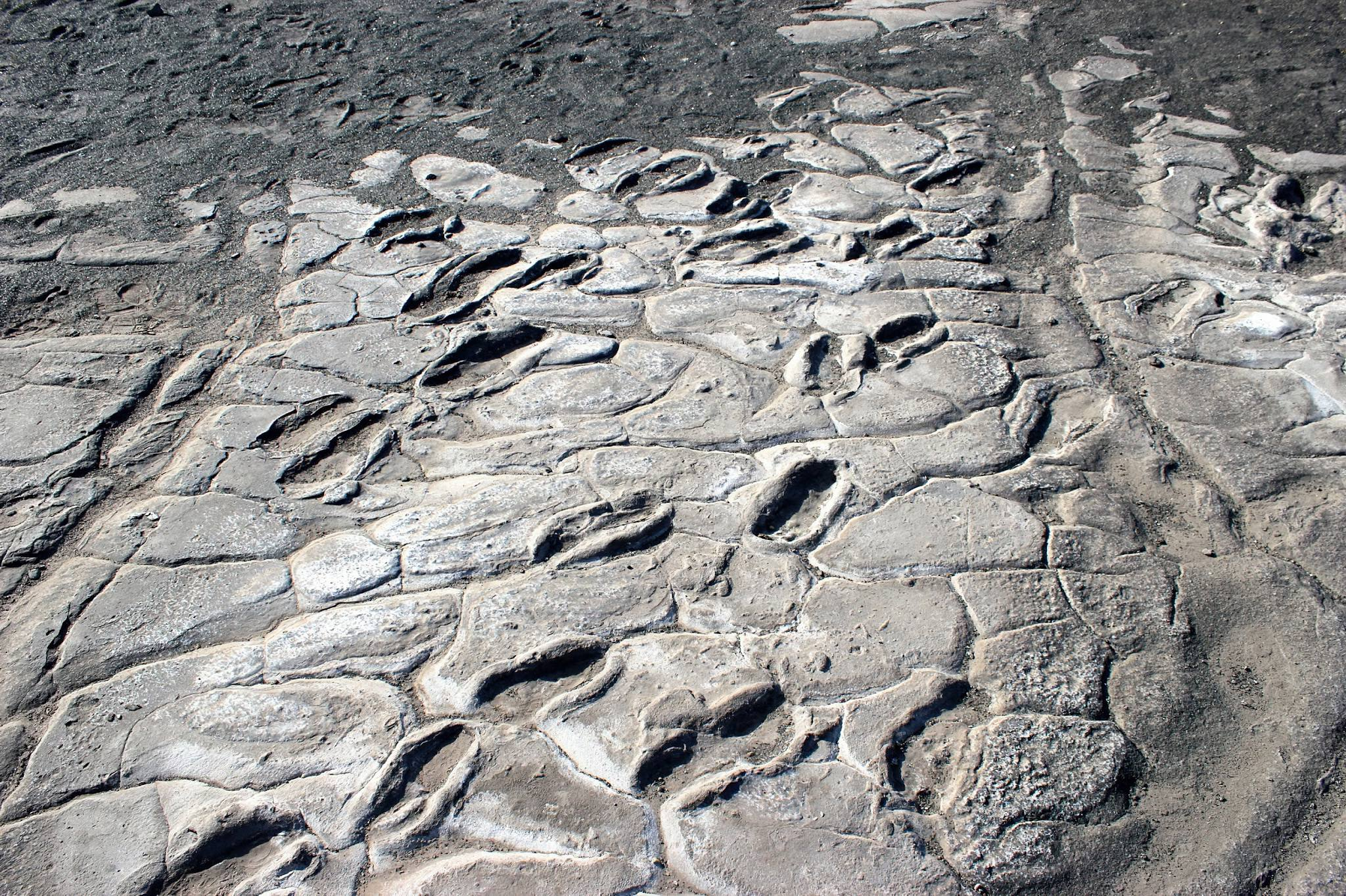
It turns out that in the evolution of ancient humans in Africa, the very first anatomical feature on the road to humanity was… No, not a large brain-case, but an upright stance. More basket-like hips, and the big toe in line with the other toes. There are footprints going back 3.7 million years ago, in which humans walked upon powdery volcanic ash, which then became moistened and hardened by a fine rain, and then covered with more ash to preserve it. Upright stature has advantages in surviving on a plain – of being able to see predators from afar, and freeing hands for carrying and tool use.
What does rising up have to to with being alone? As we tower over other creatures, we are in a position to dominate. In the book of Numbers, to describe how small we felt, when scouting the promised land, the scouts described a land of Giants, in comparison to which we felt like grasshoppers. In fact one of the most derided verses by environmentalists is the apparent permission to “rule over” the animals, in Hebrew “yirdu” Rashi cites the midrash that the word can be read in two ways – to dominate, or to fall. If we are ethical we can dominate, if not we fall. I have translated it as “look down” to capture both meanings. But if we dominate we cannot be in relationship with creatures. Lest you think Adam has no relationship with other creatures – check this out – after The Holy One declares “it is not good for earthling to be alone” G8d brings…each type of animal to see what the earthling will call it. Adam had to go through a period of relating to all other creatures, recognizing a unique loneliness before the separation/creation of mates. And the mate is “kinegdo” opposite the earthling, not lower. Only then does loneliness end,(and of course more trouble begins).
We are like Jacob’s ladder when we stand upright, with our feet on the ground and our heads in the sky. Our very first mitzvah, command from G8d is to “be fruitful, become many, to fill the earth and to conquer “her” It was not lost on the commentators that men conquer earth, and may also rule unkindly over women. Height and might do not make right! In Genesis chapter two, the androgynous earthling will lie down, asleep when his mate “life-giver” Chava comes into relationship with him. And we will always be a toggler between standing and lying down.
~Inspired by Aviva Gottlieb Zornberg’s Reflections on Genesis, “Standing Upright” page 20!
To love God is to love creatures, your near ones, and the immigrant.
We prayed: Shema Yisrael, but it is no ordinary prayer – it does not even address G8d. Whom do you hear it addressing. Listen up you Yisrael – G8d wrestlers/ singer. V’ahavta.Love of God is one of the three loves commanded in Torah. But who or what is G8d, and how can we love G8d?
We are not capable of knowing what G8d is. According to Maimonides, born as Moshe be Maimon, known as the Rambam he was born in Cordova Spain in 1135-ish and died in December 1204. A brilliant physician, scientist, philosopher he taught:
to love G8d, one must contemplate God’s pure and holy CREATIONS! -& we must remember, the great principles of the Creator of the world. … miracles are found in the wisdom of nature and geometry.. Anyone who wants to know the miracles based on God’s words should strive to study… until they know the blessed Holy One through G8d’s creations
. Rambam knew from personal tragedy the power of knowledge of nature.. A person should not go on a voyage in dangerous seas, and expect divine providence to save them! So did his younger brother david, against his advice. His beloved brother perished, leaving a widow and child/ Rambam was devastated. Only devotion to his wisdom studies – Torah, science, philosophy could raise him from his sick bed, bring him back to life from heartbreak. How could Rambam love G8d after such tragedy?
Rambam’s words answer: learn about nature and you will learn to love G8d
In his most controversial work, Guide to the perplexed, written purposely as a mysterious letter to a confused young student, he writes that to interpret the Bible literally is, for the thinking person, the biggest obstacle to true love of G8d and is in effect – a form of idolatry!
Who is G8d for you?
For me G8d is the mysterious connecting and creating force in the universe, filling the interstices of the universe. This power emerges when things are in supportive relationships. And it gives rise to everything – from atoms to cells, from creatures to communities – everything. It is evident as the plus factor where and when the totality becomes greater than the sum of its parts. We are much more than a bag of organs. There are several such forces (ask me later) but most importantly for us, love.
A story to illustrate this love from our tradition
It was Friday morning, the eve of Shabbat that a group of hasidim set out to journey to the town of Lublin, in Poland, to spend Shabbos with their teacher, Rabbi Ya’akov Yitzkah, known as the “Seer of Lublin” Among those traveling was Reb Dovid of Lelov, who had a reputation as a great lover of animals. They set out early, and there should have been plenty of time, but there was a bridge out, so they had to take a detour and a boulder to be moved from the pathway, not to mention rush hour traffic jam (only kidding) and the students arrived just as the sun was about to set!
Not wanting to be late, and miss the teacher’s wisdom they quickly tied up their horse and carriage, and ran into the synagogue. All, except Reb Dovid.
Back at the synagogue, the Seer of Lublin noticed that Dovid was missing. He sent the others to look for him. They searched, and where do you think they found him? He was at the stable, feeding and watering the horses. “What are you doing here, Reb Dovid?”
He replied, the horses were tired from the long journey today, and hungry and thirsty as well. I stayed behind to care for them.” And his face shone from the joy of the mitzvah of baal tzarei chayim, preventing the suffering of animals. It was this joy that the Rabbi could see!
In Hasidic Jewish tradition God can be found in each creation and reached through each pure deed. And we must Be Torah, not just learn it
Jewish Renewal considers itself to be a new Hasidism
Torah has two more commands to love – your neighbor, and the immigrant or stranger – This latter is the most often repeated mitzvah – we should remember that we were oppressed immigrants, and remember Not do that oppression, but to reach out in love.
A story told by Dr. Rachel Naomi Remen z’l’ from her work with cancer patients at a retreat. One man, Yitzhak, an immigrant from poland was 2 years from diagnosis with pancreatic cancer. Brilliant and hard working, Yitzhak became a physicist, and came to the retreat to engage the power of his mind to help beat the cancer. A very loving man to his family, he was very uncomfortable with the touchy feely culture of the retreat. Vat is all dis “huggy huggy vit strangers” he would say. He let folks hug him anyway, relates Remen, After several days of silence and yoga, Remen says, sometimes folks uncover deep truths. Yitzhak related an experience of a beautiful and tender” pinkish light that felt like he was inside a rose. But then,, he realized this light surrounding him came mysteriously from his chest. He described it as a hemorrhage, It frightened him and made him feel vulnerable. It turns out Yitzhak was a child survivor of a concentration camp. He learned to protect himself from hurt by restricting relationships and love to his family only. This was borne of a fear, which he had become aware of only now. But as the end of the week approached , Yitzhak seemed to relax a bit more. Dr. Remen asked him on the last day how he was doing “Better!” Yitzhak replied. He explained that the day before he had a walk on the beach, in which he had talked to G8d. What did G8d say?, Remen Asked “Ah rachel-le, Yitzhak said, I asked the Holy one of Blessing is it ok to love strangers? And in his heart yitzhak hear this answer “yitzhak, vat is dis “strangers? You make strangers! I don’t make strangers! I don’t know how long Yitzhak survived. But i do know that at any age, the blooming of that inner rose is possible. teshuvah a return to the childhood G8d- spark, the one before the trauma is possible, And for Yitzhak this pathway to joy and inner healing happened after a lifetime
We began by singing Shema Yisrael and asking who is God and how can we love. We explored the The 3 loves commanded in Torah – G8d, which can happen even through tragedy, as Rambam discovered by a love of wisdom of nature. Including as Reb Dovid of Poland by loving creation. Loving family friend & by loving the immigrant. How do we love them – Bchol levavcha.. With all your hearts, soul and all! Will this cure your heartache, your cancer? I don’t know. But I know going through whatever life brings us with a heart filled with love is an amazing way to live and can ultimately redeem those sparks and heal a fractured world. I urge today. Open your hearts a bit past your comfort zone. Choose one way. Tell your loved ones you love them. In the words of the prophet Micah – Just do what’s right, love kindness and walk humbly with your G8d.
With honor to my teacher of Maimonides, Dr. Sarah Pessin, Reb Sarah Binah bat Miryam Batya
May I stay amazed! Some folks and all toddlers are amazed with life. But how do you maintain this sense of “radical amazement”, as Rabbi Abraham Joshua Heshcel says – how can you avoid the burnout.
I once saw a sign on a coffee house window, which I never forgot: middle age is a time when a narrow waist and a broad mind swap places!
Recently I began to wonder – what is the connection to cafe?
A bit of history of coffee from Britannica encyclopedia, just because it’s so interesting..
Wild coffee plants were native to a flat region in Ethiopia known as Kaffa. One legend of its discovery is that of a goat herd who was curious – his goats were performing strange antics! He followed that curiosity and sampled the berries the goats had been munching on. He felt exhilarated. And viola! This is the year 850 or so of the common era. From ethiopia, the beans crossed the red sea to Yemen where they were grown.Sufi monks brewed the bean, and used the resulting beverage to stay up all night and praise through the night. Making its way to the Muslim world, coffee houses began, even though the beverage was outlawed, with stiff penalties. From Turkey to Europe. In London in 1600s a cup cost a penny, Coffee houses became nicknamed penny universities –folks would stay up half the night engaged in philosophic, scientific and political discussion. Make no mistake, I am not pushing coffee drinking, I drink it rarely, and only decaf. I find natural ways to boost curiosity
There is mystery – a deep unknown at the heart of the universe, at the core of life itself.
How do we respond to things we just don’t understand? With fear, or with curiosity – is central to the story of our life!
Someone whom I love dearly is transgender. Just a week ago, A friend who has met them asked me what makes them that way? She was curious of something she did not understand. I sort of dismissed it, I responded “that’s a mystery.The important thing is to love and accept them. She agreed- perhaps her curiosity, and open mind is a reason why?
The dark is mysterious. It contains things imagined and real. On October 29 8:00 Pm a category 1 hurricane reached the shores of NJ, where I lived. It collided with a cold air mass which pulled it up the Jersey coast, turning it into a 900 mile wide super-storm named Sandy The damage was tremendous. 8.5 million people were blacked out, including my home. That’s when I first felt that G8d was present even, perhaps especially in the darkness.
The interplay of light and dark is mysterious, Where were you on August 12th of this year/thousands flocked to Spain to see the Total eclipse of the sun. This twilight darkness during daytime – it fills us with awe. It was very moving, emotional, said my daughter. She could not describe the emotion – it was not joy, no ordinary emotion. She is a person of words, a voracious reader. For the second time in her life she was speechless. The first time was at her wedding. The stars fill us with one kind -Awe of G8d transcendent, and love is the signature of G8d imminent. Unfortunately At about the same time, fires, heat waves and drought raged in Spain,later that month catastrophic mudslides devastated Nepal-Tibet border, as retreating glaciers destabilized mountains, The cause of these disasters is not mysterious, the sad consequences of a world that will not stop burning fossil fuels, for some mysterious reason…btw climate change threatens the future of coffee crops.
The word “yirah” in Hebrew, is super important to understanding G8d and Jewish spirituality. But Yirah has two related meanings: it means both fear and awe. Both were in full play this summer. But fear tends to close the heart, and awe to open it – how could one word mean both?
What fills You with Yirah? fear? With Awe? Perhaps these things are not so separate. A year ago I got to hold my first & possibly only grandchild, I gave to him his Hebrew name, Shalom, from my dad, who died many years ago. In January of this year I was at my mother’s side when she passed away. Birth and death, the reminders of time and mortality fill us with awe and fear – there is the unknown- darkness mystery, danger and in each. And in that darkness G8d is with us: Every beat of that baby’s heart, a complex dance of proteins in split second timing -every beat is a miracle, and so is the heart’s capacity for love that outlasts death.
The Awe of G8d can be found – by being amazed by creation, by creatures,
Hummingbirds hearts can beat up to 20 times per second during flight
A seed – contains a plant embryo, and enough food to start a redwood tree.
But plants that heal can also poison – all parts of the foxglove plants are deadly, yet from these can be extracted the potent heart medication digitalis.
A story from our tradition.
Medicine
Rabbi Baruch was Tzaddik in Poland, leader of his community, He had a beloved daughter, Rayzel
. His daughter was ill, and though he prayed, she had gotten worse so Rabbi Barukh went to the city and bought medicine.Rabbi Barukh stared at the bottle, realizing that some of the herbs in the remedy were poisons! He experienced yirah was scared, amazed, curious – how could it be? And why didn’t G8d just heal his daughter from his prayers
If it is Your will Holy One that my daughter, Raizel recover, she would need no medicine. But if You make your miracles visible to all eyes then no one would need faith. So You cloak your doings in the processes of nature. That is why You created healing herbs. Baruch began pacing again. But why are they poisonouos, and why do we give them to the sick? An answer came to him. A little background into Lurianic Kabbalah
AT the beginning of time there was only G8d. G8d longed to be in relationship, and so withdrew and placed some of G8d’s light into vessels. The vessels weren’t strong enough and so they shattered, and the shards, containing sparks of the light formed the material world. So the answer came to him. Aha – the sparks of plants yearn to return to you.
But how can the sparks that fell into poisonous herbs be redeemed? G8d intended them for the sick: and when used with holy intent, the patient redeems the poisonous plant – it too can be reunited with its source.
We are here tonight connect to the Creative Power of the Universe, and the only way to do that is to always be curious,, to always learn -to allow the Awe to grow in you, until says Rambam, the love of the this power fills you,
Maimonides the great medieval philosopher, physician and Rabbi talks about Yirah from his Mishneh Torah
Yirah h is divided into…two parts the first of these parts is fear – fear of consequences, of punishment. Some fear can be helpful, keeping us from getting in trouble, giving us wisdom
The second is the “end of fear” which is awe, which is attained after fulfilling the commandments according to Rambam, the very reason for the mitzvot is for humans to cultivate, or attain Awe of G8d! And following the awe is love of God, which we will return to tomorrow.
So we asked how can Yirah mean both fear and awe? One answer we’ve explored – is the things that provoke them are not so different – but our reaction – do we close in fear or open in love?
Another possiblity
Rabbi Shai Held in the name of his teacher Bernard Steinberg, “Awe is what happens to fear when it stops being about me” – I stop thinking of the consequences to my body, my ego. I can think about G8d. When my mind travels beyond my personal concerns to the wonder of being alive. Life itself, a miracle of the highest order, every second of our existence a complex world, Our own consciousness, an order beyond that. We are here to be grateful for our lives, but beyond gratitude is praise,
This gratitude awe and love commands us to choose and protect life. Especially in the darkness, especially if we don’t understand.
Our tradition has a pathway to live a life of gratitude and awe – says the Talmud, each person is to recite 100 blessings each day. 100 time each day we are to say “wow” – and bravo to the composer! To see each sunset and twilight as a total eclipse of the sun. To be wise to the dangers our actions evoke, consequences such as superstorms and glaciers melting and to have a healthy fear of them. To know in our hearts that G8d is present especially in the darkness. To know that a cup of coffee is amazing, you would not be able thank all the i people that helped bring it to your doorstep, but you can thank the source of seeds and rain and the human mind. To thank the Creator for making us beautiful just as we are, and to remain curious about and grateful for, life.
The traditional blessing begins Baruch ata Ad*nai, You are the source of blessings oh Holy one. Think it’s difficult? Come to our morning services – for a gratitude and awareness – a yirah bath. It’s much easier with friends, One prayer alone contains 19 blessings. I challenge you this year – 100 wow and bravos per day. It has the power to change you and the world.
This is the time of year to “Return”–to do Teshuvah,in Hebrew, as we lead up to standing before God on the High Holy Days. We search our souls, identify our faults, offer apologies, and offer apologies to the Source, perhaps for not keeping G8d before us always (psalm 16) The meaning of teshuvah is clearly “to return” though it is sometimes translated as “repentance” — But return to what? Shlomo Carlebach’s song “Return Again” sung here by his daughter, Neshama, explains that we are to return to the “land of the soul” and “to who you are…born and reborn again” Hashiveinu, from lamentations, offers: “if you return us, we will return”. In other words Teshuvah, which we are told in Deuteronomy 30 is “not too hard or too far for us, but in our mouths and in our hearts to do it” is actually hard -we need the help of the Holy one of Blessing! In the same way, where in Deuteronomy 10 we are commanded to circumcise our own hearts, in Dueteronomy 30 we are assured to have G8d’s help with this task as well. Sources here.
The word Teshuva, is from the Hebrew root Shin, vav, vet, and is repeated over and over again in chapter 30 of Deuteronomy (archive source) In verse 3 alone it’s repeated three times (!), and in a puzzling way. I have added verse 4 for its poetry and beauty.
And YHWH your God will return your “sh’vut’cha“, and have compassion on you: G8d will return to collect you from all the peoples, If you be led away to the ends of the heavens, from there YHWH your God will collect you, from there he will take you,
But wait – How can G8d return? Is the Holy One in exile, and why is it repeated so often?
Many sources – Rashi, Zohar, all make a case, that when we are exiled – spiritually or physically- that G8d or Shechinah is with is in our exile! And that G8d takes us each by the hand to return us to who we are. The repetition of shuv so many times can refer to: spiritual or physical, G8d and the People of Yisrael. It can refer to the good parts of us with the parts that stray. The third repetition is from the word “sh’vutcha” – your returnings. Tanya says that when we do teshuvah, the letter “hey” will be returned to us, making us complete – as Avram and Sarai received the letter “hey” added to their names.
Tomer Devorah, an ancient mystical work often read during this time claims the world was birthed with the letter “hey” and where the baal teshuvah – the returnee stands, not even the tzaddik can stand – it’s a greater route around the outside of the “hey” then up through to the open window. G8d’s forgiveness is greater than ours, and even allows those who have really missed the mark to rise higher – their own love traversing a longer distance as well as G8d’s love. This is the gist of Jonah.
Maimonides allows there are three levels of “Yirah” – the lowest is fear of G8d, the second is awe, gotten by means of awe of creation, and the highest is love of the Holy One.
Chapter 30 contains the exhortation to choose life that we and our children may live. Ibn Ezra’s comment is my favorite – to live is to love.
I propose that return means to return to loving – ourselves, in spite of our flaws, one another, and the Creator of life and love
…it’s how small we tell ourselves we are in comparison. We live in challenging times, the truth is for sale – Lies are peddled today for profit or power. And fear is the emotion that sells. And fear becomes hate.
This week’s portion is Sh’lach, meaning “send” and begins with the choosing and sending of scouts to tour the Promised land. This venture will end in catastrophe. The scouts famously bring back giant fruit, they have to carry it between poles it’s so big, and explain that there be giants there and even mythical creatures, Nephilim who fell from the sky. 10 of the 12 scouts send out words -slanders Yotziu dibat ha-aretz some are true, some false, to intentionally create terror. They lie to try to convince the people they have only one option”, they explain – to go back to Egypt, the real land of milk and honey., the land will eat us!
we were in our eyes like grasshoppers, and thus were we in their eyes!
What’s so wrong with feeling overwhelmed, feeling inadequate, or like a grasshopper in your own eyes? And what’s the a subtle lie in the verse –we cannot know how we appear in someone else’s eyes! Perhaps these are the most damaging lies -the ones we tell to ourselves -about ourselves! “I’m not good enough, I am worthless” . According to Sforno, the Israelites thought G8d hated them for their sins, and so were bringing them to die. Perhaps these former slaves have internalized the hateful words of their brutal slave masters.
So how can we counter these feelings? How remember we are children of the Divine, and how hold on to the moments of clarity and inspiration?
When you need more than your own understanding, lean on the power of love
The wisdom you’ll hold is worth ten times the gold that some sell their souls for in vain
and a Peace that surpasses every thrill on this plane
is heard when your soul calls your name.
When you experience a calling, when you’re true to that – your soul calls your name – To abandon that calling is another thing the spies were guilty of. The Israelites should have known that G8d was with them: they lived the miracles: redemption at the sea and revelation at Sinai. What a gift!. What do you do with that inspiration? You want to hold it, to let it guide your life. In Sh’lach instead, words inspire fear, and fear leads to violence. Soon the whole community threatened to pelt Joshua and Caleb with stones (Numbers 14:10)
a. acting from fear
b. by mixing lies with truth
c. by forgetting that God had been with them, redeeming them against all the odds
d. by belittling themselves
violence and chaos errupt. A few verses later, the scouts have worked the people up to a mob that plans to stone Joshua and Caleb.
June is Pride month, where the LGBTQ+ community declare, we are in the Divine image, God is with us, we have heard our soul call our names. Before covid, while I was still teaching full time at Brookdale, the campus one night went on full security alert – a suicide had occurred and the person trans.n I had another trans student who was homeless when their parents kicked them out on the street. The suicide ideation rate is upwards of 50%-80%, it is a matter of life and death.
How can we remember in this crazy world that G8d is with us?
Perhaps. That’s what our tradition is for (show talit)
A story: Tainted wheat
There once was a Queen, beloved by her people. One day her chief advisor, Menachem approached her with a very worried expression.
What’s wrong, the Queen asked? Your majesty, it’s the wheat. It has been infected with a mold – it has spread to every field in the kingdom.
The subjects will have no choice to eat bread made from this wheat or they will starve, but when they eat it, they will lose their minds, they will see visions, they will not what is real and what is imagined.
Don’t we have an emergency reserve stored up” asked the Queen. Yes, replied Menachem, enough to feed one person.
What should the Queen do? Feed herself, and watch all her subjects go insane?
Menachem, You shall eat the wheat. But your majesty, you will not know what is right or wrong. Ah yes, but I will look to you Menachem, and you shall give me a sign, and I will know when I am veering from the right path.
What is that symbol, you ask.
When the whole world’s gone insane, our tradition brings us back to center.
The tzitzit reminds us like a string around our fingers. The last verses of this weeks reading is about these reminders. When we see them we are reminded we live in a crazy world, and there is a deeper truth.
And don’t mess with grasshoppers, when they face drought the transform into….locusts – together they are a force to contend with!
This week’s reading in “The Torah of our Lives” is Naso. I spoke about Hair on Thursday morning. HERE is a post I wrote about Hair, the mystery of why a Nazarite is not to cut their hair.
My middle child was born with a shock of black infant hair. So was her baby! In both cases it wore/ is wearing off, and new, somewhat lighter hair will grow in. This child was the smallest of the three, and I used to recite a stanza of a William Blake poem to her each afternoon as I gave her a sponge bath on the countertop in her carrier.
Years later, remembering these scenes from her infancy, I blended these words into the Priestly Blessinng, the Birkat haCohanim, which is also from this week’s Torah reading, immediately following the laws of the Nazir: Numbers 6:24 Sources here
(22) יהוה spoke to Moses:(23) Speak to Aaron and his sons: Thus shall you bless the people of Israel. Say to them: (24) יהוה bless you and protect you! (25) יהוה deal kindly and graciously with you! (26) יהוה bestow [divine] favor upon you and grant you peace! (27) Thus they shall link My name with the people of Israel, and I will bless them.
When my children were little and growing, I would channel these blessings, as a parent is entitled to do, even if you’re not a kohen, a descendant of Aaron. Notice in verse 27, it is not YOU blessing children, nor even the children of Aaron, but you become a conduit for G8d’s blessings. People do not receive enough blessings. I have learned from Rabbinic Pastor Leon Olenick (pic and bio below) how to give people blessings, at a class he presented at the Renewal conference Ohalah. What an amazing feeling to be a blessing channel. I just really listen intently to what folks say when I ask them what they need most from the universe right now, close my eyes, and open my heart.
I dedicate this to my child, and the child in us all
PRIESTLY BLESSING by William Blake and Miryam Wolfson and Numbers 22
To see the world in a grain of sand
and Heaven in a Wildflower
to hold infinity in the palm of your hand, eternity in an hour
when I look at you, my child, I vow to try to keep you safe
I pray that G8d will be with you always
Y’varech’cha Ad*nai v’yish’merecha, May G8d bless you and keep you
Ya’er Ad*nai panav eilecha v’chunecha May G8d face you and grace you
Yisa Ad*nai panav eilecha, v’yasem l’chah Shalom
May the light of G8d shine down upon you ____name____
May you be blessed with wholeness, with peace
May you be blessed and bless others!
Leon Olenick
Leon Olenick is a Board Certified Chaplain, Rabbinic Chaplain, Author and Spiritual Counselor. He coordinates Adat Ha’araphel, Congregation of the Cloud, a Jewish Renewal Community, which meets on-line the second and forth Shabbat morning of each month. Ordained by Reb Zalman z’l, Leon’s wish is to create a ruach ha kodesh, a holy experience for all. He is married to Judaic artist Jackie Olenick, has 3 children and nine grandchildren. (as of 2 years ago)
Leon and I co-lead services with other renewal voices live-streaming on the second and fourth Shabbat mornings of each month.
Kol ha-Olam kulo Gesher tzar m’od, v’haikar lo hit’pached klal ~Rebbe Nachman of Bratzlov. There are times in our lives when “all the world is a narrow bridge, and the essence is not to en-fear ourselves”
These are difficult times. The ikar the essence is not to make ourselves crazy with fear. In our cycle of readings, we begin the book of Nsumbers this week. This book is called BaMidbar in Hebrew, meaning “in the wilderness”, which is where we will be wandering for next 40 years. These years are a time of love as well as conflict between God and the Redeemed formerly enslaved ones – Yisrael, a crucible in which a people emerge, but only a new generation. The conflict is born of fear in this new book of the Torah – fear of the wilderness full of snakes, fear of thirst and hunger, and fear that they were too small, as small as “grasshoppers”. And out of fear came all the woes of the generation of the wilderness –Beloved by G8d, yet doomed to die there. As Yoda said “fear is the pathway to the dark side” (the rood yada in Hebrew means to know) There are several links from Bamidbar to the upcoming Festival of Shavuot, which celebrates Revelation at Sinai -which is in the wilderness! Even with all the complaining and dangers, it was also the place of love between the Holy One and the nascent people of Yisrael – the G8d wrestlers, dancers and singers. That connection is seen in Song of Songs, with the echo of a “banner of love”
It was a particularly harsh wilderness, there would be great strife, and great love in this wilderness. There is no worship of the blessed Holy One except from darkness, and there is no good except from evil. When a person enters on knowing an evil way and then abandons it, the blessed Holy One is exalted in His glory. Therefore the perfection of all is good and evil together, ascending subsequently as good;…This is perfect worship.~Zohar
Jeremiah (31:2-3) tells that although they too flawed for a covenant with the land the Israelites are beloved as does Rashi (1:1) explains the counting of the Israelites. But perhaps there was no way of becoming who we are without the challenge of the wilderness
The circular arrangement of tribes around the mishkan/tabernacle following the counting is the shape of aspiration – for all to be equal in the circle dance, with G8d at the center of their lives. The banners arranged by their father’s house – many have animal logos, perhaps reflecting the zodiac. The four directions are mentioned, with Shechinah/ Malchut (see zohar) and G8d centered aspiration. These echo many of the shapes in the ancient mystical Book of Formation/ Sefer Yetzirah and represent the ideals of forming a new people.
In addition, the circular arrangement of tribes under their banners is an attempt to take control of the unknown and the wilderness. By numbering each man of fighting age we can seem formidable, by this beautiful arrangement take down some of the fear provoked by a wilderness.
Governments today, just as the ancient Israelites did are responding to fear, stress and doubt, causing them tostray very far from those ideals. In our time as in Biblical times, we hold out hope that a new generation is better prepared to approach and fulfill those ideals. If we don’t let our fears of the other, the unknown wilderness get the best of us.
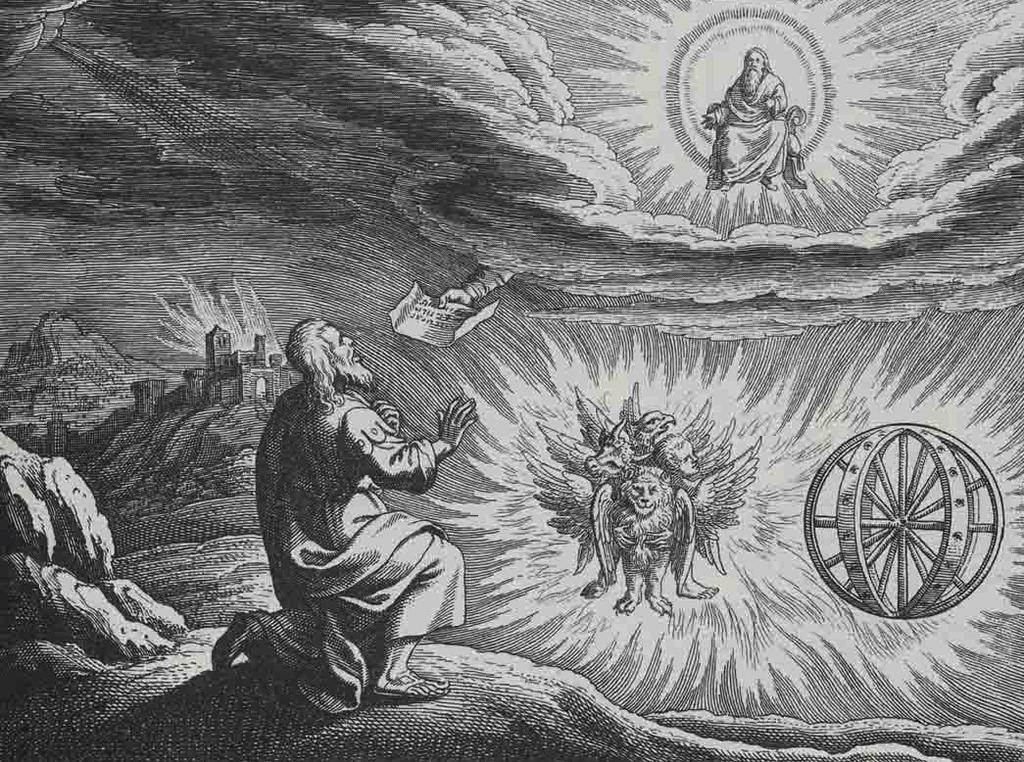
On Shavuot we also read from Ezekiel’s psychedelic vision of G8d. Ezekiel’s chariot –merchavah in a hyperlink from Shavuot to the banners in this week’s reading.Below: Ezekiel’s Vision according to Matthaeus (Matthäus) Merian (1593-1650) –
But what about the limitations of someone with a physical disability, or the ultimate limitation of mortality?
This week’s Torah Reading, is “Emor” meaning “speak”. The root of the word is repeated three times in very short order. The word is not the only way to command “speak!” and its repetition has drawn commentary. For me the most interesting is from Mei HaShiloach (Rabbi Mordechai Leiner, 1800s) that “emor” means to whisper to the Kohanim who have these limitations put upon them.
“Emor – say,” means speaking softly.. G8d enjoins us to whisper into the ears of the servants of G8d that they should not hold grudges when it comes to G8d’s stern judgment, for the intentions of G8d are always in order to improve (sources here)
I love the chesed in this interpretation of how a person should speak limitations to another, and how G8d does!
This reading, like much of Leviticus, contains many laws that only pertain to the Kohanim, the Priests who offer other folk’s offerings to the Holy One of Blessing. So, why read them? Perhaps because we are meant to be a “nation of priests and a holy people”. Also, there are still descendants of Aaron, who will not go to a cemetery. The reading begins by telling the Kohanim not to approach the body of one who has died unless it’s a very close relative – it turns the Kohen tamei –ritually unprepared. Life is the the most magical thing we have, it is the gift that ties us to our Creator. On an emotional level, this law makes sense. Some illnesses also makes a priest tamei. However, does this taboo keep us from mitzvot of comforting the dying and honoring the dead? More importantly does it make the death of loved ones something that we see as unnatural, and make us unable to deal with it? In my childhood, I was shielded from death and dying. My grandpa left me in the car to visit his mother in the nursing home, and when she died, I was not taken to the funeral (or any funerals!) Many years later, I was pregnant and told not to come to the cemetery for his funeral. I was rarely taken to a shiva, memorial in the home of the bereaved. Mortality is the ultimate blow to our aspiration of being “unlimited”
Chapter 21 of Leviticus goes on to say to those who have a moom –a blemish on the symmetry of their body, or a birth defect or a broken limb. As Chapter 21 of Leviticus continues, it tells the Kohen that he is never to approach the Altar with offerings – in other words -not to be allowed do the job he was born into. These verses deeply trouble me, They imply that these men were less worthy. Does this come from the idea that beauty is gifted to those worthy, and that “ugliness, disability, deformity” are reflections of being less worthy intrinsically? I once saw a version of Cinderella on a kid’s show on Reading Rainbow, which showed the “ugly stepsisters” as being beautiful in the beginning. With each cruel act, their faces and bodies would twist until they appeared “ugly” toward the end of the play. The tale of Cinderella is problematic in so many ways, (a discussion for another time) but this move was brilliant! The real test of “beauty” is kindness, nothing else really matters. We are all of us in the Divine image, in all our fabulous diversity, all of our abilities. (See “Twilight Zone” episode “Eye of the Beholder”) In a discussion of politics with a cousin today, he revealed that selects his candidate in part based upon “are they attractive enough to win?” According to Maimonides, Guide to the Perplexed –Sources here –
The multitude does not estimate man by his true form but by the perfection of his bodily limbs and the beauty of his garments.
This is as true today as it was for Maimonides a thousand years ago, and in Biblical Times a couple of thousand years before that. When will we ever learn?
Rabbi Julia Beltzer, in her book “Loving Your Own Bones”, is disabled, and very troubled by these verses as well. When challenged to explain this verse says “I don’t justify it”. She explains, that it is a reflection of the deep prejudice against disabled individuals, and an attempt to assign these values to G8d.
Speaking from personal experience as someone who is at times, medically disabled, I did defy those limitations/gravity. It took me some time, but I overcame the limits that my situation said were true, and I took the leap to apply to, and complete Rabbinic and Cantorial school. I trusted my instincts, trusted in my faith, and leaped. Yet I know there will be limits, that I am not unlimited. When I am afraid, I lean upon my faith, pray for G8d to give me the wisdom to define and respect those limits. I hope these limits are whispered with kindness, but clearly enough to understand. I respect my limits enough to have stopped driving (no, I don’t miss it). But in offering songs of Praise to the One, and being a channel of the wisdom of our tradition to others, for now, I’m unlimited!
What are your limits? How do you know until you’ve tried “defying gravity?” If they are offerings to holiness, to kindness, to truth, may you defy gravity!
This week’s Torah reading is a double one, Acharei Mot/ Kedoshim: After the Death/Holiness. After the death refers to the deaths of Aaron’s two eldest sons, Nadav and Avihu. As discussed previously I disagree with the interpretation that they were punished for some minor deviation from the rules. Rather they were holy men who died before their time. Their alien fire, aish zarah, was not choosing life, but choosing a pathway of union with G8d that led to their death. Sometimes these two Torah portions are read separately, sometimes together, depending upon the year (if there’s a leap month they are separated) This year they are read together. When I worked my clinical Pastoral work in hospice and when my mother recently passed, I wondered if there is any connection between “after the death” of someone and Holiness. There is an intense and mind-raising awareness about accompanying someone on the brink of life. We are more aware, of time and mortality and what lies beyond. The work for Holy in Hebrew is Kadosh, what what does “Holy” mean? and what does it mean to aspire to become holy? Leviticus 19 urges us to do exactly this: Kedoshim t’hyu ki kadosh ani YHVH You shall be holy because I, G8d am holy. There are many uses of this word in the Bible, including in the deaths of Aaron’s two sons (Sources here) Leviticus 10:3 Then Moses said to Aaron, “This is what G8D meant by saying: Through those near to Me I show Myself holy, And gain glory before all the people. What can that mean – is it possible that the deaths of these two makes G8d holy! Spoiler alert: this is a pathway that is not endorsed, so their passion is termed an aish zara an “alien fire”.
The word Kadosh is used for the dedication of spouses during a wedding – Kiddushin, a blessing to do a mitzvah asher kiddishanu b’mitzvotav, and even for Temple cult prostitutes k’deshah (which is forbidden in Deuteronomy) We are in the period between Passover and Shavuot when we count the days of the omer, Each day can be used for self reflection, for self improvement. But in the mystical tradition it’s far more intense than this. I discovered a text by Hayyim Vital, a student of R’ Isaac Luria in the 17th century called “Sha’arei Kedushah” meaning Gates of Holiness. Each of these days he spent in isolation, just him and G8d, each was a gateway to connection or union with the One if he were repentant enough, denied his ego enough. In mystical tradition only Moses was able to enter all 50 gates. (there are 7 weeks of 7 days, and then the Holiday of Shavuot). When you are on the verge of fainting, wrote Vital, you then offer this prayer:
“Master of all worlds, to you it is revealed and known that I am not engaged in this for my own glory, but rather for the glory of Your name, for the glory of the oneness of your being, so that I will know You, how to serve You and bless Your name. Enlighten my eyes lest I sleep the sleep of death. Create a pure heart within me”
…Sanctify your limbs and adorn them with Mitzvot (good deeds) making yourself into a throne for the Divine Presence, your body an ark for the Shechinah! (from p 122-3 Essential Kabbalah by Daniel Matt)
After this section of Aspiring to be Holy the text details many of these deeds to adorn yourself “into a throne for the Divine Presence” including the great Golden Rule of the Torah, “Love your near one as you love yourself” This is the core around which all Torah hinges. These things are what it means to be holy.
This is the fourth level – the sod or mystery – the ultimate aim of aspiring for holiness is those flashes of inspiration and knowledge that all is one, it’s all G8d. This is why kedoshim t’hyu is the same as v’ahavta l’re-acha kamocha in being central pillars around which the rest of Torah and our lives can be arranged and given direction! I suggest that the “ani Adonai which follows some of these commands are to, on this level dissolve the barriers between Ani and Adonai
From William Wordsworth (great name!) Tinturn Abby, quoted in Rabbi Aviva Gottleib Zornberg’s Hidden Order of Intimacy commentary on Leviticus
-with an eye made quiet by the power
of harmony, and the deep power of joy
we see into the life of things
note the synesthesia of the “eye” quieted by “harmony” reminiscent of seeing Sinai’s thunder!
This week’s Torah saga is about empathy for the outcast, when you delve past the surface. On the surface it seems to be a medical handbook, perhaps about microbial control. Tamei is a word that has been translated as “impure” but actually means prohibited from offering sacrifices at the Temple. Giving birth, contact with a dead body, skin ailments that spread, and bodily discharges make a person tamei. Houses and garments can be infected too. It is not the doctor, but the kohen (priest) who inspects and decides whether or not the person’s skin ailment has progressed or regressed enough to perform the ritual to re-enter society. I have written about the contagion before, check it out here; returning following childbirth; and about how this is no ordinary illness, but one of the spirit which becomes visible on the skin. Psoriasis, for example as well as alopecia, lupus are all autoimmune diseases very much affected by anxiety, and stress. The Hebrew word for this skin disease, falsely translated as leprosy is metzorah. Midrash interprets this as evil talk, or gossip. “Therefore, Moses cautions Israel and says: “This shall be the law of the metzorah” the law of the defamer [hamotzi shem ra].” There is a famous Hassidic tale of a town gossip whose tales ruin the reputation and therefore the business of a new arrival in town. When he learns that his words have so wounded, he feels remorse, and goes to the town Rabbi. “How can I set things right?”, he asks. The Rabbi instructs the man to bring him his feather pillow. When he does, the Rabbi opens the window, opens and shakes the feathers loose. “Now go and gather every last feather back”, he instructs. “It’s impossible!” replies the gossip! “Just as your words, true or not, are out of your control once you let them loose.” is the lesson. (sources here)
There is a disturbing verse which snagged my attention. Leviticus 13:45
As for the person with tzaarat (scaly skin infection): their clothes shall be rent, their head shall be left bare, and their upper lip shall be covered over; and they shall call out, “tamei, tamei!”
It sounds pretty awful, I can’t imagine it being me – how humiliating! I would much rather be silent, to hide. If I had a scaly skin infection, that was thought to be contagious, would my crying out keep them away more than my wanting to hide under a rock? I don’t think so! The call of “tamei, tamei” however, can arouse empathy, and prayers for my healing, according to Talmud
On the other hand, what if I am outcast for the sin of gossip? Perhaps now, the public outcry is for the purpose of apology! I learned from Talmud (sources here) overcoming the silence and hiding just might be the reason for this calling out. Calling out in the night can arouse tears of empathy. We are commanded in Leviticus to love your near one as yourself. Silent suffering or silent apologies can both get in the way of that connection between people that is needed in community.
When I walk through the streets of Manhattan, I see forgotten folks. The unhoused are treated as invisible. Their hair is unkempt, their clothes are torn, they are banished from normal activities of life, and unlike in the biblical verses, there is no prescribed way back in to society. Their skin may be broken, or unsightly and people are repelled, perhaps afraid of contagion, or of irrational behavior. And if they cry out in their pain, the police are called. I make it a point to see, to give, to honor them as human beings, each with a spark of the Divine. It’s required in Torah – it’s the foundation of empathy and community. Empathy simply is our hope for a better world.
Recently “Empathy” has been in the news in a way that shocked me. Some were calling it a sin, a weakness Emanuel Levinas wrote in 1934 about ‘Hittlerism” and was inspired to write his argument: that seeing the face of another must arouse within us a sense of responsibility to care for them, no matter what. (source 1) He predicted what would become the Holocaust from an inability to respond with caring and apologies when we err. It is interesting that the crying of the defamer serves both as an apology and a plea to not be left alone forever. When we silence our own or others suffering, we are denied the mitzvah of praying for another, of crying with them, of the possibility of healing.