Torah for now

One of my favorite children’s books is Legend of the Indian Paintbrush by Tomie dePaola.  A young man is different from the other young warriors, he is born for art, for painting. He goes on a vision quest and finds his reality, his fate. And today, flowers called Indian paintbrush dazzle the plains as evidence of his inspiration and insight. http://www.youtube.com/watch?v=gyaifWkUWr0
Yom Kippur was yesterday, and when I took my shower this morning I had the weirdest deja vu experience:  to the morning after my son was born. It was life renewed: so great to take a shower, to have breakfast, to let the morning sun wash over me, to give thanks for the morning, and to ride my bike. A bit as I felt reborn after my own child was born. And I thought to myself, “wow, it really worked!” 
I want to write about the fasting on Yom Kippur. I’ve done it before out of trust and sticking with my buddies who fast. It’s sometimes difficult due to dehydration, and sometimes I just slog on and make it through the day to get to the end, that break fast. Is that all there is? Many that I know do not fast, they don’t see the value, and simply don’t want to.
But out of the trust that the tradition must have deeper value I have fasted. This year I realize that it’s myself I fast for. Friends often try to talk me out of fasting, for health reasons. As I was feeling a bit queasy yesterday morning (new medication on an empty stomach) one friend urged: “It’s Ok to eat, God doesn’t want you to get sick”. I assured her I’d be fine. Later I realized I don’t fast for God, but for me. To know that life is more than an endless quest to satisfy hunger, or habits. To know that food and water are not entitlements, but blessings. To raise empathy for those that go hungry and thirsty. But most of all, it’s my vision quest. http://www.schooloflostborders.org/content/huffington-post-what-vision-quest-and-why-do-one Through fasting to draw near to ultimate questions, to myself and to the possibility of more intensely resonating. And this year I emerged like Jonah. In my head I knew that the world and I still faced giants of problems, but In my heart was  joy. I remembered this song, by Dan Nichols. http://www.last.fm/music/Dan+Nichols+and+Eighteen/_/All+We+Can+Do
“Do as much as you can, with the time that you have, in the place that you are. Eighteen words from a kid, with less than a year to live, Eighteen words from a kid. He knew so much more than they thought he did. Lo Alecha…What can one person do, the task is great and the time is short, words our fathers knew. We can’t do it all but we can all do more…All we can do, is all we can do.” The next lyric cries: “from all that used to be, to all that might have been; there’s no mystery; if we work with what’s in between; All we can do is all we can do!”

Right on.
Hebrew, unlike English, has only three tenses, I’ve learned: present, future, and past. No might have beens. We’ve confronted our choices from last year, made apologies, moved on to the next year with a clean slate. No regrets, no “might have beens” Just all we can do, in


visionquest

Loving Rosh Hashanah

I love Rosh Hashanah to pieces. After all the cooking, the New Year’s cards, the rehearsals (choir), suddenly the prep, is done, all is still. Family members long gone feel close. The air hangs brilliant with possibilities. I stop rushing around and start being, and singing and receiving hugs and smiles. And I smile, and cry and sing (I know I repeated that one…)

This Shabbat is Shabbat shuvah, Sabbath of Return, as we return to the “land of our soul” in the ten day journey from Rosh Hashanah to Yom Kippur. The Torah portion is Haazinu, “Lend me your ears”  From Craig Taubman’s Haazinu http://www.amazon.com/Haazinu/dp/B007NXA8CW

Listen O Heavens and I will speak; Listen O Earth, to my words; may my message be like rain and my speech be like the dew. To Adonai my God I sing praises to you…. Remember the days, the days gone by. Remember the days, Remember, be wise. How Israel is one, one with Adonai. Sing a new song, sing it to the skies.

Rain, dew, earth, sky:  the inspiration and beauty of the world, and the very foundations of life. They must be witnesses to the covenant, just as we must be.

So Listen we must, to the sound of the shofar, to the music of Rosh Hashanah, and the very skies will listen, and the rain and the dew. One more from Craig Taubman, ties the music we make on Rosh Hashanah to the heavens:

Everybody searches; in light or in darkness, unsure of the way, afraid and alone;   Someone who stood right where you stand, would like to take your hand, help you feel, help you see, help you dream your dreams. 

Open up all your eyes, let the truth make you wise; when we sing with one voice, music will fill the skies. We can fly, we can be more than you, more than me; take my hand, we can fly, it can be.

The quality of mercy is not strained, it falleth as the gentle rain from heaven.

Not in Heaven?

300px-kanizsa-triangle.svg-tmThe High Holy Days are coming, and some of the verses we read for Yom Kippur are previewed in this week’s reading: The laws of God are not in the heavens, or across the sea, they are very near to us, in our hearts. 
But how could laws from God not be in heaven?

A fabulous G-dcast cartoon, with music by Eliana Light , animates a famous Talmudic tale. https://www.youtube.com/watch?v=al4FgjbUztI about a court dispute about whether an oven was kosher. One man, Rabbi Eliezar had a special connection to God, but Rabbi Gamliel, Eliezar’s brother in law, disagreed. Miracles from heaven backed up  Eliezar: a tree uprooted, a stream flowed backwards, the building almost crushed!  But another Rabbi, Yehoshua, said: miracles are irrelevant, these are laws for us down here!

Heaven doesn’t need laws, we need them: within our hearts for wholeness, and in the charged up spaces between us for peace and wholeness as a community. But don’t we want deep truth to rule our laws? And why would the Talmud reject divine inspiration and intervention as a pathway to that truth? I’m not sure, perhaps because  we could run into the quicksand of zealots who are misguided or devious, and it’s too hard for us to tell the difference! So, we must figure it out logically and by engaging with dialogue with one another; outside miracles are no fair!  

And yet ideologues in government continue to refuse to engage with the other side, thinking their answer is in heaven.  But don’t we want those who stand up for principles? Yup, but it can’t only be in heaven, when we live it down here on earth.

This week, of course, marks the fiftieth anniversary of Dr. King’s march on Washington.  Was Martin an ideologue? Well, he said famously the arc of the moral universe bends toward justice, and referenced a day when righteousness will flow like a mighty stream, and saw himself, like Moses as one who would not get to the promised land. But he put himself out there in dialogue with many, including many Jews who marched with him and helped craft Civil Rights amendment. He stretched out his neck and engaged  at risk of his life. He taught us about first steps, and crawling toward a dream if you cannot fly. I offer this link to David Berger’s Martin’s Dream sung by Zamir Chorale of New York http://www.youtube.com/watch?v=djpASrrtnTM


Chimeras

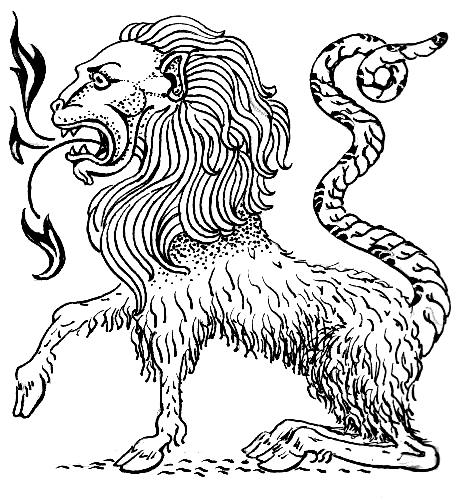
Chimeras were ancient legendary mixed creatures. I think it’s such a powerful image for me because I imagine being a  chimera of all the influences that motivate me, including music, and science and Torah. How about you?Chimera_(PSF)

But here’s the thing: chimeras are real, legend no more. I am engaged in a conference in Genetics this week run by the DNA learning center (Cold Spring Harbor labs). It’s been 30 years since grad school, and I really needed this update in biotech and newer revelations. Science is cold hard facts, right? Not so much! This conference reinforces for me what I know: Its brilliant deductions, philosophy and insights  can blast minds open to layers of reality that were previously invisible. These insights relate to our health, our sustainability, they can predict problems, or solutions, can be tools or weapons. Perhaps it is scientists who are most like the Levites in this week’s Torah reading who proclaimed on mountaintops the amazing blessings if the Israelites did the right thing, and horrific curses if they didn’t. The blessings and curses of this portion capture me, they are the stuff of our dreams and nightmares, and everywhere in this world there are people suffering simultaneously with those joyful.  Our world is a mix, a little like a chimera.

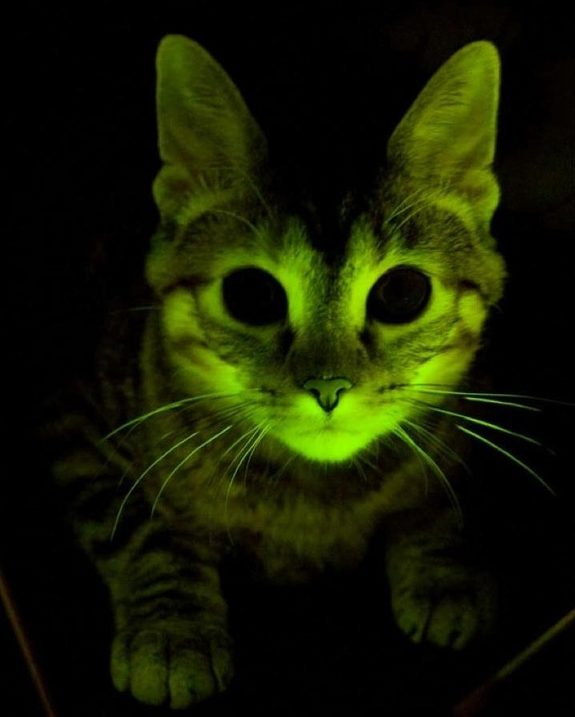
And that brings us to modern genetics. With its tools, we are creating chimeras, mixes of creatures’ genes that have never existed before. With these chimeras, genetically modified bacteria make human insulin, sheep make cystic fibrosis treatments in their milk, pigs grow organs for human transplant (potentially), cats glow with a jellyfish protein (as a tag to see if they’ve taken up the HIV fighting gene). It’s amazing! glowing-cat

But scientists warn us that danger is lurking.  The  instructor, Bruce Nash, of Cold Spring Harbor, a brilliant and funny guy, an inspired educator, http://www.dnalc.org/about/staff/nash.html is studying bee genomes, because we’re in real danger of losing the creatures that pollinate our food to the ravages of pestiicides. We have no alternatives to honey bees, and they’re dying. Many Genetically Modified organisms are developed to clean up pollution, which is best avoided in the first place. In this week’s labs we worked on DNA barcoding plants in a vanishing habitat. Species are being lost at a rate unrivaled since the time of the great dinosaur extinction, 1/3 of all life forms are threatened, which impoverishes and threatens us!  Bruce keeps saying these techniques are powerful, and they are, but I feel that few people are paying attention, too busy with their narrow paths.

Be quiet and listen! screams Moses to the Israelites.  Too much noise seems to be drowning out important messages. Science gives us amazingly powerful tools and advice. How do deal with them. Perhaps with humility and open ears as Moses and the Levites suggest, can help us bring more blessings to this complex and beautiful, dangerous, tortured, inspiring world.  It’s a chimera.

coney-island-wonder-wheel-day

Of all the moments you’ve experienced, which ones are emblazoned in your memory? I am afraid of heights, and I screwed up enough courage to ride on the ferris wheel in Coney Island one day when I was ten or eleven, and it got stuck, with me on the very top. I was scared! I remembered the glint of the sun on the sea, and the sway of the car – I’ll never forget.  As Rosh Hashanah draws close, it is my Grandparents whose memory looms large in my life as I spent the holiday with them: the odors of holiday meals,  the scratchy feel of Grandpa’s clothes & talit as I sat with him to hear the sound of the shofar, the warmth of their smiles and embraces.

History is memory writ large. My daughter has recently graduated as a History major.  In particular, she has taken the tragic history of America’s native people to heart, and is impassioned to show people their story, and to expand that to awareness of all who are trodden.  History and memories are a strongly valued in Jewish tradition, I would even go so far to say we don’t exist as a people without them. REMEMBER WHO YOU ARE! advises Rafiki to Simba (from Passover post  https://margosmidrash.wordpress.com/2013/03/ )

This week’s Torah portion ends with an injunction to REMEMBER the scoundrels Amalek, who attacked us from the rear in wanderings through the wilderness, attacking the most vulnerable among us.  And we are paradoxically told to blot out their memory. Perhaps we should forgive, but never forget. This has become the mantra of how so many deal with Holocaust history. But what is it me must blot out about Amalek?  Perhaps this: shame on us for letting them straggle behind, rather than embracing the elderly, the children!  The uncaring behavior of ours is what we needed to blot out.  Memories are not blank, they come with emotions and lessons – as my daughter’s history scholarship shows.

We don’t exist as individuals, as souls, without memories either.  Physically, the people we used to be no longer exist! The molecules that make you up come from the surroundings: the air you breathe, and the materials you eat and drink. You are completely rebuilt after about three years, made of molecules that, guaranteed, were once part of dinosaurs, of Leonardo daVinci, of Shakespeare. http://www.jupiterscientific.org/review/shnecal.html  The surface of your skin, even on the oldest person, is completely replaced and new every six or seven weeks. Each new day we are reborn, according to the morning blessings.  The ONLY thing that gives us an identity through time, that says I’m the same soul as I was a year or a decade or a half century ago, that tells me who I am, are the ideas and images our memories stitch together as a continuum.

Do you remember the musical Cats?  The song Memories is about Grisabella, the glamour cat, who lives in the memory of her younger self.  What makes it so poignant is how true it is for some. Further, how many of those family and friends we’ve lost to death continue to inform our lives today? Their memories are powerful for us.  http://www.youtube.com/watch?v=4-L6rEm0rnY

Of course, for many the heartbreak is that Alzheimer’s disease,  erases what is so crucial. It is the long term memories that tell us who we are do persists the longest for patients. Ironically it is the loss of memory that drives home just how crazy important it is.

This incredible poem is by Alden Solovy is an ode to the value of History and Memory  http://www.tobendlight.com.

History

History is sacred,
Memory is holy,
Time is a blessing,
Truth is a lantern.

Source of sacred moments,
Creator of time and space,
Teacher, healer and guide:
Thank you for the gift of memory,
The gift that allows us to see beyond the present,
The gift that allows us to remember our past,
And to remember our lives.

Thank you for the gift of vision,
The gift that allows us to imagine the future,
The gift that allows us to learn and to teach
The lessons of the ages,
The lessons of millennia,
So that we may heal ourselves and the world.

Eternal G-d,
Thank you for the gift of history,
The gift of ancient moments and modern tales.
Grant us the wisdom and understanding to see history in the light of truth,
To trust the enduring power of memory to guide us from generation to generation.

Alden Solovy and http://www.tobendlight.com. All rights reserved.

As the passing days bring us closer the Days of Awe, it is our memories that come front and center: memories of absent family members, memories of the deeds and mistakes of the past months, memories of last year’s resolutions, of past Holidays. They all converge to a sacred point in time. Awesome!

Justice, Justice

product_45_border21

Justice Ruth Bader Ginsberg displays the Biblical quote “Justice, Justice you will pursue”. http://www.jhsgw.org/exhibitions/online/jewishwashington/oral-histories/ruth-bader-ginsburg . The classic question “why the repetition of the word Justice?” is often answered by understanding the various aspects of justice. In Kaballah, the two aspects Chesed & G’vurah, which are Loving kindness and strength,  show the two complementary aspects that are the puzzle pieces of righteousness, justice.

But consider this: perhaps Justice is repeated for the same reason we repeat a lyric in a song. So that the second time can be in a different dynamic or in harmony. I Imagine that the first singing can harmonized in a major chord, the second in minor. Perhaps the first singing can be whispered, the second shouted! Only together as a community can justice, or righteousness even exist. Only with many voices, only when the truth can be verified by more than one witness (also in this Torah portion), and with a jury of many. Only in harmony.   Consider this quote from Shakespeare, in the Merchant of Venice, who speaks about justice verses mercy  arguing with the Jewish lawyer, Shylock.

The quality of mercy is not strained.
It droppeth as the gentle rain from heaven
Upon the place beneath. It is twice blessed:
It blesseth him that gives and him that takes….
The attribute to awe and majesty
Wherein doth sit the dread and fear of kings,
But mercy is above this sceptered sway.
It is enthronèd in the hearts of kings.
It is an attribute to God himself.
….Therefore, Jew,
Though justice be thy plea, consider this—
That in the course of justice none of us
Should see salvation. We do pray for mercy,

Wow! Do you see the conflicts? Is mercy the opposite of justice? No, Torah repeats justice to show that mercy is the partner of punishment. Also, William says the quality of mercy falls like rain, but Deuteronomy says we must pursue justice! Justice is not easy, neither is the half we call mercy: wanting vengeance might be easier. I heard recently an interview of a man who was convicted to life in prison through faulty hair evidence.  The conviction was voided and another man (a prosecution witness) was later convicted. This is not an isolated case, hair cannot be “matched” as an identification, regardless of what Quincy ME says!  check out page 2 of: http://www.nytimes.com/2002/10/25/nyregion/hair-evidence-in-jogger-case-is-discredited.html?pagewanted=2&src=pm . There now is a non profit called the Innocence project which pursues wrongful confictions based on faulty DNA evidence http://www.innocenceproject.org/about/   Clearly justice, including mercy sometimes doesn’t fall as the gentle rain from heaven (sorry, Will) QUINCY M.E-900x900

I then notice the “twice blessed” parallels the use of justice twice: cool!  Finally,  the reputation of the Jew is (unfairly),  squarely in the court of punishing, strong justice.    Mercy is not separate from Justice, but at its very heart. It is the path to harmony and community.

One other observation: we don’t call a person sitting on the bench of the Supreme Court a judge, we call her a Justice: repeat nine times.

For a modern musical setting, check out Eric Komar’s Justice, Justice, song seven on the Jukebox at http://www.komarmusic.com/

Too many hungry families sleeping on the street.  Too many addicts trying to get back on their feet.. Justice, justice shall you follow, Tzedek, Tzedek tirdof!

Happy Elul!

Choose! or Not?

The sense to focus on this week is vision. “See that I set before you this day life and death, blessing and curse” are the opening words of “Re-eh” meaning vision/ see. These words powerfully appealed to me many years ago, because they validated my own independence to choose in life, and the possibility that choosing life and blessing are within my grasp!
The song, “Liv’racha” by Mah Tovu conveys drama surrounding the choice. To listen: https://myspace.com/mahtovumusic/music/song/livracha-77875314
But how much steering of our own life’s ships do we have considering how powerful outside forces  and circumstances that influence us are? We did not choose to be born into the time, family, circumstances that we were. Are there certain dispositions determined by our genetics and our upbringing that limit our choices? Fairly new in genetics is a third influence, epigenetics:, from fetal existence on, chemicals in our environment determine gene expression for decades to come. Certainly not choices we have made.  Classical physics of the 1800s was convinced that if they were able to plot the location and velocity of each particle, they could predict the future: there would be no choice at all, due to unwavering laws of nature.  This parallels a traditional religious belief that all is pre-known and pre-determined.

But then came Heisenberg’s uncertainty principle: that one cannot measure location and velocity, that observation would actually change one or the other.  You can check out uncertainty in this Minute Physics short: http://www.youtube.com/watch?v=7vc-Uvp3vwg , Quantum physics further uncovered a world where particles could pop in and out of existence. Uncertainty itself is part of the fabric of existence.  So if uncertainty is back, choice then again looms large. And we do make choices: career, friends, address, whether to risk tangling with life’s dangers….

A midrash  speaks of choices that go against our nature. In a world gone completely violent there was a single earthling that still walked with God. Commanded to build the ark, Noah did, and soon animals were converging upon this righteous family bringing all manner of headaches in their wake the likes of which had never been encountered before. The lion roared I’m famished and began to crouch and stalk other animals. In true Dr. Doolittle fashion, Noah understood and approached the beast. Sir, if you’re going for a ride on my boat, I must ask you not to hunt the other passengers,  pleaded Noah.  Not hunt?!? But it is my very nature to! cried the lioness.  I am asking you to do it anyway so we can make it through this journey together, explained Noah, and when we make it out alive, I will let it be known to the world how regal your species is, true royalty among the animals. And so the lion and lioness agreed not to hunt for the rest of the journey. Just then Noah’s son Shem came running up to his dad as the whole boat began to thump and shake.. It’s the elephants, Shem spurted out, all out of breath, they’re stomping and dancing to the music. They’re going to capsize us all!  So Noah ran to speak to the elephants, urging them not to dance for the duration of the journey.  Not dance!?! But it is in our very nature to dance! trumpeted the elephants.  But when Noah promised to tell all of the elephants’ wisdom and memory, the elephants promised not to dance for the duration.  And so the monkeys promised not to steal, and the mosquitoes not to bite, and the snakes not to strike, each making a choice for mutual survival, but only for the rest of the journey. (adapted from R. Ed Feinstein) Now, lest you laugh, thinking it is impossible for a beast to make choices to defy it’s nature, it is what the human animal sometimes does, and is perhaps one feature that elevates us, making us creatures in Divine image. Jane Goodall uncovered those war-like, savage elements of chimpanzee nature that so mirror our own worst behavior. She considered despair, until an insight, that unlike chimps, we can choose ways beyond such pieces of our makeup. (Reason for Hope, Jane Goodall)

But still unanswered: can Divine knowledge and free choice still co-exist? For me, an answer in  a beautiful story by Reb Zalman Schachter Shalomi. This is an adaptation of a piece of that story.  Reb Chayim returned home from a journey on a river in a row boat with his teacher, Reb Nachum. He explained to his wife Tzillah that in navigating the rapids, pools and falls, Reb Nachum was teaching them the answer to the question which had so troubled them all: how can divine providence and free will co-exist? Now, Tzillah was an artisan, with a brilliant eye and hand for weaving. Come with me to my weaving shack, my husband, and I can answer that question without getting you soaking wet!.  So Reb Chayim followed. There she showed him the Torah cover she had been commissioned to weave, still in the loom. She then took the shuttle with a purple thread and sent it across the loom The warp also had various colors, and it was always important to check these.  She then showed him a similar and completed work in which she’d embroidered beautiful symbols with gold thread.  She explained that the warp was carefully prepared, stretched and threaded to prepare the loom, and once this foundation was laid, it was her choice to select, not only the colors for the weft, but how much energy and care would be put in, and attention to complementing the colors of the warp.  Don’t you see? she exclaimed, the Divine presence is like the warp? It is for us to choose which threads we put into the shuttle with which God weaves the tapestry.  What we add is our love, intention and care.” 

After a long sigh of insight, Reb Chayim composed this hymn for Yom Kippur:

As tapestry is formed, thread by thread, and colof is to texture wed,

Our life is woven on Your loom, we yield to You, save us from doom.

Warp_and_weft

This is the anniversary, on the Jewish calendar, of my trip to Israel in 1996. In this week’s Torah portion, Ekev, Moses exhorts the people to cut away the thickening of their heart, to “circumcise” their heart! So, the tiny paper I put in the cracks of the Western Wall did not have a prayer for healing but for helping cut away that thickening, fully knowing that makes me more vulnerable. As Carly Simon sang “there’s more room in an broken heart“. ( I guess I was afraid of getting an overly thick skin.) The Tin man in Wizard of Oz sang

I’d be tender, I’d be gentle
And awful sentimental
Regarding love and art
I’d be friends with the sparrows
And the boy that shoots the arrows
If I only had a heart.

But if your heart were bare, wouldn’t you cry for the sufferings you see on the evening news, or the streets of the city, would you just be “bleeding heart”? Won’t that just make you depressed? The truth is the opposite depression, according to Lauren Slater, (Prozac diaries) is like a deadening, an inability to feel anything though your senses are feeding you information, like a steel curtain between your soul and the world.

I spent this past week at the North American Jewish choral Festival in the Catskill mountains of New York. We were on a hilltop and the view and the weather were spectacular.  I got to study and sing with the likes of Nick Page http://www.nickpagemusic.com/www.nickpagemusic.com/Music.html; with Eleanor Epstein http://www.zemerchai.org/about_eleanor.htm and Benjie Ellen Schiller http://urj.org/about/faculty/?syspage=article&item_id=97481. Morning prayer flooded with the light of floor to ceiling bay windows began my day in harmony. And my heart melted several times, my eyes welling up, moved by the harmonies, the beauty and the sheer power of music emerging directly from the heart to the rarified air of the mountains

tin_man

Listen up.

I went to a concert on the beach tonight, and a woman was singing in a plaintive voice “I’m scared!…” and she sang about being stronger after a Hurricane took her house. I listened to the music and the words. I listened. I listened to the surf and the gulls, the boat horn,  the crinkling of the chips, the chatter of folks nearby, cheers from the volleyball game. What should I listen too in the cacophony?   Some lyrics give insight from the chorus of Listen Close, song 18 in the jukebox at http://www.toddherzog.com/

Listen Close to the whispers,
they will help you to remember
who you are and who you came here to be.
Listen close and you will hear Me,
in your heart I’m always with you;
In the silence I’m the only voice you hear.                     Todd Herzog

This weeks parashah contains six of the most powerful words, and commands us to Listen! In Hebrew Shema Yisrael, YHVH Elohenu YHVH Echad. My own take on these words: “Listen up, you God-wrestlers, the creative Power of the universe,  is ours, and is Unity.”
This all important six word statement is shouted (perhaps) by Moses to the Israelites (translation: God-wrestlers) following the receiving of the Ten Commandments.  in Deuteronomy. What is your take on these six words? This prayer is in every service, in Mezuzot, is the first learned, the last uttered. Unity/Oneness is elusive, yet as real a part of our universe as separation and divisiveness. In one of the most profound connections, the very next statement is “V’ahavta” You shall love God, with all your heart, and all your soul and all your all. Easier to say than do. Do we ever do something with all we’ve got? And how to love God? By loving life? By loving others? Kindness, connecting, loving all build unity. Perhaps it’s listening that makes unity and loving possible. Unity by parts interacting, more than the sum of its parts.  You and I are organisms, unified mixtures of interacting parts, as are our cells, our families, our communities… Listen and you will hear the web of connections singing with the music of the spheres.
Todd’s Lyrics excerpted above are from a song about personal change and transformation. But I like it before reciting the Shema. Listen to your heart and the melodies and harmonies and rhythms, and the silken web of connections, listen in order to love.

A story. There once was a wise old king of a small land by the sea, beloved by the people of the realm. When there was thirst, the king’s scouts raced to tell of the news, and, at once, irrigation ditches were built. When there was hunger, emergency grain was delivered as fast as the horses could carry them. When there was sadness, the King mourned too. Any commoner could wait at court and be heard. But, alas, the wise old King died, and his son, the Prince who became king did not honor his father’s ways. When there was famine, the Prince declared “I have plenty to eat, why should I care about commoners starving?” Countered his advisors, “Your father always…” “I am not he! ” the Prince interrupted, “I am too busy with important matters of state to worry about peasants!” he bellowed. And when there was thirst, he was similarly unmoved. He had little time to listen to mere commoners. The folk of the realm became distressed. The Prince’s advisers were petitioned ceaselessly. Finally one adviser, Menachem, had an idea. Menachem approached the Prince with a wonderful idea of a relaxing day at sea on his boat. “Splendid,” said the Prince, “I can survey my coast”.

While out at sea, Menachem suddenly took out a drill and began turning the handle, carving a hole in the bottom of the craft. “What are you doing!?” cried the Prince. “Don’t you know that the boat will sink if you drill a hole in the bottom!? “We’ll both drown!” he exclaimed.  “Don’t be rediculous,” Menachem replied, “I’m only drilling on my side of the boat.”  “But we’re on this boat together, both of us will perish!” shouted the Prince.  Menachem stopped drilling. “As all of us, your common or royal,  are in this together, we cannot survive if others we depend upon suffer and perish. Now, unless you promise to mend your uncaring ways, I will resume drilling.” Menachem whispered, and picked up his drill.  Suddenly, the Prince’s ears and eyes were opened, and he understood. “Thank you, my friend, I’ve been a fool. My father was right, and I will rule like he did.”  From then on, he listened when even peasants approached the throne, and sent scouts out to make sure all were cared for. We’re all in this boat together!

(Menachem means comforter, and this is Shabbat Nachamu, from the same root, and from the haftarah reading “Be comforted, my people”)

Did you ever do something that made your mom or dad sad with disappointment?

A confession, one I haven’t spoken about since I was 8 or so years old. My Dad was a generous man. He sent me on an errand with my cousin Sue to get something from the corner store, but lacking smaller change, gave me a $5 bill. This was the 1960’s, it was a fortune. Enough to buy that pretty, round faced doll. My cousin Sue encouraged me: “your Dad would want you to have it.” I hesitated, and then, wanting the beautiful doll badly, I just took out the $5 and bought it. When I returned carrying my prize, Dad’s sadness and disappointment stung. It was more effective than any smack or scolding. I have never forgotten it.

Rosh Hashanah is coming, the New Year, in 7 weeks, and we sing of God as a parent: Avinu Malkenu (Barbara Streisand at  https://www.youtube.com/watch?v=0YONAP39jVE )  And yet, 7 weeks before Rosh Hashanah, we weep on the ninth of Av for all the sad things in the world. We read of God’s sadness as a disappointed parent in the prophetic vision of Isaiah:

The visions of Isaiah son of Amoz: …

Hear, O heavens, and give ear, O earth,
For the Lord has spoken:
“I reared children and brought them up —
And they have rebelled against Me!…..
Cease to do evil;
Learn to do good.

I imagine God’s disappointment as a parent’s, when we do the wrong thing .

Flashback #2: Road Trip 1998: Disney world in November, and the middle one gets sick to her stomach. So I stay up all night with her. Well, she’d been having trouble adjusting to this new baby. She wants to be carried, to ride in the stroller like him. It’s been rough, but it softens her heart a bit that when things get really dicey, when she’s sick, her parents are still there for her. That’s what parents are for -to stay up when you’re sick,  to carry you into the ER for stitches, out of the car, ’cause you’re sleeping, or just ’cause you’re lonely: I wore my kids, carrying them for years. From the Torah reading this week, a connection to the parenthood theme:

Deut. 1:31. In the desert, you  saw that Adonai your God carried you along the road you traveled to this place, just as a man carries his child.

The best song about these words is http://www.mahtovu.com/mah_tovu/Turn_It.html    The second song on Mah Tovu’s album Turn It.

How incredible to know that you’re held, and can hold. So as we approach the Ninth of Av, and Rosh Hashanah, parent-child connections give insights to both of these Holy days.

As we think of these images of parenthood and childhood, and weep for things lost, it seems to me urgent that we protect our children’s futures by ceasing evil and learning to do good by our planet. For the sake of holding our children, so they have a place to live in good health and to love, and to walk in fields and swim in waters and eat and drink. So Tuesday, the ninth of Av, I will sing this lament:

Eichah / Lament for the Earth: Tisha B’Av 2010
By Tamara Cohen  (student at Reconstructionist Rabbinical College.)

Eicha: Alas, she sits in danger.
Earth, home to multitudes,
like a beloved, deep in distress.

Blue ocean, source of life –
Endangered and imprisoned.

Bitterly she weeps in the night
Her shorelines wet with tears.
Of all her friends, none to comfort her;
All her allies have betrayed her.

Checkerspot butterflies
flee their homes;
Polar bears
can find no rest.
Because our greed has heated Earth.

Whole communities destroyed
To pursue off-shore oil.
Lives and dreams have been narrowed.

Coastlines mourn for families,
lost homes and livelihoods.
Barrier islands lament, desolate.

Wetlands sigh without their song birds.
Estuaries grieve; the sea is embittered.

Earth’s children – now her enemies;
Despite destruction, we sleep at ease.
The Breath of Life grieves
our abundant transgressions.
Infants of every species,
captive to our conceit.

Hashivenu Yahh elecha v’nashuva, hadesh yameinu kekedem.
Let us return, help us repent,
You Who Breathe all Life;
Breathe us, Breathe us,

Breathe us into a new path–
Help us, Help us, ,
Help us Turn to a new way of living
Make–new, Make -new,
Our world of life intertwining –
Splendor, beauty, joy in our love for each life-form.

Protect this gift of creation! If we join together, spurred by visions of the children we were and those we carried, we can turn and re-turn this precious planet onto the right path.

300px-kanizsa-triangle.svg-tm