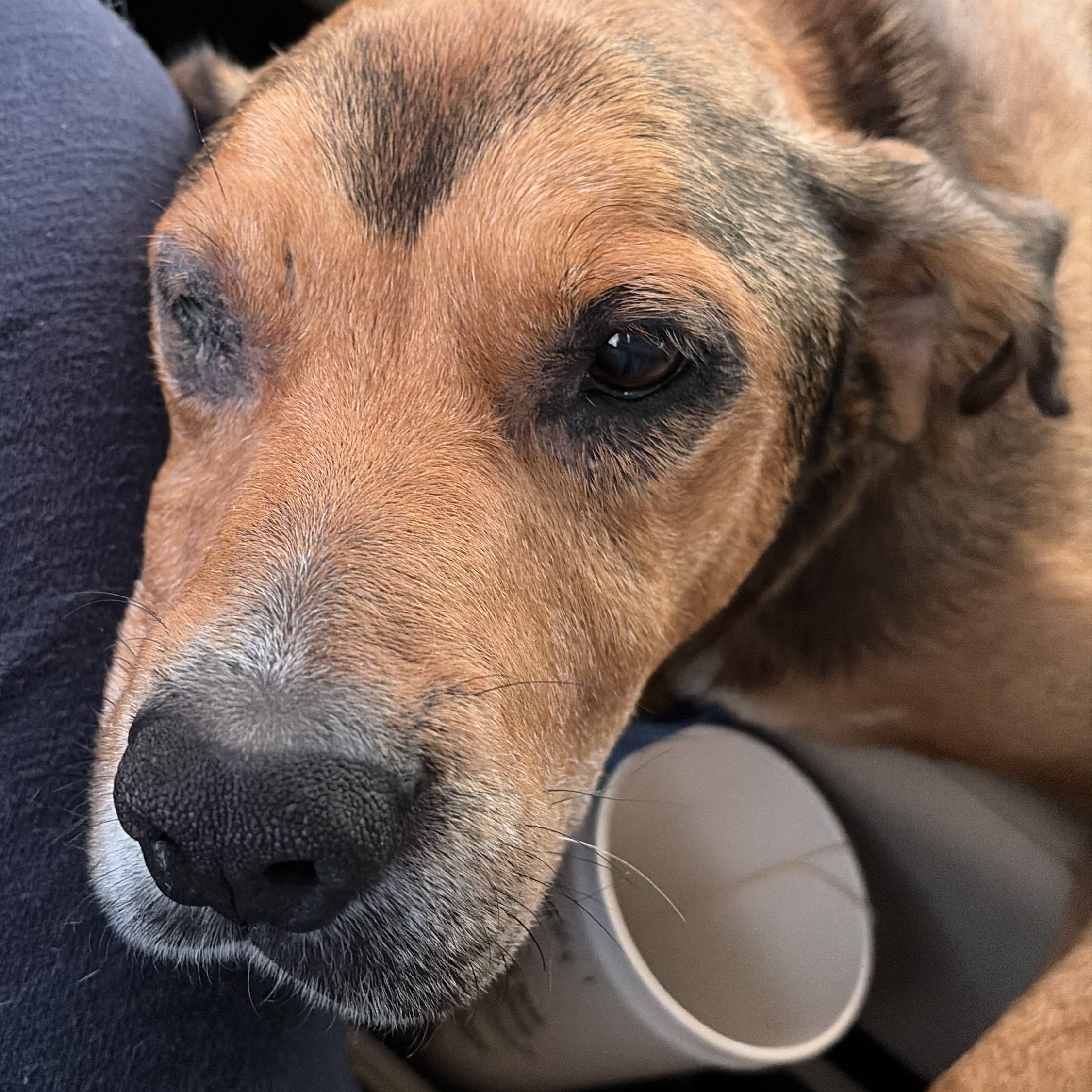
Shofar, a hound dog, was stumbling around at night, as the car nearly hit him in rural Georgia. Luckily an angel appeared, picked him up and took him home. It was almost midnight. He was considered a hospice dog — dehydrated, feverish with infection, blind from an eye condition, he would have been euthanized. That was three weeks ago. Nourished and treated for his infections, Shofar is healthy enough and can see, and be adopted. Today he got neutered. Anne Gregory Teicher and her husband Zach Teicher, administrators and angels for Congregation Shaarei Simchah have an interesting calling – they have established animal rescue agencies in their homes and foster them and prepare them for adoption. They especially care for older or special veterinary needs animals. To find out more, check out the Rescue society Here, or follow the story on social media Here.This week’s reading from Deuteronomy includes the following instructions about caring for lost animals! (synchronicity!)
Deuteronomy 22:1 Do not see the ox of your kinsman or his sheep running off and hide yourself from them;
Why would anyone hide themselves from an ox or sheep that belongs to someone else, I wondered. The Hebrew root for hidiing oneself is Ayin, Lamed, Mem. It also means forever, like in “olam” which also means the world. Also piquing my interest was the sheep running off – it reminded me of the midrash of Moshe (Moses) following a runaway lamb, and finding the burning bush which called him to his life’s journey! Reading further, it becomes clear that the “hiding” refers to hiding from the responsibility to help. What if you should hear the lamb bleating or the ox, and turn your head so you don’t see it – would you be absolved? No, says Rashi, turning your head is the very essence of hiding!
During the month of Elul, it is said “The master is in the field” – the Holy One of blessing is immanent, palpable. Playing a game of hide and seek with us perhaps? We must do the seeking, and then we will be found.
Psalm 27, recited each day during Elul, often refers to this game of hide and seek:
(4)One thing I ask of GOD,only this do I seek:to live in GOD’s house all the days of my life,to gaze upon GOD’s beauty,to frequent the temple.(5)I will be hidden in God’s pavilionon an evil day,granted the protection of God’s tent,and raised up high upon a rock(7)Hear, O ETERNAL One, when I cry aloud;have mercy on me, answer me.(8)In Your behalf my heart says:“Seek My face!”O ETERNAL One, I seek Your face.(9)Do not hide Your face from me;do not thrust aside Your servant in anger;
We seek (darash in Hebrew) with the hope of being Found (matza) One of my favorite songs is “You will be Found” from the musical “Dear Evan Hansen” The version I fell in love with is linked here, from the Brooklyn Youth chorus, recorded during COVID, when loneliness was rampant (which it still is) I love the emotion the composers, Benj Pasak and Justin Paul, give to the contrast between lonliness, and the joy of being found. In Jewish tradition, redemption only can happen in community, with others having our back -for example returning something we’ve lost, or helping with burdens
Verse Two continues׃
And if your kinsman/countryman is not near to you, and you do not know him,
you are to bring it into the midst of your house;
it is to be with you until your brother makes seeks it, and then you are to return it to him.
What? I have to bring the sheep home, and into my house? or an ox? OK, perhaps I could keep it with my other animals, but what if I don’t have any? (a Levite, for example). I noticed a hyperlink to a verse in Exodus – we are to bring the lamb for the first Passover into our homes. And the Hebrew word for returning is is based upon the root Shin Vav Vet – “shuv” which is a theme word for this season and the m onth of Elul – Teshuvah – returning to “the land of the soul” to your true essence, to your relationship with the Blessed Holy one. Now the text had my full attention.
I wondered if the lost sheep or ox could be a lost person, so I reached for one of my favorite commentators, Or HaChayim (Chayim Ibn Attar, Morocco 1700’s) and my hunch was validated. Sources here. Ibn Attar argues that the ox or sheep is one who has lost their way morally or is ignorant of Torah, and the person “returning” them is one who sees it as their responsibility to teach them. He says: the commandment to restore lost Jewish souls applies, i.e. to the righteous, the Torah scholars. Ibn Attar sees the scholars as responsible arguing that the word “achim” literally meaning “brothers” which I have translated as kinsman or countryman, means they view all kinsmen as brothers, making them righteous.
Verse 3 continues:
Thus you are to do with his donkey,
thus you are to do with his garment,
thus you are to do with anything lost of your brother, that is lost by him, and you find it:
you are not allowed to hide yourself.
There is was again, the prohibition from hiding, from melting into the rest of “olam” the world, pretending we don’t see. The word for “lost” in this verse, however, was different from verse one, and is repeated for emphasis. The root “aleph” “bet” dalet” often means to perish, to be destroyed. Emphasizing, that these are living assets, they could mean survival or lack of it for one who thinks it’s lost! Imagine the relief if you can restore such a valuable loss after thinking it was dead.
The last verse in the cluster of four, verse four relates to that magical creature in Torah (see Balak) we often overburden-the donkey
You are not to see the donkey of your brother, or his ox, fallen by the wayside,
and hide yourself from them;
you are to raise, yes, raise it up [together] with him.
Ramban connects this verse to the hyperlink to raise even your enemy’s donkey, the one who “hates you” when the poor thing has fallen because they often carry such great burdens. Imagine a world built on this commandment! Ibn Ezra notes: the same applies to all beasts. Including Shofar, the hound, who was FOUND!


Leave a Reply