Torah for now

Posts tagged ‘Esther’

Hidden in Plain Sight

This coming week is the festival of Purim, in which the scroll of Esther is read. In a crucial scene, the book’s male protagonist, Mordechai refuses to bow to the arrogant Vizier of Persia. Due to this arrogance, the Vizier plots revenge against all Mordechai’s people, the Jews. We wear costumes, and are commanded to get fragrant levasumei in Hebrew (with wine?) until we can’t tell the difference between ‘cursed be the bad guy’, Haman in this case, and blessed be Mordechai! Interestingly the entire book of Esther is political satire against the powers that were: It begins with the King’s 180 day drinking party, the only rule is “no rules” and when it ends the King declares … another party!

Earlier this week, during Vizier’s state of the Union Address to congress, a woman of color refused to sit down when told, to silently protest the use of racism in the policies and speech. She was arrested and manhandled, re-injuring a shoulder which was injured in a January by federal agents. Story here. We are badly in need of political satire, to laugh at the impossible and cruel way of the rich and powerful, and along comes Purim. (I call Purim the “Jewish mardi gras”)

This week’s Torah reading begins with G8d saying: command the Israelites to bring clear beaten oil from olives to keep a light burning at night in the Mishkan the portable sanctuary, and to light it each and every night upon the golden menorah that looks like an almond tree. The original night light is where no one can see it: within the Tent of Meeting in the mishkan’s innermost chamber. It then goes on to speak of the inspired tailors who should be chosen to make the “uniforms” of those who will serve G8d in this traveling sanctuary, and to spell out the materials and specifics of the wardrobe.

Hidden beauty and Passion connects all of these things: The menorah, the Holiday of Purim, the robes of the Kohen Gadol

  1. Hiddenness in the Menorah: The olive contains within it the pure oil hidden within it. The olives are like the Israelites who are bidden to bring the olives, and who have within them pure fuel, passion in faith and to love one another and to love G8d. From the combination of wick and olive oil will emerge flame – also a hidden potential within the fuel, the flame lets out the beauty that was always there. Hidden in the design of the menorah itself is the pattern of an almond tree. There was worship of a tree Goddess in Biblical times, Asherah was her name, until the time Josiah uncovered the book of Deuteronomy and it was outlawed. Hidden in placement, the menorah is within the innermost center of the mishkan, where only the kohanim and G8d can see it! I suggest: don’t hide your flame, but don’t let it consume you either
  2. Hiddenness in the holiday of Purim: So many things are hidden in the Book of Esther: starting with Esther’s name, which means “hidden”. She hides her Hebrew name and her Jewishness, she is hidden within the palace, G8d’s name is hidden in the book, it does not appear. Esther hides her intentions after she approaches the king, taking a subtle tack. We wear masks which both hide who we are, and reveal hidden identities waiting to come out. We hide our serious, judgemental side for the day. We are bidden to be silly, to play, to let it “all hang out”
  3. Hiddenness in the clothing of the Kohanim (priests) This one seems a bit more obvious: Clothing hides the “human animal” giving dignity, artistic flair, both concealing who we are and revealing it. The clothing of the Kohanim is supposed to somehow transform them into creatures worthy of representing the community to G8d, and being able to withstand the presence of G8d. The voice of G8d will then come from that potential space between the K’ruvim Golden cherubs who spread their wings over the arc of the pact. But as we know from history and today’s headlines, some seek the power that the uniform, the fancy clothing conveys, and are nothing but a human animal within their clothes. Others have imposter syndrome and don’t feel worthy although they are.

Back to the headlines: Many leaders in the world wear the trappings of Dignity and Leadership, yet inside is the only same craving of power we know from Biblical times. A story by Reb Nachman of Bretzlov tells of the son of King who is convinced he is a Turkish bird, strips all his clothing, retreats under the table and refuses to do or say anything except for pecking grain under the table. Feel free to read here. In one version of the story, the prince still crows every once in awhile. How much do the trappings of dignity, honor and rule make a person that way? How much do they hide the hypocrisy inside? Which of us is exempt from this self examination? It seems that history is reflecting the text of Torah and Esther this week. May G8d’s rules of justice and kindness be revealed through our actions, in this time of hidden things.
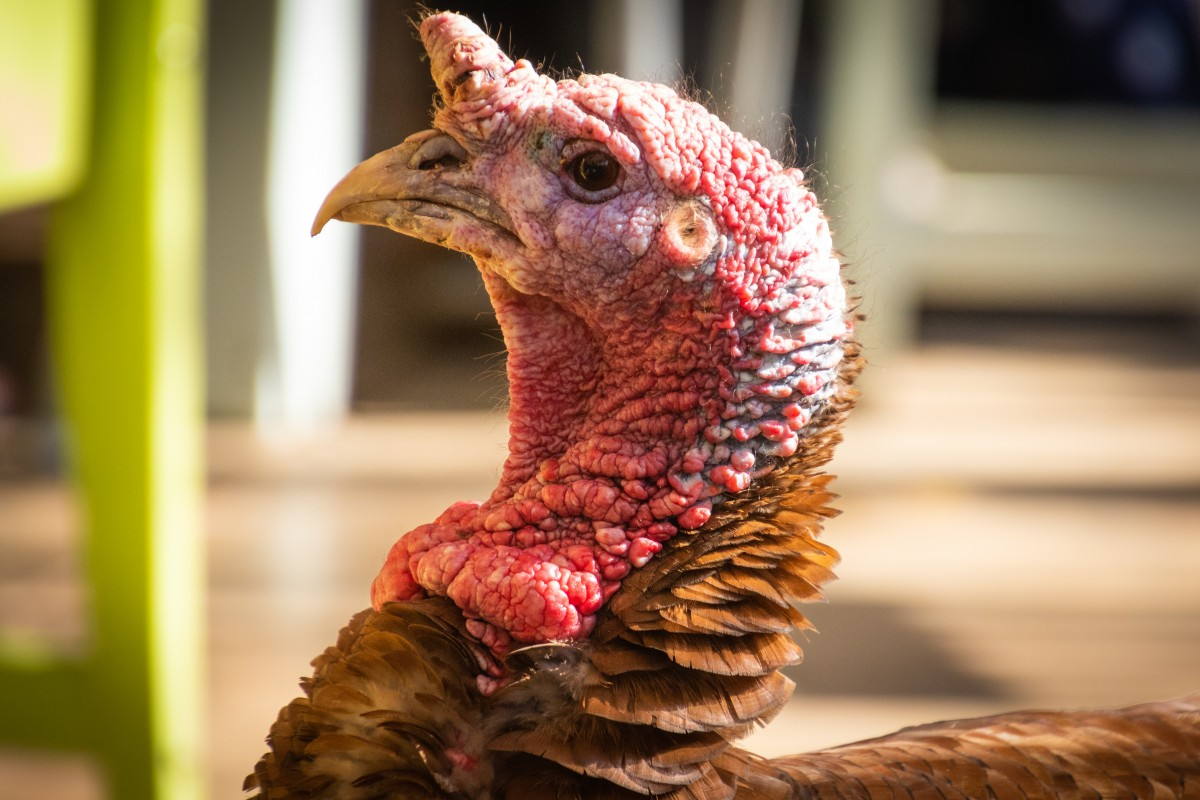

Don’t worry, be happy?

Every life has its creation, revelation of great truths, and redemption from forces greater than us. It seems to me that we in the US have suddenly started ignoring our revelation of democracy. It was only 250 or so years ago, that we conceived a new way of government meant to empower the populace: a better way than monarchy. And we’ve turned our back on it. Satan has been whispering in our ears, something about immigrants, the price of eggs, and things aren’t like they used to be. We made the bad old days into the new normal. And we’re laughing and partying?

On the holiday of Purim, we’re supposed to be happy. “I always hated Purim, admitted my friend, Chaim.” He didn’t like to be told to “be happy!” That’s understandable! American culture loves to tell us to be happy: party, have fun, divert yourself. Here’s Dick Van Dyke singing Put On a Happy Face. “wipe off that frown and cheer up, put on a happy face” It sounds obnoxious to be told “cheer up, it’s not that bat” On the other hand, Laughter really can be the best medicine! When is the last time you had a really good belly laugh? It is wonderful at breaking the tension, and it’s great, and humbling to make fun of your self, or impossible situations. Clowns and comedians are among our favorite entertainers.(Make ’em Laugh) Even if things are rough, it’s good to laugh at it! Who can forget Mel Brooks’ “Springtime for Hitler”, from the Producers?!

Springtime for Hitler and Germany
Deutschland is happy and gay
We’re marching to a faster pace
Look out, here comes the master race!

But humor is subjective, and sometimes not at all the right timing. On Purim The Book of Esther is an amazing political farce, basically SNL in Ancient Persia, railing against the monarchy. It begins with a king who is so disinterested in the people he rules that at the end of a 180-day drinking and feasting party for the princes, he declares, you guessed it, another week-long drinking party. When his queen refuses his demand to “dance” for his princes, he proclaims an edict to disempower all uppity wives. This is a dangerous situation, one which leads in just a few moves to a proclamation of genocide from the monarchy. If not for the courage of a woman who hid her identity, and was clueless about the genocide order, who seduced the king and made him jealous (careful not to appear uppity) all would have been lost. Whew. For this reason we fast on the day of the edict, and when the day is done we are supposed to joke, drink and be happy? Isn’t it drinking to a stupor that got us in this predicament.

For many, these are difficult times: our democracy seems to be replacing itself with something not very kind: A ruling party that cares about empowering and enriching itself, to the exclusion of the welfare of the most vulnerable. A party seeking scapegoats, who has little respect for truth or justice, and even empathy for others. We can stop assistance to fight malaria and AIDS abroad, round up folks who are undocumented, and scare the insides out of those of us who have lost a federal job, who know about climate change and the 1% among us who are trans, and their parents. And yet life seems to go on. Superbowl parties, celebrities partying on TV…. Yet what is wrong with trying to party and have a great time all the time? As I was preparing to chant from the book of Esther, I noticed a new line, from chapter 4, verse 2, that I had never paid attention to. The hero of the story, Mordechai comes to the gate of the walled city, but is not allowed in. He is in mourning, dressed in sac cloth, and no-one dressed that way is allowed in. Trying to shut out what and who disturbs us so we can be more cheerful? That’s not a time for laughter.

In the Torah reading for this week, the Israelites are also having a good party, dancing and in bawdy, raucous joy around a golden calf. They had been so worried that Moses was late, Satan whispering in their hearts that he was gone, “whew, that was a close one, good thing we made this calf!” they must have thought. This uninhibited dancing and release is why Moses broke the G8d-carved set of tablets. Not when he saw the idol, but the inappropriate revelry. The legend/ midrash tells of a character that disappears mysteriously from the tale: Hur, an assistant to Moses and Aaron. The legend explains he was murdered when Aaron hesitated to build the calf. Hur’s name translates to “hole” This is no time to be dancing ecstatically. We have just been freed from slavery. The Israelites saw the awesomeness of revelation, a scripture that would bring us closer to “love our near ones as ourself” and in a flash have been “stiff necked” unable to apply it when Moses was “late” coming down the mountain. In a flash, the old way of doing things becomes the new normal.

In the Babylonian Talmud Rava instructs us: It is one’s duty levasumei,  to make oneself fragrant [with wine] on Purim until one cannot tell the difference between ‘arur Haman‘ (cursed be Haman) and ‘barukh Mordekhai’ (Babylonian Talmud) levasumei is sometimes translated as “get drunk” The S’fat Emet disagrees, we get drunk on, not wine, but the fragrance of the Ten Commandments, the fragrance of revelation. Drunk with this we get silly, we get on the floor with the kids, as was the habit or the Baal Shem Tov, get messy and make mistakes so that we may rise again. And we see beyond the dualities of right and wrong. The Israelites have committed idolatry, yes. But in this same weekly reading, a new covenant based on forgiveness are revealed as Moses makes a second trip up the mountain and yearns to experience. El rachum v’chanun, erech apayim v’rav chesed v’emet. Love, grace, patience, kindness and truth. Second and third chances are possible. Perhaps it was a good thing the tablets of the commandments were smashed so they wouldn’t become an idol, says the S’fat emet.

On that Purim day, when we’re snookered on the Commandments, and loving one another as ourselves, we’ll be able to sing this song, and all will be Eden again.

Out beyond ideas of wrongdoing and rightdoing,
there is a field. I’ll meet you there.
When the soul lies down in that grass,
the world is too full to talk about.
Ideas, language, even the phrase each other
doesn’t make any sense ~Rumi

(Melody coming soon for this!)

Tetzaveh: will you still love me tomorrow?

One of the most beautiful Jewish traditions, is the canopy which covers a couple during their wedding ceremony this gauzy, open canopy, a chuppah, a symbol of a couple of things. Firstly, it is a symbol of the home the couple will now share. Chuppah is also a symbol of the Mishkan, or portable sanctuary that was built to take the inspiration of Sinai with us. Two weeks ago, we read of revelation at Sinai. According to the legends/ midrash, Revelation at Sinai was actually a wedding between The Holy One of Blessing and the people. In fact the entire erotic song of songs is taken to be the love song between Israel and the Holy One!

One week ago, we read of the instructions for making the portable sanctuary, the mishkah, which will allow G8d to dwell amongst the people. Folks give lots of beautiful gifts, a starburst of color, and materials from gold to wool. This week’s reading begins with a flame that must be continually renewed. now you, command the chilldren of Israel that they may take for you oil of olives, clear, beaten for the light,, draw up a lampwick regularly.

Every morning, every night. This is the container to shine back a light to the one who freed us from slavery, like saying “I love you” to your partner, spouse, child, and showing that light is going back and forth. Starlight, moonlight,Fire on Sinai, and that pillar of light are answered by our humble olives, who get their energy from sunlight, and contain oil / light hidden within them if you clarify them.

This week is Mardi gras, and next week is the Jewish equivalent in Purim, a bawdy tale of lust, power and palace intrigue. This holiday always comes as the winter turns to spring. We hide our identity in masks, as the king’s wife Esther (whose name means hidden) hides her identity as a Jewess. The book of Esther does not mention the name of G8d, not even once, as this week’s Torah reading does not mention Moses. The only portion in the final 4 books of Torah – Moses is hidden in the “and you” in the commands quoted above.

It is so interesting given the season of early spring that is arriving with  Purim. Seeds are hidden within the ground, within their seed cases, and there is magic in them. That’s why we say in the blessing for bread, not that G8d makes bread, but hamotzi, the one who sends the wheat out of hiding. Life is hidden when a woman is pregnant. Esther’s Jewishness, is of course hidden, but so is her courage. And of course if Shechinah’s (The feminine, immanent facet of G8d) presence fills the earth, (The whole earth is filled with G8d’s kavod)! it is the encouragement of the blessed Holy one who pushes the truth hidden from the earth into view, and to nourish us and other creatures, as it says in psalm 85: Truth with spring up from the earth, and righteousness will gaze down from the sky, and G8d will provide the good, and the earth will nourish body and soul” My Setting of Psalm 85 inked here

I think joy comes, not just in the morning (psalm 30) but in springtime and its anticipation! As the words in this Jerome Kern song “You are the promised kiss of springtime, that makes the lonely winter seem long – what if that song were about Sh’chinah, the presence of the Holy One?!

Sometimes ugliness is brought out of hiding, which seems to be the state of the world today. This is the story of Purim too. An advisor to the king seems innocuous enough, until his ego is challenged by the one guy in the kingdom who wouldn’t bow to him. The king’s advisor proposes genocide, and, lied to, the king, hiding in a glass of alcohol agrees. The advisor’s name is Haman, and he is a descendant of Amalek, a warfaring tribe who attacks the most vulnerable of the wandering Israelites.

Kedushat Levi interprets Amalek as being a hidden part of each of us deep within ourself! A colleague, Josh Jeffries writes in his capstone on how we need an Amalek in order to make the hidden destructive powers within and without visible, to take it out of hiding!

So this week we light a lamp, and show our loved ones and creation that we love them. May it help us find what is hidden in ourselves.

Adelina ’and Josh’s beautiful wedding ceremony at St Lucia, captured by Alex Dali Weddings

ESTHER, A Leap of Faith

A Purim Song:

Utzu Eitza b’tufar

Dabru Davar v’lo yakum  Ki Imanu El

Go ahead and make your evil plans, They will fail, they will not stand, for G8d is with us always

This is a beautiful Purim song, about the book of Esther. An ancient farce, political satire that turns all too frighteningly real sometimes. On Purim We actually have the chutzpah to laugh, the need to laugh, the obligation to laugh.  The interesting thing about this song is that it put the reason for our success, not into the hands of Esther or Mordechai but in the Holy One of Blessing, whose name never appears in the Megillah.  It is hidden, much like Esther herself is in hiding. It requires a leap of faith for us to find G8d in the story!

In the land of Shushan, Persia, many years following was a beautiful Jewish girl named Haddassah. But when the king’s men came to uncle Mordechai’s house looking for the most lovely to be queen, she was silenced, told not to reveal her true identity, and given a new name, Esther, from root as nistar, meaning hidden. After being made queen, she busies herself with queenly stuff. She hadn’t been paying attention to the happenings of the kingdom when she is told of Mordechai in sack cloth and ashes –”send him some new clothes”, she orders. She does not want to hear about trouble: hard to blame her, who wants trouble?!  Mordechai then delivers my favorite line of the whole Megillah

Chapter 4:6 “If you keep silent in this crisis, relief and deliverance will come to the Jews from another place, while you and your father’s house will perish. And who knows, perhaps you have risen royal position for just such a crisis.”

Esther is afraid, bc the punishment for one who approaches the king without being summoned  is death. And although Esther is scared she bravely, and with all her wits about her approaches the king: she takes a leap of faith.

In his book G8d in search of Man, Heschel says
The belief in “the hidden miracles” is the basis for the entire Torah.

What does it mean to take a leap of faith, that G8d/ love/ righteousness is with us when things seem hopeless, for Esther, and for us?

Reb Nahman of Breslov explains about a leap of faith, saying, there is a moment on the spiritual path (on the ladder of Return to the One), where one is suspended in space, caught between the rungs. Even if one stretches to full height, the gap is so large that one cannot both have feet on the rung below and your hands on the rung above. One can only jump into thin air, and hang for a moment between, where there is no Ground or sure hand-hold. Such is the practice of emunah, .. That leap of faith.

And perhaps just as we need faith, the Holy One needs our help, and it is Esther, a woman specifically who is G8d’s partner on earth.

Shechina, a feminine facet, or sphirah of the Divine is the indwelling presence, immanent, and all around us, yet hidden in the natural world, I invite to close your eyes, to breathe in. The oxygen is made by green living creatures: we are breathing one another in to existence. Know as you breathe in that Shechinah dwells in you as well as in every other creature, rock and tree of the natural world, you just must be aware. Perhaps you’ve experienced her presence in the magic of the Florida wetlands, or at the ocean, or on a mountaintop. The awful truth is and she is in trouble. We have treated this sacred garden, not as Divine gift, but as a killing field. We need to once serve the more-than-human world with love and care, to be G8d’s partners. The ancient fossil forests burn in a destructive fire, and their wastes fuel scorching, flooding, storms and extinctions. We need to love with our upper heart, to choose life.

And now you’re all tuning out, saying “we’ve heard all this before” You’re possibly saying , “this problem’s too big, there’s nothing we can do”  As Rabbi Marc says, that’s your lower heart, that wants to keep satifying its egoic desires, and not worry about the consequences.  We need to be Esther,  to take a leap of faith, and respond with love and smarts – a feminist approach. It’s so easy to be discouraged.

For me this song, by David Wilcox, tells of the leap of faith of the Esther story

You say you see no hope, you say you see no reason to believe,,

that the world will ever change, you say that Love is foolish to believe,

Cause there’ll always be some (thug) with their greed or with a knife, To take away your daydream, put the fear back in your life.

Look, if someone wrote a play to glorify what’s stronger than hate,

would they not arrange the stage to look as if the hero came too late.

It’s almost in defeat, feeling like the evil side will win,

on the edge of every seat from the moment this whole play begins,

It has been love that mixed the mortar, and it’s love that stacked these stones,

and it’s love that built the stage here, though it looks like we’re alone

In this world set all in shadows, like the night is here to stay,

there is evil cast around us but it’s love that wrote the play,

and in the darkness, love will show the way.

Now the stage is set
You can feel your own heart beating in your chest
This life’s not over yet
So we get up on our feet and do our best
We play against the fear
We play against the reasons not to try
We’re playing for the tears
Burning in the happy angel’s eyes

… For it’s love who mixed the mortar
And it’s love who stacked these stones
And it’s love who made the stage here
Though it feels like we’re alone
In this scene, set in shadows,
Like the night is here to stay
There is evil cast around us
But it’s love that wrote the play
For in this darkness love will show the way

Love/G8d can be hidden. That leap of faith is needed to see that it’s all G8d, that Shechina surrounds us all.

Dayenu is a Jewish climate change activist group. We’ve had enough.  Tonight we ask you to take a leap of faith, as TAO joins hands with Dayenu. Rebekah has some lit. And next week on Purim join us in Davey, and take the first step, write a postcard to show you care.  we do it all for L’Dor VaDor, for our children, and because as Jews we are commanded to choose life, take a leap of faith like Esther.

Or like Elphabah in Wicked

Something has changed within me
Something is not the same
I’m through with playing by the rules
Of someone else’s game

Too late for second-guessing
Too late to go back to sleep
It’s time to trust my instincts
Close my eyes and leap

It’s time to try defying gravity
I think I’ll try defying gravity
Kiss me goodbye, I’m defying gravity
And you won’t bring me down!