Torah for now

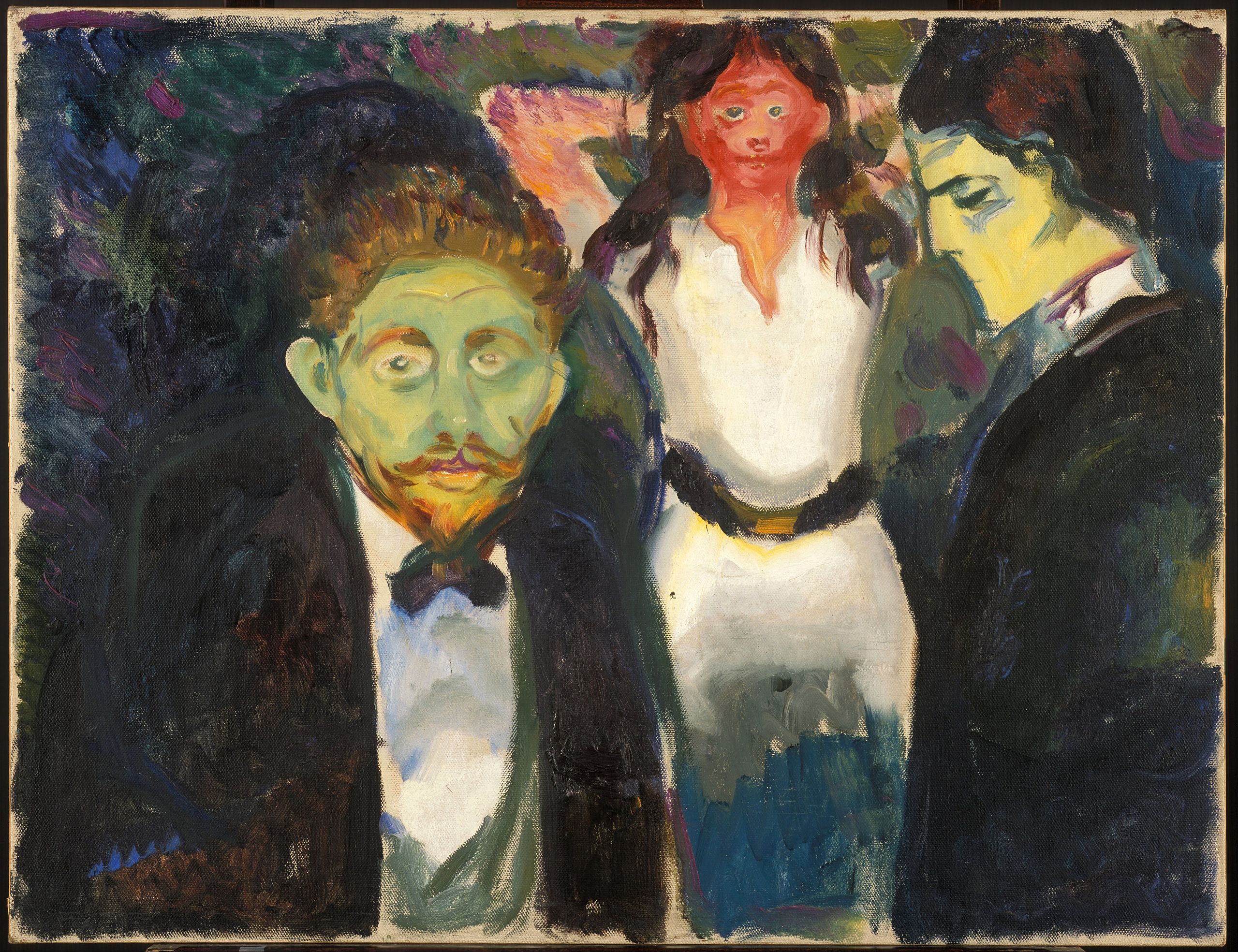
How do we deal with parts of ourselves that are primal? This week’s reading in scripture includes the case of the Sotah, the suspected adulteress against whom there is no evidence. But the husband’s jealousy will not be assuaged. (This is a practice that only existed during Ancient biblical times). There is no court case, instead a magical ordeal which publically embarrasses the suspect ensues. Unbelievably, to save a marriage from a husband’s jealous rage, the Priest/Kohen, who first tries to get her to confess, is commanded to write a curse using G8d’s name YHVH on parchment, to mix it with water and dust. The water will dissolve the ink from the parchment and erase G8d’s name! The suspect then drinks the mixture. It is of course, exceedingly unfair that only the woman has to undergo an ordeal that it is so public: the priest undoes her hair removes her ornaments, and embarrasses her purposely. There are very pointed prohibitions on embarrassing someone! Commentator Rafael S’forno call the jealous man a fool. And drinking dust mixed with ink and water is not gonna hurt anybody unless of course you believe it will, and then anything is possible.

Rashi the medieval French commentator has a very interesting comment on the Sotah. With a word play on the root for the word Sotah, he writes “Adulterers do never sin until a spirit of madness enters into them”, as it written, of her Key tisteh “if she becomes mad”, taking Tisteh in the sense to become a Sotah. Wait, the husband is insanely jealous, and Rashi places the madness on the wife? Jealously is the true madness. It is a projection of madness, distortion of a taboo

I learned to recognize the thorough and primitive duality of man~ Robert Louis Stephenson,

It often men whose anger and lust are out of control. The Incredible Hulk is our myth of the uncontrollable side of our personality. Another myth is that of Dr. Jekyll and Mr. Hyde, check out this trailer from the 1941 movie. I’ve only just noticed (I know, so lame on my part) the wordplay on Hyde/Hide. The movie was billed as a horror movie in ‘41. Jekyll tries to separate the repressed parts of himself, in a “scientific” (controlled) way. He liberates it by drinking an elixir and names the emerging part of himself Hyde. Spencer Tracey, who plays both, has said the elixir is not mystery, it’s alcohol, and the need for more and more of it, an addiction. He also becomes addicted to the transformation, and the sexuality it releases.

The illusion of Biblical control of men over women and what could be hidden from them by women, is an illusion, just as with Jekyll. Rashi suggests it is really a fear of madness – which is only controllable with the help of supernatural assistance. Imagine a universe out of control. Mystics say the universe was created with somewhat unequal doses of womb-like compassion and structural rigidity/judgement. An earlier world made with too much rigidity/judgement shattered! Just as at the start of the universe, there must have been an excess of matter over antimatter sparking into existence, more compassion than judgement was needed for the world to endure.

Some people find madness, the loss of their inner world with what they think is excessive compassion, not enough rules. I find madness in a world that is unkind due to the worship of money and power, and that breaks rules of decency and honesty. Yeats wrote this verse in response to world war 1.

Turning and turning in the widening gyre; The falcon cannot hear the falconer;

Things fall apart; the centre cannot hold; Mere anarchy is loosed upon the world,

Faith and spirituality means feeling in your bones that G8d is with you, not “out there” somewhere. That all the earth and all you do is sacred if done with loving intention. Including sexuality, which is not “original sin” in Jewish theology, but a command to “be fruitful” There are three partners present in conceiving each child: the mother, the father, and the Presence or (Shechinah). The union found in a loving marriage is potent enough to heal the heavens, you will even allow G8d’s name to be erased and drink bitter waters, rather than giving in to the madness of love turned into jealousy.

The madness of breaking taboos of ethics and replacing them with old taboos on sexual expression is in the same was as the Sotah ordeal, a projection of madness, distortion of a taboo. Below: Edvard Munch 1885: Jealousy

Language is one of the very few features that defines being Human. Certainly other creatures have language: Trees in the forest speak to one another chemically beneath the soil, (would that be amazing to hear and speak that language!), bees dance to tell one another where the good flowers are. Other great apes can be taught sign Language. But the brain space devoted to the motor and sensory parts of language in humans is enormous! (shaded in this diagram) When I was four years old, I learned about lying, from Michael, the four-year-old little boy next door, who just made up a lie in answer to my question. When I asked him why, he just shrugged. We have the full range of words and the power to abuse them or write poetry so true it makes the heart soar. What could it mean for the troubling times we’re in?

In Genesis, G8d speaks, and the world comes to be. This week’s reading Emor, begins “speak”(emor) to the Priests (Aaron’s sons, Kohanim), speaking…. Emor begins with the silent letter “Aleph”. Moses is instructing the Priests to avoid contact with the dead, except for their immediate relatives. The Hasidic masterpiece Mei Hashiloach explains this: A Kohen will see every harsh thing in the world as a purposeful act of the Holy One, and become really angry, so upset is he with the suffering. “as discussed in the holy Zohar. Therefore God commanded, “Emor el haKohanim – say to the Kohanim.” “Emor – say,” means speaking softly. God enjoins us to whisper into the ears of the servants of God that they should not hold grudges (against G8d) Source page linked Here (for Torah nerds!)

The end of the reading contains a narrative teaching more on the power of words: What does it mean to curse G8d’s name, and why does it matter? After all, it’s just words: sticks and stones can break my bones…. In the narrative, a fight breaks out when a man with an Egyptian father tries to camp in the area reserved for the tribe of Dan, which was his Israelite mother’s tribe. Apparently, you only get to camp according to Dad’s tribe. The midrash identifies the Egyptian father as the task master who was beating the slaves so severely, that Moses slew him, and had to flee Egypt. His mother was an Israelite woman (likely the child was born of rape, his mother being a slave at the time). During the scuffle, the man screams out the ineffable name of G8d (in Hebrew YHVH) whose meaning is existence itself, and curses it. This is the only form of “cursing G8d” which earns the death penalty! (Rash 24:16:1)

This seems harsh to a man in pain, ostracized, trying to defend his mother and his parentage, not to mention the fact that Moses killed his father. Like the Kohen he gets super angry. Moses is at a loss: it is one of the four times in Torah that G8d’s help is sought for judgment. (Moses’ kids do not have an Israelite Mother either) What sense can be made of it all?

The book of Job also has a dramatic discussion about using words to curse G8d. When he loses everything, Job still blesses G8d. When he’s covered in painful sores, he curses the day he’s born, but refuses to curse the Source of life itself. An angry response is understandable, but “mad” is a synonym for angry, and there can be psychological and physical chaos if we release our anger. The idea that words can create worlds has a corollary: words can destroy worlds.

There are two different words for “cursing” or blaspheming used here in Hebrew. The words used here are לקלל l’kallel and ונקב V’nikav, which mean both mean to puncture, to put a hole in something. I am reminded of a balloon suddenly pierced, it flies away and collapses as the air is released. The name for G8d YHVH is a mashup of past, present and future tenses of the verb “to be” and the “breath of life” according to Rabbi Arthur Waskow which, if it were to be pronounced, would sound like breathing. This reminds me of the ‘whispering” that is spoken to the Kohanim. To scream this name in anger and curse it is to curse existence itself . To mess with it is to question that there is meaning and goodness at the heart of life. All those who heard the curse were to place their hands upon his head and witness the punishment. In Hearing the curse, there is danger. Quoting Mei HaShiloach again “Zohar says (Vayikra, 106a), “He took the final Hei in God’s holy name and cursed him, in order to defend his mother.” This is because the final Hei hints at the world of Asiyah, the world of action. Though God desires that we fulfill His mitzvot with our actions, still He wanted to create an opening whereby He would bring about salvation even without the actions of man” This is a fascinating comment: there are no shortcuts, only by partnering with the Holy One of Blessing can we perfect the brokenness. For more on the blasphemer, see Aviva Gottleib Zornberg’s book on Leviticus: The Hidden order of Intimacy, Chapter Emor. Through her books on Torah, she has been a powerful teacher!

The air waves and print are full of screams, and lies. The Name of G8d is being used, as it has been during the Crusades and pogroms, to hurt people. Chaos, hatred and anger are being used for the power they bring. These are dangerous times. To witness all that we hold sacred, ideals such as “love the stranger” “love your neighbor as yourself” the imperative to care for the gift of creation, and that we should pursue justice, truth and peace upon which the world rests (Mishnah Avot) being threatened is profoundly disturbing. What life raft will keep us afloat? I am reminded of a story of a king who is told that his country’s wheat fields are almost completely contaminated by a fungus which causes insanity. They have enough of the old flour left to support one man – “shall it be for you, Majesty”? Ask the king’s advisors. The King thinks for a bit, and decides, “no, it must be reserved for my wisest, trusted advisor. That way when everyone has gone mad, I will have someone to look to whisper the truth in my ear and to guide me.” Can you hear the whispers, because it seems to me the world has gone made, from the abuse of words. What do you think?

Deflating balloon flies away flat cartoon vector illustration isolated on white background. Air balloon deflates with puffs of air. Kids rubber toy and decoration element.

Passover 5785


In the middle of all the cooking and preparing for the Holiday this year, I recognize, this year is different. Mah nishtanah ha Pesach HaZeh: How is this Passover different from all the others? What part of today’s world can we let the world in to our seder that won’t ruin this cherished family tradition? This year we are torn by events of the times, as was Joseph’s cloak, torn and dipped into the blood of a goat. The song at seder’s end, Khad gadya, or “one little goat” reminds us of that cruelty.“Do you recognize this coat? A wild beast must have torn Joseph,” the brothers lie to their heartbroken father. Is this cloak the broken, bloody remnant of our hopes? The karpas on the seder plate, reminding us of the greenery of the field also means “a woven cloak” in the Persian-speak of Purim. The prequel of the Exodus story is the story of parental favoritism, unequal treatment and near fratricide: Exodus begins with that reminder: a new King arose who did not know Joseph. Things go very wrong from here on: slavery, abuse, and the murder of the first-born male infants. In other words – tough times, like those we are in now, make up the first part of the seder. This story of despotic, cruel dictators with delusions of G8d-hood collides with current reality of being terrorized by power run amok.

Then come the plagues: When you throw infants into the river, of course it turns to blood, it is already bloodied! When you pour ten million tons of carbon dioxide per day into the atmosphere, of course there will be karma/ Divine consequence. And without these consequences, the status quo could never change. The plagues, awful as they are, are the turning point toward redemption. as the pogroms, and Cossack conscription, drove my grandparents across an ocean.

As the group of refugees makes their way to the wilderness, they bring the memory of that torn coat, and the slaughtered goat, with them: Joseph’s bones are exhumed from the Nile, and carried with them.

This Shabbat is called Shabbat HaGadol the “Great Sabbath”. We read of a day of justice and judgment, in the finale of the prophet Malachi, culminating in a great healing: “I will send Elijah the prophet… he will turn the heart of the parents to the children and children to their parents. Some in the generation of potential young parents are wondering if it’s ok to even bring children into the world. How heartbreaking! The apples of the charoset on the seder plate remind us of the merit of women who seduced their reluctant enslaved husbands under the apple trees, that brought children into a world of genocide in Exodus. Shabbat ends, and immediately Passover begins. Perhaps this year at the seder we can once again honor our tears with salt water, dip our torn hearts into it, and acknowledge the transformative nature of the Blessed Divine One. Then we can envision that kinder world, keeping it in our sights, and keeping our hearts turned to one another.

Resource: Dayenu’s guide, an insert for the Haggadah, with Climate change in mind.

Arthur Waskov 50 years of the Freedom seder

Make your own Hagaddah, featuring Ellen Bernstein’s Promise of the Land

PS I am now in the afterglow (and exhaustion) of seder, and cleaning up. Thesa are my addenda to my family seder this year Lion King Passover

This first song was so much fun: used for the Maggid section, from 613’s music video

  1. Circle of life.                   Call out:

Mah nishtanah ha’layla hazeh, mikol halailot

(mah nishtanah, nishtanah ha’laya) repeat chant 4x

In the days we prepare for the seder

It seems like we’ll never be done

There’s more to clean than can ever be cleaned

Grab a candle and search for the crumbs

When the seder table is ready

And all the chametz has been found

Our family arrives, and the sun leaves the sky

At the table we’ll gather around

At the seder tonight, Passover retold

With our prayers of hope; .

And the seder plate; Helps us tell our story

At the seder , the seder tonight.

I JUST  CAN’T WAIT TO BE FREE

Now, Pharoah you’re a mighty king,

But I’m tellin’ you beware

(Pharoah) You’ve come into my palace making threats now don’t you dare

Your days of making us your slaves are done forever more

And if you challenge G8d, ten plagues will shake you to your core

I’m telling you, you’d best listen to me

It’s time to let my people go, you see

‘Cause we just can’t wait to be free!

From Rabbi Ebn Leider on Substack: As we witness the truly shocking events of our day: … the terrifying injustices coming from the highest levels of power, it is natural to be angry, fearful, shocked and devastated…. we can try to shift our perspective …Pesach is perhaps an opportunity to see a larger perspective and to vision together, not just a return to a more peaceful status quo, but a truly transformative change that is in the pangs of being born. ~R Ebn Leider             

This version of the four Children is by Rachel Barenblat’s, from the Bayit publication “The Broken Matzah”

All Four Children (are one)

Today the Four Children are a Zionist,

a Palestinian solidarity activist, a peacenik, and

one who doesn’t know what to even dream.

The Zionist, what does she say? Two thousand years

we dreamed of return. “Next year in Jerusalem”

is now, and hope is the beacon we steer by.

The solidarity activist, what do they say?

We know the heart of the stranger. To be oppressors

is unbearable. Uplift the downtrodden.

The peacenik, what does he say? We both love this land

and neither is leaving. We’re in this together.

Between the river and the sea two peoples must be free.

And the one who doesn’t know what to even dream:

feed that one sweet haroset, a reminder that

building a just future has always been our call.

All of us are wise. None of us is wicked….

We are one people, one family. Not only

because history’s flames never asked what kind

of Jew one might be, but because

the dream of collective liberation is our legacy.

We need each other in this wilderness.

Only together can we build redemption.

R. Rachel Barenblat

This week’s reading in Torah is “Pekudei” and is the end of the dramatic book of Exodus, which told of our redemption and revelation. We were freed to follow the Mysterious Forces of liberation, rather than a human ruler, and to follow pathways of “loving the stranger” because we were once strangers. Moses climbed a mountain, and was inspired to bring down, not just stone tablets, but the gorgeous Divinely inspired blueprints. With the help of inspired artists, we created a space to take G8d with us on our journeys. This inspired, beautiful, community-made space is the Mishkan. (see last week’s teaching)

Once upon a time we built a Mishkan in this country. We came together from all parts of the country to make the AIDS quilt*. The HIV/AIDS epidemic was terrifying, and we had come through a very narrow place (Mitzrayim/Egypt means narrow) with many souls lost. We who were alive then all knew someone who had died, it was a scary time. (the HIV pandemic is still happening, I know.) From their grief and memories, each family brought a square with the name of their lost loved one, filling the Washington mall. Then the squares were connected very much like the panels on the Mishkan, looping connections through the grommets. When it was completed, it was an enormous, portable, communal work of art. It travelled around the country, and folks added names to it. Last week in Vayakhel, we saw how the Mishkan could be the measurement of a human soul. The many connections between the end of Exodus and the first chapter of Genesis (source page here) show some of the parallels of the creation of the Mishkan to the creation of the universe: the human-made and G8d/nature-made are intertwined. In today’s fractured world, where fighting seems to be the default way of dealing with one another, what if we were to build another communal work of art? If the Mishkan represents creation, perhaps we can fashion squares with the images of creatures and features of this beautiful planet, alternating with the beautiful and diverse images of babies born this year who will inherit the land? This could be our travelling sanctuary to bring healing to our planetary one. (*gratitude to Rabbi Arthur Waskow, whose book “Freedom Journeys” p.99, reminded me of this quilt and the link to the Mishkan!)

Hazak, Hazak, v’nitchazek, is chanted as we complete a book of the Torah: Be very strong, and may we be strengthened!

Diverse babies sitting on the floorPetition · Save Threatened animals before its to late! - Ireland ·  Change.org

Don’t worry, be happy?

Every life has its creation, revelation of great truths, and redemption from forces greater than us. It seems to me that we in the US have suddenly started ignoring our revelation of democracy. It was only 250 or so years ago, that we conceived a new way of government meant to empower the populace: a better way than monarchy. And we’ve turned our back on it. Satan has been whispering in our ears, something about immigrants, the price of eggs, and things aren’t like they used to be. We made the bad old days into the new normal. And we’re laughing and partying?

On the holiday of Purim, we’re supposed to be happy. “I always hated Purim, admitted my friend, Chaim.” He didn’t like to be told to “be happy!” That’s understandable! American culture loves to tell us to be happy: party, have fun, divert yourself. Here’s Dick Van Dyke singing Put On a Happy Face. “wipe off that frown and cheer up, put on a happy face” It sounds obnoxious to be told “cheer up, it’s not that bat” On the other hand, Laughter really can be the best medicine! When is the last time you had a really good belly laugh? It is wonderful at breaking the tension, and it’s great, and humbling to make fun of your self, or impossible situations. Clowns and comedians are among our favorite entertainers.(Make ’em Laugh) Even if things are rough, it’s good to laugh at it! Who can forget Mel Brooks’ “Springtime for Hitler”, from the Producers?!

Springtime for Hitler and Germany
Deutschland is happy and gay
We’re marching to a faster pace
Look out, here comes the master race!

But humor is subjective, and sometimes not at all the right timing. On Purim The Book of Esther is an amazing political farce, basically SNL in Ancient Persia, railing against the monarchy. It begins with a king who is so disinterested in the people he rules that at the end of a 180-day drinking and feasting party for the princes, he declares, you guessed it, another week-long drinking party. When his queen refuses his demand to “dance” for his princes, he proclaims an edict to disempower all uppity wives. This is a dangerous situation, one which leads in just a few moves to a proclamation of genocide from the monarchy. If not for the courage of a woman who hid her identity, and was clueless about the genocide order, who seduced the king and made him jealous (careful not to appear uppity) all would have been lost. Whew. For this reason we fast on the day of the edict, and when the day is done we are supposed to joke, drink and be happy? Isn’t it drinking to a stupor that got us in this predicament.

For many, these are difficult times: our democracy seems to be replacing itself with something not very kind: A ruling party that cares about empowering and enriching itself, to the exclusion of the welfare of the most vulnerable. A party seeking scapegoats, who has little respect for truth or justice, and even empathy for others. We can stop assistance to fight malaria and AIDS abroad, round up folks who are undocumented, and scare the insides out of those of us who have lost a federal job, who know about climate change and the 1% among us who are trans, and their parents. And yet life seems to go on. Superbowl parties, celebrities partying on TV…. Yet what is wrong with trying to party and have a great time all the time? As I was preparing to chant from the book of Esther, I noticed a new line, from chapter 4, verse 2, that I had never paid attention to. The hero of the story, Mordechai comes to the gate of the walled city, but is not allowed in. He is in mourning, dressed in sac cloth, and no-one dressed that way is allowed in. Trying to shut out what and who disturbs us so we can be more cheerful? That’s not a time for laughter.

In the Torah reading for this week, the Israelites are also having a good party, dancing and in bawdy, raucous joy around a golden calf. They had been so worried that Moses was late, Satan whispering in their hearts that he was gone, “whew, that was a close one, good thing we made this calf!” they must have thought. This uninhibited dancing and release is why Moses broke the G8d-carved set of tablets. Not when he saw the idol, but the inappropriate revelry. The legend/ midrash tells of a character that disappears mysteriously from the tale: Hur, an assistant to Moses and Aaron. The legend explains he was murdered when Aaron hesitated to build the calf. Hur’s name translates to “hole” This is no time to be dancing ecstatically. We have just been freed from slavery. The Israelites saw the awesomeness of revelation, a scripture that would bring us closer to “love our near ones as ourself” and in a flash have been “stiff necked” unable to apply it when Moses was “late” coming down the mountain. In a flash, the old way of doing things becomes the new normal.

In the Babylonian Talmud Rava instructs us: It is one’s duty levasumei,  to make oneself fragrant [with wine] on Purim until one cannot tell the difference between ‘arur Haman‘ (cursed be Haman) and ‘barukh Mordekhai’ (Babylonian Talmud) levasumei is sometimes translated as “get drunk” The S’fat Emet disagrees, we get drunk on, not wine, but the fragrance of the Ten Commandments, the fragrance of revelation. Drunk with this we get silly, we get on the floor with the kids, as was the habit or the Baal Shem Tov, get messy and make mistakes so that we may rise again. And we see beyond the dualities of right and wrong. The Israelites have committed idolatry, yes. But in this same weekly reading, a new covenant based on forgiveness are revealed as Moses makes a second trip up the mountain and yearns to experience. El rachum v’chanun, erech apayim v’rav chesed v’emet. Love, grace, patience, kindness and truth. Second and third chances are possible. Perhaps it was a good thing the tablets of the commandments were smashed so they wouldn’t become an idol, says the S’fat emet.

On that Purim day, when we’re snookered on the Commandments, and loving one another as ourselves, we’ll be able to sing this song, and all will be Eden again.

Out beyond ideas of wrongdoing and rightdoing,
there is a field. I’ll meet you there.
When the soul lies down in that grass,
the world is too full to talk about.
Ideas, language, even the phrase each other
doesn’t make any sense ~Rumi

(Melody coming soon for this!)

One of the most beautiful Jewish traditions, is the canopy which covers a couple during their wedding ceremony this gauzy, open canopy, a chuppah, a symbol of a couple of things. Firstly, it is a symbol of the home the couple will now share. Chuppah is also a symbol of the Mishkan, or portable sanctuary that was built to take the inspiration of Sinai with us. Two weeks ago, we read of revelation at Sinai. According to the legends/ midrash, Revelation at Sinai was actually a wedding between The Holy One of Blessing and the people. In fact the entire erotic song of songs is taken to be the love song between Israel and the Holy One!

One week ago, we read of the instructions for making the portable sanctuary, the mishkah, which will allow G8d to dwell amongst the people. Folks give lots of beautiful gifts, a starburst of color, and materials from gold to wool. This week’s reading begins with a flame that must be continually renewed. now you, command the chilldren of Israel that they may take for you oil of olives, clear, beaten for the light,, draw up a lampwick regularly.

Every morning, every night. This is the container to shine back a light to the one who freed us from slavery, like saying “I love you” to your partner, spouse, child, and showing that light is going back and forth. Starlight, moonlight,Fire on Sinai, and that pillar of light are answered by our humble olives, who get their energy from sunlight, and contain oil / light hidden within them if you clarify them.

This week is Mardi gras, and next week is the Jewish equivalent in Purim, a bawdy tale of lust, power and palace intrigue. This holiday always comes as the winter turns to spring. We hide our identity in masks, as the king’s wife Esther (whose name means hidden) hides her identity as a Jewess. The book of Esther does not mention the name of G8d, not even once, as this week’s Torah reading does not mention Moses. The only portion in the final 4 books of Torah – Moses is hidden in the “and you” in the commands quoted above.

It is so interesting given the season of early spring that is arriving with  Purim. Seeds are hidden within the ground, within their seed cases, and there is magic in them. That’s why we say in the blessing for bread, not that G8d makes bread, but hamotzi, the one who sends the wheat out of hiding. Life is hidden when a woman is pregnant. Esther’s Jewishness, is of course hidden, but so is her courage. And of course if Shechinah’s (The feminine, immanent facet of G8d) presence fills the earth, (The whole earth is filled with G8d’s kavod)! it is the encouragement of the blessed Holy one who pushes the truth hidden from the earth into view, and to nourish us and other creatures, as it says in psalm 85: Truth with spring up from the earth, and righteousness will gaze down from the sky, and G8d will provide the good, and the earth will nourish body and soul” My Setting of Psalm 85 inked here

I think joy comes, not just in the morning (psalm 30) but in springtime and its anticipation! As the words in this Jerome Kern song “You are the promised kiss of springtime, that makes the lonely winter seem long – what if that song were about Sh’chinah, the presence of the Holy One?!

Sometimes ugliness is brought out of hiding, which seems to be the state of the world today. This is the story of Purim too. An advisor to the king seems innocuous enough, until his ego is challenged by the one guy in the kingdom who wouldn’t bow to him. The king’s advisor proposes genocide, and, lied to, the king, hiding in a glass of alcohol agrees. The advisor’s name is Haman, and he is a descendant of Amalek, a warfaring tribe who attacks the most vulnerable of the wandering Israelites.

Kedushat Levi interprets Amalek as being a hidden part of each of us deep within ourself! A colleague, Josh Jeffries writes in his capstone on how we need an Amalek in order to make the hidden destructive powers within and without visible, to take it out of hiding!

So this week we light a lamp, and show our loved ones and creation that we love them. May it help us find what is hidden in ourselves.

Adelina ’and Josh’s beautiful wedding ceremony at St Lucia, captured by Alex Dali Weddings

In the reading from the Torah this week are the detailed instructions Moses receives to make the portable sanctuary by which the community who stood at Sinai can take inspiration with them, and to have the Holy One of blessing living in their midst. Most of the rest of Exodus is concerned with this, with one notable exception: the sin of the golden calf. Perhaps the sin of greed and insecurity which led to the golden calf. But how can the Holy One convey this to Moses, and why the detail? A midrash/legend from Bamidbar Rabba ” Moses said before the Holy One blessed be He: ‘My God, am I able to craft like these?’ He said to him: ‘Like the form “that I [am showining you]”’ (Exodus 25:9), “with the sky-blue, the purple, and the crimson wool, and with the fine linen” (Exodus 38:23). And G8d inscribes the pattern in fire on Moses’ palm.
The Midrash goes on to say, if you do this I will dwell in your midst, constricting/ focusing energy in this place you build. The same source places the reason for those colors of the sanctuary to reflect places on earth rather the heavens: “Its cushioning of gold” (Song of Songs 3:10) – this is the earth, which produces the fruit of the land and the fruit of the trees, which are similar to gold. Just as gold, there are different types and different shades, so too the fruits of the land; some of them are green and some of them are red.
“Its seat [merkavo] of purple wool [argaman]” (Song of Songs 3:10) – this is the sun, which is placed above, rides on a chariot [bemerkava], and illuminates the world, just as it says: “It is like a bridegroom leaving his bridal chamber…” (Psalms 19:6). By the power of the sun rain falls, and by the power of the sun the land produces fruit.

Finally, ““Its interior is inlaid with love” (Song of Songs 3:10) – as after all the act of Creation, He created Adam and Eve…”

In other words the travelling artwork/ sanctuary is the inspiration of the fire in the sky and the miracles of earth created in architecture and art.

We look to the heavens and the forests and fields for inspiration, they have a design which is far beyond our capacity to understand and imagine. If we can open our hearts to the awe and love they inspire, and bring the awe via music and art into our midst, gratitude and humility and joy can happen

It is written in psalm 16: 8 “I have set G8d before me continually” This can become a powerful practice, in Hebrew “Shiviti Adonai L’negd tamid”

SHIVITI (Miryam Margo Wolfson)

This week’s Torah portion is Mishpatim, meaning “laws”. The narrative of Revelation is interrupted to give a whole bunch of laws, although Moses is still up on Sinai! These laws include some troubling ones, as well as some beautiful laws (Source page Here )There is a flashback to before Revelation as well, where Moshe reads everything that came before Sinai to the Israelite people, and they answer as one All “na-aseh v’nishma” We will do and we will hear. How can you agree to do if you haven’t heard what the deal is. Rashbam explained it means we will do all we’ve been commanded so far and listen to upcoming ones. But the Me’or Einayim hints that the doing will open your heart, and bring so much joy and love, that you will simply be attuned to the Holy One. A voice from Heaven (bat kol) hearing the Israelites say “naaseh v’nishmah, asked “who told you this secret?” for this is how the angels serve the Blessed Holy One. It is a beautiful thing! So what is it we must do? The single most oft repeated command in the Torah stems from our experiences leaving Egyptian slavery. It is this: Do not oppress the stranger, for you know his nefesh soul, for you were strangers/sojourners in the land of Egypt. According to the Talmud, Rabbi Eliezer stated that “the Torah warns 36 times, and some say 46 times, not to oppress the stranger” (Babylonian Talmud, Bava M’tzia 59b) Twice in this Torah portion alone. By the time we get to Leviticus, it has morphed into a command to actually love the stranger as we love ourselves! Leviticus 19:33–34 and Deuteronomy 10:19

Once again, our neighbors and friends are being rounded up in churches and schools without any regard to being deserving or not. They are undocumented, they are vulnerable and sojourners. Our command is clear

HEAR THEIR CRIES, by Miryam Margo Wolfson December 30, 2018

You already know how it goes 

To be so far from safety, from home

To be alone, to be a stranger in a narrow zone

Love the stranger, you were strangers too

Love the stranger, you know their soul

Hear their cries and know

You can be part of the healing, 

make things whole

A little girl cries in the nlght

Though they hear her no one comes to hold her tight

No one makes it right, or reunites

The world seems far too big and too cold

Without Momma beside her to hold  

Bridge

Naaseh v’nishma, We will help and then truly hear

When we comfort and dry the tears 

It can open pathway so we

Can be free, to live in dignity

Naaseh v’nishma,  

Let us open our hearts and our ears

Cause there will always be mountains to climb

We can truly be there,*

even gather a glimpse of Divine

if we..

Love the stranger, we were strangers too

Love the stranger, we know their soul

We Hear their cries and know

we  must be part of the healing, 

make ourselves whole

* Moses is told to climb the mounain and be there!

Pulitzer prize winning photo by John Moore

This week’s Biblical reading is called “Yitro” it is named after Moses father-in-law Jethro, who we meet for the second time in chapter 18 of Exodus. The first time is in the Wilderness. This great song in the Prince of Egypt gives Yitro a voice (the stunning voice of Brian Stokes Mitchell!) This part of the Torah is famous for the 10 Commandments and revelation at Sinai in Exodus 20. Even though Jethro is heard two chapters prior, the medieval commentator Rashi convincingly argues that his encounter with Moses comes after revelation at Sinai. (Number 5 on the source page) Jethro has heard about the redemption at the Sea And revelation at the mountain top and seeks out his son-in-law with Moses’s wife and two sons in tow. He then gives up any status that he had a Midianite priest and reunites this broken family, as he joins the Israelite faith.

The advice that Jethro gives Moses is excellent. Jethro says that people are standing in long lines to see Moses and ask him questions. He tells his son-in-law Moses to delegate, and to appoint leaders over the thousands, the hundreds and the tens of people. This is supposedly so that Moses doesn’t get tired out. But I suggest that it is a redistribution of purpose, authority and power down to the level of families rather than a concentration of purpose, authority, and power in one man. The Israelites were so frightened after receiving the 10 Commandments, that they told Moses to go up for them, or they would die. Thus, they removed their own honor, authority, purpose In fear. My first Jewish teacher as an adult was Rabbi Henry Weiner of Blessed memory. He explained that every person who was present at Sinai and all of us from future generations, each have a place on the slope of the mountain. Each has a place that is unique and contributes to the whole In a way that no one else can. As Jethro restores Moses’ family, So he restores our place. Israelite people are standing in lines all day long waiting to talk to the great Moses, as if to the Wizard of Oz or some billionaire politician. They are not being honored physically, emotionally or intellectually. The Bible subversively warns against setting kings over themselves (Deuteromy 17:15-20) and if they insist God will choose for them, but “he must not keep many horses or send people back to Egypt and not have many wives. He should not let his heart go, astray or amass silver, and gold to excess… So that he may not raise his heart over his brothers” Even the great Moses was not meant to be king. Perhaps it is why his brother Aaron was chosen rather than he to be the spiritual leader, and he was not permitted into the Promised land. Jethro returns, whether of his own volition or fate, or the hand of God, to bring Moshe down to earth where God’s kavod dwells, after Sinai. Returning the feminine in the guise of Moses’ wife and the feminine aspect of God in the Earth herself. 

(*God’s kavod is the honor, or glory, indwelling immanent feminine aspect in mystical teachings)

King Solomon and the Queen of Sheba in the palace. You shall not set a king above you. (from ‘Hutchinson’s History of the Nations’, early 1900s ) Painting by Edward John Poynter

Sometimes things feel so bleak, you feel squeezed on all sides between a “Rock and a hard place”. But you are here today you made it: the baby was born, you recovered from that breakup, disease, accident: you were redeemed, and life felt suddenly new and shiny again. (I ‘m a big fan of the Pixar movie Soul, which acts out such a scenario!) Remember that feeling, the inspiration? One of the names for G8d is Rock, “tzur” in Hebrew. And the word for Egypt, “Mitzrayim” has the same root as Tsures – squeezed, troubles all around. (Funny, I never noticed the homonym there!) This week’s Torah reading, named Beshalach, referring to Pharoah sending the Israelites out of Egypt. This is the first climactic moment of the Passover story, of the Exodus. What is the response of the Israelites to freedom after 400 years of slavery? It is to sing! Does that seem likely to you? One day this past year, after I had been holding in frustrations, I rode my bike to an abandoned field. I tried to scream, but what actually emerged from my body was song. Maybe not so weird! This beautiful poem, the Singing by Rick Barot speaks of the power of a woman’s song. I wonder what the black woman in the poem saw on her phone that brought on the song? Announcement of a birth? a death? the daily news? a memory? A woman’s voice, in mourning, in lullaby, in despair, it seems like her song has all of these. She sings. she sings. she sings. she sings.

This is also Black History month in the US. There are many powerful songs that emerged from African slavery here in America, including “Swing low, sweet Chariot” The Chariot is code for the Underground Railroad! Many of these songs are still sung in churches today. They help deal with being overwhelmed and oppressed: squeezed with tzurus.

The first sound the Biblical slaves made in Exodus was groaning or crying out. They had been silenced, to repressed to make any sound until now, taking their condition as “the way it was” It was this primal cry that brought G8d into their midst. But their second was song. When did they sing and what did their song sound like? The answer in the text is that there were two times of singing: First Moses and the sons of Israel sang aspirationally: I will sing. Then Miryam, whose name I share, sang with the instruments brought along for just such a miracle and sang, dancing a circle dance. Many commentators put the women second, but the chasidic S’fat Emet explains that Moses song is aspirational in the world of our dreams, but Miryam sings for all both men and women in the now, dancing the circle, in which all are equal in their relationship to G8d who is in the center.

Miryam my biblical namesake, is derived from Mar (bitter) and yam, meaning sea. From the bitterness of slavery her song brought sweetness to the Israelites. Directly after freedom the Israelites become bitter again, concluding that G8d hates them. A living well of water follows them through the wilderness, which according to midrash is Miryam’s well – a rock that yields water! Connecting all those places and stories in the wilderness, creating a song which lasts all of Miryam’s life. The Israelite people now read the song of songs as an emotional description of the Exodus, and of G8d’s love. Perhaps the song was a love song. There is disagreement on whether the song began while crossing or after, but according to Chizkuni, Miryam began her song while the Israelites were still crossing! (source 7) This song is the moment of awareness of the immanent presence of the Holy one – the moment of falling in love. Song is the most appropriate sound!

Remembering: a postscript

For a long time the stories of enslaved people were not told. Here in Florida, it recently became illegal to teach those stories again in the public schools, and a young professor who happens to share my last name lost her post from a public college because she taught the history of slavery. As Isabel Wilkerson teaches so powerfully in her Pulitzer prize winning book Caste to deny this history is like denying your family history of disease when you go to the doctor, or to deny old damage in a house. It doesn’t work. The Biblical psalms are a study in Crying out to G8d, Here is a setting of psalm 13. In this psalm the poet despairs of G8d forgetting them – lets go all those emotions. But then remembers: Oh yeah, remember that time I was redeemed, you were there G8d and can be there again for me in love.