Torah for now

Entering G8d’s Palace

Psalm 27, verse 4, read each day during Elul declares that we have one over-arching request, “to dwell in Your house all the days of my life, and gaze on Divine Beauty. What is this “house?” It is prayed for each early morning: Mah Tovu, what goodness is in this tent (our earthy home)….And as for me, with your great loving kindness, I will go to your house, I will bow in awe in your Holy Palace!

In my Mah Tovu practice each morning, I summon the emotion of awe at this time. However, recently contemplating the discouraging happenings, during these difficult times, I recall the “palace on fire” (birah doleket) from Midrash on Lech L’chah, where Avraham sees a beautiful palace on fire, and seemingly without a Master, when G8d answers him, “I am the master” of the palace on fire.

Perhaps the reason we cultivate love and awe at the world, a palace on fire, is to enter the palace, to protect the world we love. We in this nation have voted in power a false “master”, one who is amoral. Simply that should be enough to disqualify. The brilliance of Jewish tradition is that the Divine is not a power hungry god like Zeus, but who is our teacher, and our healer, and urgently cares about our moral integrity. Zeus only cared about his ego. In addition the whole earth is filled with G8d’s “Kavod” This word for “glory” also indicates Shechina, the feminine, indwelling aspect of G8d, the only sephirah directly accessible to us.

Halachah (Jewish law) clearly implies that it should be forbidden to consume fossil fuels due to the damages to future generations, and to Sh’khina herself. Creatures are dying, our children are/future is endangered. (Nina Beth Cardin, Sustainability as Mitzvah)

Fossil fuel  technology however is established and entrenched in our time, in the US it garners most of the public dollars spent on transit, and as such it enables our lives, to connect with our loved ones, to do mitzvot (what G8d wants us to do) to learn, etc. Which of these are the greater of our obligations? This is a terrible conflict of obligations, and calls us to activism to change the situation. The burning of fossil fuels, (among other causes ) also damages G8d’s presence on earth, Sh’chinah herself. This makes living with this technology a series of impossible choices to those on a spiritual path. When Shechina is loved, blessing flows to us. To love G8d is to care for the earth.

The amoral leadership now elected to power in the US is preparing to turn up the dial on fossil fuel use. This looming danger cannot be ignored. As we enter spiritually into this beautiful palace of a planet, “the day is short, the work is great and the Master of the house is pressing” says pirke avot. It is not ours to complete the task, neither are we free just zero it out. We are “eved Elohim” Servants of the most high. Even if we feel overwhelmed and weary. Perhaps Jefferson Smith was right that “Lost Causes are the only ones worth fighting for” (Mr. Smith Goes to Washington)

Each day beginning on the second night of Passover, we count each of the 49 (seven weeks of seven) days until the next major festival, Shavuot, the festival of weeks, which is on the following day. Shavuot celebrates the barley harvest/ an OMER is a sheaf of barley – first harvest of the season, kind of like the strawberries are the first harvest in New Jersey. According to the tradition of Isaac Luria, we do not begin counting on the first day of Pesach, because on that day, we have the gift of light from the heavens, perhaps due to the gift of springtime itself. The songs of the seder open our hearts and our throats, constricted by winter and slavery, and we sing songs of freedom and “enoughness” – Dayenu (meaning each step toward freedom would have been enough!) After discussing in my class with Rabbi Dr. Elliot Ginsburg why on Pesach, contrasted with other Holy Days, the light comes from above, I was singing this song with my Mom at the memory care unit. It’s called “All the Things You Are” by Jerome Kern You are the promised kiss of springtime, that makes the lonely winter seem long. You are the breathless hush of evening, that trembles on the edge of a lovely song. You are the angel glow that lights the star The dearest thing you are, are what you are. Wow, what amazing theology, and that kiss of Springtime, is the gift of Pesach light, perhaps. And who knew, Azi Schwartz recorded it?!

Each day beyond that first day we must generate our own light by fanning the flames of our soul. There are seven “lower” sephirot or facets of the Holy One of Blessing, that are mirrored in our soul. For an explanation of the sephirot, see this video beginning at 7 minutes. Each week of the seven we work on the reflection/fractal of that aspect of ourselves. Each day of the week represents one of those aspects within the week. And so as we count each day, it’s called counting the omer, we count toward Shavuot, which is the day each year we receive the Ten Commandments all over again at Sinai. To be psyched to receive such a gift in real time the omer elevates us, and fans the flame. Here is a link to Open siddur’s all in one chart by Karen Levine, and/or this very full exploration to guide you if you wish to check out the mystical pathway of making each day between the festivals count!

The first day of the counting the omer was 2nd day of Passover. The counting begins at night, because all days in Jewish tradition begin on sundown the night before (similar to how our secular day begins at midnight before) Today I met with my mashpiyah my spiritual and overall guide, Reb Sarah Cohen who suggested I find a creative way to count each day. So thank you Reb Sarah, here it is for today, day Three. Then I’ve chosen for this year’s counting one verse from Tanakh, the Hebrew Bible for each of the sephirot. Next year I may choose other verses from these texts, or YOU can choose your favorite verses to mash up and meditate upon

Each day of Chesed gets a verse from the Song of Songs, I chose chapter 2, verse 10 Arise my love, my fair one and come away,

Gevurah: Strength/structure/boundaries- from book of prophets in haftarah trop. I’ve chosen Jeremiah, the boy prophet 1:17 Al tachat mipnehem – do not break down before them
Tiferet = harmony/balance and beauty, I’ve chosen from psalms – I’ve chosen psalm 85 verses 11 -12 this balance: here is the verse from Sefaria As kindness and truth meet, and righteousness and peace kiss!
Netzach – is endurrance/ victory from Shirat hayam (song at the sea): Ashirah L’Adonai ki Gao Gaa I will sing to the Holy One, who has truly triumphed!
Hod is humility/splendor/gratitude, I chose from Job or Ecclesiastes This year is from Job 39: 11 v’im al pi-ach yagbiyah nasher – Does the Eagle sour on your command?
Yesod -Masculine foundation. Joseph is thought to embody Yesod. Verses from Joseph in Genesis or Joseph the musical (technicolor dreamcoat) This year, I choose I wore my coat, bright colors shining from Any dream will do
Malchut the Feminine immanent Presence of G8d -I chose from Genesis matriarchs in HHD trop VaTomer Sarah tz’hok asah Li Elokim- and Sarah said G8d has made laughter for me.

DAY 3 This is the week of chesed, love. Tonight is tiferet-beauty/harmony sh’b’chesed within love

ק֥וּמִי לָ֛ךְ רַעְיָתִ֥י יָפָתִ֖י וּלְכִי־לָֽךְ׃My beloved spoke thus to me,
“Arise, my darling;
My fair one, come away!

חֶסֶד־וֶאֱמֶ֥ת נִפְגָּ֑שׁוּ צֶ֖דֶק וְשָׁל֣וֹם נָשָֽׁקוּ׃

Faithfulness and truth meet;
justice and well-being kiss.

So I will begin, but if anyone has a good idea for a favorite verse, chime in.
Shir hashirim 2:10 and psalm 85:11 mashup

ESTHER, A Leap of Faith

A Purim Song:

Utzu Eitza b’tufar

Dabru Davar v’lo yakum  Ki Imanu El

Go ahead and make your evil plans, They will fail, they will not stand, for G8d is with us always

This is a beautiful Purim song, about the book of Esther. An ancient farce, political satire that turns all too frighteningly real sometimes. On Purim We actually have the chutzpah to laugh, the need to laugh, the obligation to laugh.  The interesting thing about this song is that it put the reason for our success, not into the hands of Esther or Mordechai but in the Holy One of Blessing, whose name never appears in the Megillah.  It is hidden, much like Esther herself is in hiding. It requires a leap of faith for us to find G8d in the story!

In the land of Shushan, Persia, many years following was a beautiful Jewish girl named Haddassah. But when the king’s men came to uncle Mordechai’s house looking for the most lovely to be queen, she was silenced, told not to reveal her true identity, and given a new name, Esther, from root as nistar, meaning hidden. After being made queen, she busies herself with queenly stuff. She hadn’t been paying attention to the happenings of the kingdom when she is told of Mordechai in sack cloth and ashes –”send him some new clothes”, she orders. She does not want to hear about trouble: hard to blame her, who wants trouble?!  Mordechai then delivers my favorite line of the whole Megillah

Chapter 4:6 “If you keep silent in this crisis, relief and deliverance will come to the Jews from another place, while you and your father’s house will perish. And who knows, perhaps you have risen royal position for just such a crisis.”

Esther is afraid, bc the punishment for one who approaches the king without being summoned  is death. And although Esther is scared she bravely, and with all her wits about her approaches the king: she takes a leap of faith.

In his book G8d in search of Man, Heschel says
The belief in “the hidden miracles” is the basis for the entire Torah.

What does it mean to take a leap of faith, that G8d/ love/ righteousness is with us when things seem hopeless, for Esther, and for us?

Reb Nahman of Breslov explains about a leap of faith, saying, there is a moment on the spiritual path (on the ladder of Return to the One), where one is suspended in space, caught between the rungs. Even if one stretches to full height, the gap is so large that one cannot both have feet on the rung below and your hands on the rung above. One can only jump into thin air, and hang for a moment between, where there is no Ground or sure hand-hold. Such is the practice of emunah, .. That leap of faith.

And perhaps just as we need faith, the Holy One needs our help, and it is Esther, a woman specifically who is G8d’s partner on earth.

Shechina, a feminine facet, or sphirah of the Divine is the indwelling presence, immanent, and all around us, yet hidden in the natural world, I invite to close your eyes, to breathe in. The oxygen is made by green living creatures: we are breathing one another in to existence. Know as you breathe in that Shechinah dwells in you as well as in every other creature, rock and tree of the natural world, you just must be aware. Perhaps you’ve experienced her presence in the magic of the Florida wetlands, or at the ocean, or on a mountaintop. The awful truth is and she is in trouble. We have treated this sacred garden, not as Divine gift, but as a killing field. We need to once serve the more-than-human world with love and care, to be G8d’s partners. The ancient fossil forests burn in a destructive fire, and their wastes fuel scorching, flooding, storms and extinctions. We need to love with our upper heart, to choose life.

And now you’re all tuning out, saying “we’ve heard all this before” You’re possibly saying , “this problem’s too big, there’s nothing we can do”  As Rabbi Marc says, that’s your lower heart, that wants to keep satifying its egoic desires, and not worry about the consequences.  We need to be Esther,  to take a leap of faith, and respond with love and smarts – a feminist approach. It’s so easy to be discouraged.

For me this song, by David Wilcox, tells of the leap of faith of the Esther story

You say you see no hope, you say you see no reason to believe,,

that the world will ever change, you say that Love is foolish to believe,

Cause there’ll always be some (thug) with their greed or with a knife, To take away your daydream, put the fear back in your life.

Look, if someone wrote a play to glorify what’s stronger than hate,

would they not arrange the stage to look as if the hero came too late.

It’s almost in defeat, feeling like the evil side will win,

on the edge of every seat from the moment this whole play begins,

It has been love that mixed the mortar, and it’s love that stacked these stones,

and it’s love that built the stage here, though it looks like we’re alone

In this world set all in shadows, like the night is here to stay,

there is evil cast around us but it’s love that wrote the play,

and in the darkness, love will show the way.

Now the stage is set
You can feel your own heart beating in your chest
This life’s not over yet
So we get up on our feet and do our best
We play against the fear
We play against the reasons not to try
We’re playing for the tears
Burning in the happy angel’s eyes

… For it’s love who mixed the mortar
And it’s love who stacked these stones
And it’s love who made the stage here
Though it feels like we’re alone
In this scene, set in shadows,
Like the night is here to stay
There is evil cast around us
But it’s love that wrote the play
For in this darkness love will show the way

Love/G8d can be hidden. That leap of faith is needed to see that it’s all G8d, that Shechina surrounds us all.

Dayenu is a Jewish climate change activist group. We’ve had enough.  Tonight we ask you to take a leap of faith, as TAO joins hands with Dayenu. Rebekah has some lit. And next week on Purim join us in Davey, and take the first step, write a postcard to show you care.  we do it all for L’Dor VaDor, for our children, and because as Jews we are commanded to choose life, take a leap of faith like Esther.

Or like Elphabah in Wicked

Something has changed within me
Something is not the same
I’m through with playing by the rules
Of someone else’s game

Too late for second-guessing
Too late to go back to sleep
It’s time to trust my instincts
Close my eyes and leap

It’s time to try defying gravity
I think I’ll try defying gravity
Kiss me goodbye, I’m defying gravity
And you won’t bring me down!

Shabbat!

Mizmor Shir Miryam (Margo) Wolfson  Feb 8th

Intro I long for Your, palace in time              

Shabbat menuchah, Shabbat Ahavah, Shabbat bra-chah, Shechinah

Tov    lehodot L’Adonai, Mizmor Shir l’yom haShabbat

Its so good;     to thank the Source,

A psalm, a poem to Shabbat .

My soul thirsts for You,

One day to be true

waters of blessing

Wash over me and you

Shabbat menuchah, Shabbat Ahavah, Shabbat bra–chah, Shechinah

Tov L’hodot, Ladonai Mizmor Shir L’yom hashabbat

Stepping out of my tub; Friday turns so fine

slipping into Shabbes time

Breathing slower, taking in aromas

And the glow on of the hearts surrounding mine

Letting go of dramas, just being mama

Love is rising, peace sublime

ECHAD  LIGHT

SHTAYIM  SKY

SHALOSH  PHOTOSYNTHESIS

ARBAH NEBULAE

HAMESH creatures of the sea and sky

SHEISH CREATURES of the land, with woman and man

SHEVA                SHABBAT DELIGHT

Shabbat menuchah, Shabbat Ahavah, Shabbat bra–chah, Shechinah

Tov L’hodot, Ladonai Mizmor Shir L’yom hashabbat

A story: The beggar with heavy speech, blessed the orphan bride and groom

Time does not exist he explained

Days are made from loving deeds, only then

can time be born

The heart of the world is yearning for

the distant mountain spring,

Each day sings its own melody,

In longing, soaring

Building a palace, on this gorgeous  planet

Carving the way for time to birth this day.

Shabbat menuchah, Shabbat Ahavah, Shabbat bra–chah, Shechinah

Tov    lehodot L’Adonai, Mizmor Shir l’yom haShabbat

YAMA                               WEST

KEDMAH                          EAST

TZAFOFNA                       NORTH

NEGBAH                           SOUTH

ALIYAH                             UP

YORIDAH                          DOWN

MERCAZ                           HEART CENTER

GIVE                   Blue                   

WORK                 Scarlet

BUILD                 Copper

REPAIR                Purple

PULL DOWN BLESSING   Silver

CREATE A DWELLING  Gold

IN THE CENTER OF TIME FOR

LOVE

Shabbat menuchah, Shabbat Ahavah, Shabbat bra–chah, Shechinah

Tov L’hodot, Ladonai Mizmor Shir L’yom hashabbat

– Did you ever get emotional, so that there was a lump, a constriction in your throat, and you were temporarily unable to speak? When The Holy One asks Moses to go to Pharoah and demand “Let my people go” Moshe responds “NO, they won’t listen to me! I have a kabed peh, a heavy mouth u’chvad lashon What does it mean to have, like Moses, a heavy tongue?

G8d’s answer: Who but I give a mouth (and speech) to humans, and who makes those who are mute?

But G8d creates all through acts of speech (in what language I’m not sure: math, physics, music, love?) and creates we humans who are partly defined by speech and are Btzelem Elohim In the Divine Image, in that way. Is G8d also the power who creates those who are mute? Many things can make a person mute: being born without hearing, for example. With therapy sign language can be taught. The mind can make you mute: my eldest daughter, so brilliant and super sensitive would lose her voice whenever she became sick! But trauma can make a person mute as well, as the heart wrenching literature of the Shoah attests.  The Slonimer Rebbe speaks of slavery in Egypt as so crushing, that their minds were enslaved, not just their bodies. He explains when finally the slaves were able to get out a geshrei, a good primal cry, it was the first step in their deliverance. That was when G8d heard their voice, their cry and sends Moshe. He speaks of the tightness or constriction in the throat where the soul cannot get out or express itself.  Moshe, the Slonimer continues was actually as an avatar of the Israelite people. Therefore he was unable to speak fluently! The word ּכְבַ֥ד  The shoresh/root also means “honor” Perhaps “k’vad peh uchvod lashon” means a mouth and tongue that honors the people that Moshe serves. There are times when it is inappropriate to be verbose, such as entering a house of mourning.  Until the Israelites could move from the Narrow place of tzuros, Mitzrayim and be free and to SING at the sea, Moshe could not be the orator who would be the channel of Torah from Heaven to earth. I personally found my voice first through teaching, then through singing. I am still finding my voice.  Moshe’s life begins in a similar way. He is born into danger. Zipporah, his mother keeps him hidden and safely for three months. When he is no longer able to be silenced, she trusts him to G8d, fate and the Nile. Now he can cry and win the heart of the Pharoah’s daughter..

In the land of Shushan, Persia, many years following was a beautiful Jewish girl named Haddassah. But when the kings men came to uncle Mordechai’s house looking for the most lovely to be queen, she was silenced, not to reveal her true identity, and given a new name, Esther, from the same root as nistar, hidden.  She hasn’t been paying attention to the happenings of the kingdom when she is told of Mordie in sack cloth and ashes – send him some new clothes. She wants to remain deaf and mute to trouble, hard to blame her, who wants trouble?!  Mordechai then delivers my favorite line of the whole Megillah

Chapter 4:6 “If you keep silent in this crisis, relief and deliverance will come to the Jews from another place, while you and your father’s house will perish. And who knows, perhaps you have risen royal position for just such a crisis.”

And our unlikely heroine is born. She does not fight hatred with fists, but with seduction and revelation.

What is it in our lives that we’d like to ignore, issues we’d rather not think about. And what is your position of influence, what can YOU do? Moshe’s heavy mouth was a sign of his complete entanglement in the people he served. Esther’s hiddenness, the secret of her success. Perhaps it is your deepest flaw or disability which can actually be your superpower.

There is much to be sad about in the world today, chief among them include the human proclivity and capacity for war. This sorrow and terror struck home for the Jewish communities around the world on October 7th of this year, and this sentiment perhaps could apply to any war throughout time. It has recently been veterans day, and it is stunning how many veterans there are, and I have known some, with PTSD, invisible injury in additional to the visible ones. The most heartbreaking are the broken hearts and bodies of children and their mothers. I have written this Haftarah to match the weekly Torah readings which connect to war or Biblical mothers and children Here is the recording in Haftarah trop. Haftarah is a selected reading from one of the Biblical books that were written later than the five books of the Torah, and this is written in the style of such Biblical books.

Some background: The Biblical mother Rachel, died in the month of Cheshvan in the Jewish calendar, which began this year in mid October. Rachel in Jeremiah is evoked as weeping for “her children” who have died. In the Midrash Rachel argues with G*d and evokes Divine sympathy for her children! Rachel is also associated with the Divine feminine/Malchut in the mystical sephirot.

Rachel Goldberg is the other Rachel referenced here, as the use of her name switches, based upon this video in which she tells her story at the United Nations on October 25th

It was in the days that Netenyahu ruled over Jerusalem that catastrophe befell 

And Rachel is weeping for her children, and she cannot be comforted.:

It was in the days when Hamas ruled over Gaza  that it happened the catastrophe

And mother Gaza is weeping for her children, and she can not find comfort.

Rachel told her pain to the gathering of the Nations,

My child kissed me good night and put on his backpack to attend a music festival

I love you, texted the child, I am sorry, and then  his phone went silent.

And the children took shelter from the onslaught

The Bedouin who was with them said, I will help, I will talk to them.

He went out to the attackers, and told them “we are all family, do them no harm!” And he was beaten the children that were left, bleeding were captured

Mother Rachel lifted him up, a ray/spark of hope in a broken world.

But Each day waiting brings her farther from life, shatters the heart a little more

Are you crying too? My child is bleeding and their bloods call to me from the earth.

And in the days to come, the mothers will find comfort and mother earth will be repaired , and usher in a day where children are reunited and none shall make them afraid

One of the most inspiring narratives of Torah is in this week’s parashah. You know the story of S’dom and Amorah, (Gemorah) The foundation of this inspiration is CHESED, loving kindness and Sarah, Abraham’s wife paves the way. So who are Abraham and Sarah really, and why do we care? Sefaria Source page

We care because we are the children of Avram Avinu (our father) and Sarah Imeinu (our mother). At the peak of the arc of the prayer service, the Amida, when we know we stand before The Holy One of blessing, we introduce ourselves – Hi G8d it’s me, I’m Avraham’s kid. The progressive Jewish movement has added Sarah’s name as well. I put these lyrics to the melody of Cuando el Ray Nimrod:

And Sarah is the model of faith and strength.

Sarah Imeinu, Madre Querida, Madre Bendicha, Emunah de Yisrael.

When Avraham was frightened, he said to Sarai his wife

Tell them you’re my sister, to save my very life

She spoke to kings and Pharoah, and held off their abuse

Whatever Sarah tells you, listen to her voice

A quick recap in our saga: Avram and Sarai are told, “Leave, Go and be a blessing – they go to Canaan and there is a famine, so they leave and go to Egypt. Sarai is stunning gorgeous, and Avraham is terrified. “Tell them you are my sister”. Pharoah takes Sarai to his Harem! Rashi says it was Sarai’s own strength that kept her from being abused. (He explains: על דבר שרי – means by the word of Sarai) — at her orders: she said to the angel “Smite” and he struck the Egyptians with plagues. (Midrash Tanchuma, Lech Lecha 5).

The scenario repeats with another king. Midrash is very dramatic “Throughout that night Sarah was lying on her face and saying: ‘Master of the universe, Abraham departed with a promise, and I departed only on faith. Abraham departed outside the cage, but I am in the cage.The Holy One blessed be G8d said to her: ‘Everything I do, I do on your behalf.’ Sarai has the faith, that Avraham lacks. In Shoni Labowitz’s words Faith keeps a balance between wisdom and reason, intuition and logic, simplicity and confusion…the word for faith is emunah in Hebrew.

A covenant is made between G8d with Avraham AND Sarah – go outside count the stars, if you can, and Avram and Sarai become Avraham and Sarah What is the significance of the adding of the H/ Hey to their names? I want to focus on Sarah’s naming for a moment, Rashi explains לא תקרא את שמה שרי YOU SHALL NOT CALL HER NAME SARAI which means “my princess”— a princess to me and not to others — BUT SARAH, is more general: she shall be princess over all (Berakhot 13a)

All of these things lead up to one of the most remarkable scenes in the Bible or anywhere. And G8d says to G8dself: וַֽיהֹוָ֖ה אָמָ֑ר הַֽמְכַסֶּ֤ה אֲנִי֙ מֵֽאַבְרָהָ֔ם אֲשֶׁ֖ר אֲנִ֥י עֹשֶֽׂה׃

When The Holy One was planning to destroy
The wicked city of Sodom he sent an envoy
Avraham, G8d Said, what can you say

Great love can balance judgement

Argue for another way

Avram avinu Padre Querido, Padre bendicho luz de Yisrael!

Avraham represents chesed, loving kindness in the sephirot.

What is different about Avraham and Sarah? Consider: it is chesed, loving kindness, Pure compassion, infinite love. It is said that Avraham’s tent was always open to receive strangers and to be giving. In chapter 21, Avraham and makes a pact at Beersheva. we learn that Avraham plants an eshel., to the everlasting One. Eshel, an unusual word in the Bible, is usually translated as tamarisk, a type of tree. The Talmud characterizes it as almost a hotel, in which Abraham runs to get whatever the strangers love most. And indeed Vayera opens with three strangers appearing on the horizon, a elderly Avraham recovering from circumcision, in the heat of the day, runs to serve them and wash their feet. It turns out they are messengers of the most high, one of whom will lead him to a mountaintop overlooking the dead sea. Chesed, Loving kindness is why G8d chooses Avraham and Sarah.

I’m about to destroy S’dom, their outcry has reached me, says G8d. Rape and murder have been their rewards for kindness. G8d and Avraham knows they are bad news. The Holy One prays, according to Midrash for Their love to outweigh Their judgement, and today G8d needs Avraham’s chesed

And Avraham rises to the test, arguing to save the city if there are 50,45,40,30,20 and finally ten righteous souls – at risk of his own life, speaking love couched in justice, to power.

An answer comes – for the sake of the ten I will save the city. What messages does this text send? Chesed would win if there are even ten righteous people. Margaret mead famously said never doubt that a small group of committed people can change the world, indeed it’s the only thing that ever has.

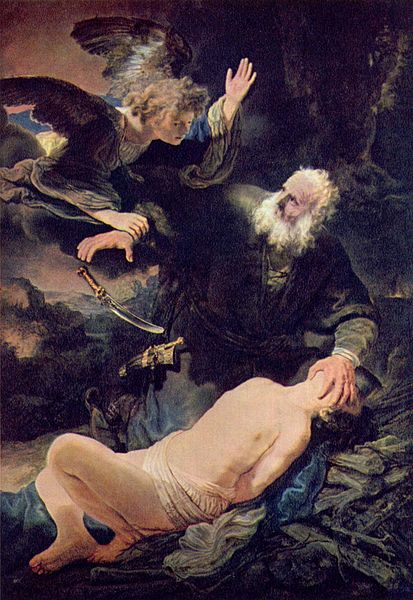
A midrash Avraham is travelling and sees a magnificent palace, and lit up and it’s on fire, a “birah doleket” Avraham sees the palace and asks Where is the master? It’s not possible that this magnificent palace has no master. And he’s also asking why is our world on fire?

Don’t paint with a broad brush, always give benefit of the doubt – there could be some good guys.

And if G8d and Avraham always wish for love to be stronger than judgement, shouldn’t we.

,

Noach, 5784

A joke:

An older Jewish man was crossing the street, and was knocked down by a car that approached too closely. The driver stopped, and ran over, calling 911 along the way. He approached the man, relieved that he seemed OK, and cleared the way for the ambulance. “Are you comfortable”, he asked. “I make a living”, replied the older man” Noach/ Noah’s name means “comfort”

My Grandpa Charlie loved terrible jokes, puns, particularly, and it turns out that the verses of Torah in Noach are filled with puns and palindromes. Noach’s Dad names him in Genesis 5:28 (Sefarai source page) “When Lamech had lived 182 years, he begot a son.(29) And he named him Noah, saying, “This one will provide us relief*relief Connecting Noah with Heb. niḥam “to comfort”from our work and from the toil of our hands, out of the very soil which יהוה placed under a curse.” Grace, in Hebrew, חן chet nun is the opposite spelling of Noach,נח nun chet, whose name actually means rest, not comfort. Y’nachamenu means comforts us, and regret is from this same root Y’nachem! G*d regrets and is sad, heart is pained, yityatzev about creation.

Also, Noach’s name from y’nachem, chontains cham – warmth or heat within it. Noach, comfort, Rachem -compassion from the word Hebrew “womb” to Chum/cham – warmth or heat. (Cham is In fact is is one of Noach’s son’s names. It’s comfortably warm in the womb, but too much warmth, just as too much passion, just like too much water, is dangerous.

And to draw attention to all the double entendres is a double trop mark on Noach’s name – two melodies in put to a very short word. Why all the word-play?Aviva Zornberg in her book “The Beginning of Desire” sees the Noach word scramble as an “uncreation/ de-composition” symbol. Another pun: What is Beethoven doing right now? Answer: Decomposing. (apologies)

Consider: in a world made by means of Divine Word, this fluidity can undermine the solid ground of creation.

Earth, air, fire and water, the four elements, parallel the four worlds of existence: Asiyah – physicality, the world of action, connected to earth; Yetzirah – formation, the world of emotion is connected to water; Beryiyah – creation, the world of the intellect is connected to air; and Atzilut – Divine inspiration is connected with fire.

These elements are out of balance, because of Human desires magnetically drawn to evil, becoming violent actions in the world.

What of G*d’s pain and sadness? It interestingly is a hyperlink to creation, in the pain of “growing up” and being kicked out of Eden, the woman’s curse is pain in childbirth, and Adam’s curse is painful hands from a land that is cursed in bringing out food. Lamech invokes this same word for pain in naming Noach. Is this perhaps how Lamech (a man) can birth a son? (Only kidding!)

Where does G*d’s pain come from? Humans, created as good, degenerate according to G*d. A quick recap of creation up to here

One of the first acts of creation was for G*d to create order from chaos (tohu vavohu) first day light and dark separate, second day the waters above separate from the waters below, third day dry land and polants. Each was created with words “let there be…”, and after each, G*d pronounces “Tov” – Good.

Skip ahead to the sixth day, from the dust of four colors, from the four corners of the earth, and Divine breath, humans are created. Now water is essential to life, and our #1 ingredient. But too much drowns.

Now G*d want’s to undo this order, release the chaos of the waters.

The fourth element is fire. Noach’s name if it comes from y’nachem, has cham – warmth or heat.

Noach, comfort, Rachem – womb like compassion may also be related to Rechem, and to Chum/cham – warmth or heat. In fact is is one of Noach’s son’s names. It’s comfortably warm in the womb, but too much warmth, just as too much passion is dangerous.

Earth, air, fire and water, the four elements, parallel the four worlds of existence:

Asiyah – physicality, the world of action, connected to earth

Yetzirah – formation, the world of emotion is connected to water

Beryiyah – creation, the world of the intellect is connected to air

and Atzilut – Divine inspiration is connected with fire.

They must be in balance, what has thrown out the balance?

There have been ten generations from creation to Noach.  Which has changed from Tov to Rah, from Good to Bad in the course of ten generations! How can that have happened. Aviva Zornberg in her book about Genesis, The beginning of Desire, entitles this section: “The collapse of G*d project”. She draws particular attention to the wordplay, scrambling of Noach’s name.  Just to draw attention to Noach’s name, the trope is crazy: look here, it says “pay attention”! Zornberg sees the word scramble as an “uncreation/ de-composition” symbol

We are still left with the question, what caused the collapse of the G*d project?

Humans, created good degenerate according to G*d,

Somehow violence has become the rule, and not just for humans, for all creatures, The earth was becoming ruined, and each creature was destroying its pathway on the earth. That magical space between creatures, the relationships went bad.

The Sefat Emet, writing about Rosh Hashanah asks the following: If at Sinai, G*d carved upon our hearts an eternal nekudah kedoshah, why must we pray and yearn each year: kotvenu l’chayim? Sefat emet reminds us what Cain learned – that sin has it’s erotic ddesire for you, and so you go for it, blocking, covering that holy spark. And so we must always be vigilant, always do teshuvah, always open our hearts! Otherwise entropy and complacency sets in.

We see degeneration of democracies across the world. Like microbes evolving resistance to antibiotics, we know we must be ever vigilant, and not to take for granted our gifts. Antibiotics were life giving, we took them for granted, used way too much, inappropriately, and know the microbes are resistant, the gift spoiled.

Noach means comfort. Can there be too much comfort? Did the craving for comfort drive the degeneration of the human world?

According to quote investigator Chicago humorist Finley Peter Dunne wrote a popular syndicated column featuring the distinctive voice of Mr. Dooley.The following appeared within a 1902 column titled “Mr. Dooley on Newspaper Publicity”. Newspapers serve to comfort the afflicted and afflict the comfortable! I’ve heart the same quoted to explain how faith tradition serves us.

Too much comfort, making your comfort a core value at the expense of compassion is not a good thing. Too much comfort is called complacency.

Complacency strains the strings on the American work ethic value. Don’t be complacent, urges our society, Do something! Yet Pirke avot says coaches us with the wisdom of who is rich? The one who is happy with their lot. In other words, and this is a mantra of mine, the practice of Gratitude is a pathway to true happiness,

A story by Dr. By Dr. Robert Biswas-Diener A researcher in the field of positive thinking around the world went to Kolkata, India (or Calcutta) to research happiness in one of the radically impoverished communities of the world. ‘was everyone miserable all day long, he wondered?

But a scholar took warned “Be careful,” “People are going to hate your research. If you find that the people there are happy, they will criticize you for it. Specifically, they will say that you are painting a picture of the poor as being complacent.”

research by a team at the University of Virginia : are happy people complacent.would be less motivated to address society’s problems? …using a sample of more than 2 thousand people of all ages, they focused on environmental concerns. They discovered that unhappy people were prone to worry about the climate but not necessarily more likely to engage in more environmentally friendly behaviors. By contrast, the happiest people worried the least worried and were the most likely to take action!

Btw, the study in India revealed worry, and also high self-esteem, stable relationships, and also moments of joy enough to motivate them to affect change.

So comfort is good. Noach was a righteous dude, and walked with G*d, only the second connection since expulsion from Eden. And Noach finds grace/ hen in G*d’s eyes. R Rami Shapiro’s book, amazing chesed, says that grace is like the sun, a gift of shefa that always shines down. It’s like love

Midrash Tanhumah explains G*d’s relationship to Noach with this story. “This is like one (echad) who was traveling along and saw another traveler (echad) and sought his company. To what extent? Til he formed bonds of love with him” Echad + Echad in gemaatria 13 + 13 = , also Ahavah, love adds up to 13, 13 + 13 = 26, which is the gematria for G*d’s name YHVH

From this love, according to the same midrash, Noach learns the feeding schedule of the animals, how to keep them alive.

One last link to pain and what how we respond. In B’resheet, last week’s parashah, the first murder was the response to pain. G*d rejects Cayin’s offer and accepts his brother’s. Cayin, the first child is furious. His “face falls.” G*d then reaches out to Cayinn “Why is your face fallen?” G*d asks?

Cain never answer’s G*d question.

There are no more words.

Even Noach doesn’t talk to G*d.

What if Cain had given voice to his rage, or if Noach had discussed the situation with G*d,

And with the lack of words, destruction begins.

The universe is young, and G*d in pain and sadness destroys creation.

Does this mean we should be like this, destroy when we feel sad or hurt?

Well, NO!

The ending of Noach comes a promise never again to destroy with water! The rainbow is that sign.

From Grace and love, we must learn the “feeding schedule of the animals” This earth is a teva, an ark in space, lonley and precious.

Earth Day 5783

Earth Day, A Jewish Holiday?

A meditation:

I invite you to take a deep breath. listen to your heart beat and the fluid rush through your veins. 

Feel the solidity of the bones. Imagine the organs each supporting one another. Supporting your life.

More than the sum of their parts. Shechinah lives in you.

Breathe again As you breathe out follow that breath, it is a part of a greater organism. Ecosystems are nested within biomes, and ultimately the biosphere, the living earth.  The Greeks called her Gaia. The parts of the system support one another and become more than their sum – which is miraculous, magic, at every level. 

The whole earth is filled with Her presence. She is Shechina, or Malchut in Jewish tradition, the most immanent of the feminine sephirot, or facets of the Divine. Perhaps you have met and felt her essence in the beauty, awe, and wonder of natural world, or in being in loving presence with others, in soaring melody and harmony, or when your child was born.

We come from the earth, and from a people with their roots in heaven and their hearts with the land.

We are also nearing a Holy day not often recognized by Jewish tradition, Earth Day. I suggest we adopt this day Jewishly in ritual. Yes its origin is secular, but we are Jews, we do it all for L’Dor VaDor, for our children we are commanded to choose life.

A feminist, earth-based perspective may be just what is needed,to pull back from the brink of a looming catastrophe which we are perpetuating, or not(!) with every choice we make.

This image has an empty alt attribute; its file name is image.png

We read in Gen 3:23) So God יהוה banished humankind from the garden of Eden, to till the humus from which it was taken:(24) The human was driven out; and east of the garden of Eden were stationed the cherubim and the fiery ever-turning sword, to guard the way to the tree of life. Link to Sefaria Source Page with text

A Tree of Life! What if each and every service where Torah is read can help to Turn our awareness to the roots of Judaism in the feminine.

 Eytz chayim, the tree of life was in the center of the garden.


In being banished from that garden we were also banished from tree, Eytz chayim and estranged from the Goddess. Or were we? The worship of Asherah, the Goddess persisted in biblical times and today is hidden in plain sight: Torah, and the Wooden rollers are Eytzei Chayim hi, if only we would engender the Hebrew as it is written: She is a tree of life

Then there is the psalm we sing each time we take out the Torah. And isn’t it intersting how we parade her around and kiss her? What if we returned the pronouns that were written for the psalm?

Tree of Life MWolfson

Eytz chayim hee, she is a tree

Offering us both life and wisdom

Eytz chayim hi, lamakazikim bav’tomhecha me’ushar

Her truths aren’t always very simple

Deep ones are not easy, but sublime

Her roots reach high into the heavens,

with her wisdom you will shine,

With the help of words Divine she has borne us

Seeds of truth spring up from her

With the sap of love she still feeds us.

We must serve and return this care

Eytz chayim hee

Live righteously

who will remain after you to repair this wondrous world?

Proverbs 3:13-20

(13) Happy (ashrei) is the man who finds wisdom/chochma
The man who attains understanding/ bina. (14) Her value in trade is better than silver,
Her yield, greater than gold. (15) She is more precious than rubies;
All of your goods cannot equal her. (16) In her right hand is length of days,
In her left, riches and honor. (17) Her ways are pleasant ways,
And all her paths, peaceful. (18) She is a tree of life to those who grasp her,
And whoever holds on to her is happy (ushar).
(19) The LORD founded yesod aretz the earth by wisdom/chochma
He established the heavens by understanding bina; (20) By His knowing the tehomot (the depths) burst apart,
And the skies distilled dew.

The Zohar believes that oneness underlies all things, even pagan goddesses. Yet the mystic of the time knows the Jews cannot recognize this. So, the Zohar says, in the world to come, we will be allowed to call the Shekhinah by Her name -Asherah. Then, She will be one and Her name will be one. R Jill Hammer

In Zohar, the masculine “seed” impregnates Bina, wisdom, who becomes the cosmic womb. In Sefer Yetzira, Chapter 3:2

Three mothers: Aleph, Mem, Shin

A great secret veiled and mysterious…

From them come fire, water and air,

Enveloped in male and female

R Jill Hammer translation

Wangari Mathai, a heroine of mine, founder of the Green Belt Movement, and winner of 2011 Nobel Peace Prize writes: ““Today we are faced with a challenge that calls for a shift in our thinking, so that humanity stops threatening its life-support system. We are called to assist the Earth to heal her wounds and in the process heal our own – indeed to embrace the whole of creation in all its diversity, beauty and wonder. Recognizing that sustainable development, democracy and peace are indivisible is an idea whose time has come”

To rescue the Goddess just might connect us to the earth once again.

From the Mother Tree by Suzanne Simard
The Mother Trees.
When Mother Trees—the majestic hubs at the center of forest
communication, protection, and sentience—die,

they pass their wisdom to their kin, generation after generation, sharing the knowledge
of what helps and what harms, who is friend or foe, and how to adapt
and survive in an ever-changing landscape.

It’s what all parents do.

It’s what Jews do, L’dor vaDor


Aleph Kallah 2023

Hello dear friends

I’m leading a one-day workshop at ALEPH: Alliance for Jewish Renewal’s Kallah! Join me from July 3 – 9 as we tap into our souls, bathe in meditative sound, and explore how Science and Torah connect and collide. You won’t want to miss this!

Learn more about the one-day workshops (including mine!) at www.aleph.org/kallah/workshops