Kol ha-Olam kulo Gesher tzar m’od, v’haikar lo hit’pached klal ~Rebbe Nachman of Bratzlov. There are times in our lives when “all the world is a narrow bridge, and the essence is not to en-fear ourselves”
These are difficult times. The ikar the essence is not to make ourselves crazy with fear. In our cycle of readings, we begin the book of Nsumbers this week. This book is called BaMidbar in Hebrew, meaning “in the wilderness”, which is where we will be wandering for next 40 years. These years are a time of love as well as conflict between God and the Redeemed formerly enslaved ones – Yisrael, a crucible in which a people emerge, but only a new generation. The conflict is born of fear in this new book of the Torah – fear of the wilderness full of snakes, fear of thirst and hunger, and fear that they were too small, as small as “grasshoppers”. And out of fear came all the woes of the generation of the wilderness –Beloved by G8d, yet doomed to die there. As Yoda said “fear is the pathway to the dark side” (the rood yada in Hebrew means to know) There are several links from Bamidbar to the upcoming Festival of Shavuot, which celebrates Revelation at Sinai -which is in the wilderness! Even with all the complaining and dangers, it was also the place of love between the Holy One and the nascent people of Yisrael – the G8d wrestlers, dancers and singers. That connection is seen in Song of Songs, with the echo of a “banner of love”
Source page linked Here
It was a particularly harsh wilderness, there would be great strife, and great love in this wilderness. There is no worship of the blessed Holy One except from darkness, and there is no good except from evil. When a person enters on knowing an evil way and then abandons it, the blessed Holy One is exalted in His glory. Therefore the perfection of all is good and evil together, ascending subsequently as good;…This is perfect worship.~Zohar
Jeremiah (31:2-3) tells that although they too flawed for a covenant with the land the Israelites are beloved as does Rashi (1:1) explains the counting of the Israelites. But perhaps there was no way of becoming who we are without the challenge of the wilderness
The circular arrangement of tribes around the mishkan/tabernacle following the counting is the shape of aspiration – for all to be equal in the circle dance, with G8d at the center of their lives. The banners arranged by their father’s house – many have animal logos, perhaps reflecting the zodiac. The four directions are mentioned, with Shechinah/ Malchut (see zohar) and G8d centered aspiration. These echo many of the shapes in the ancient mystical Book of Formation/ Sefer Yetzirah and represent the ideals of forming a new people.
In addition, the circular arrangement of tribes under their banners is an attempt to take control of the unknown and the wilderness. By numbering each man of fighting age we can seem formidable, by this beautiful arrangement take down some of the fear provoked by a wilderness.
Governments today, just as the ancient Israelites did are responding to fear, stress and doubt, causing them tostray very far from those ideals. In our time as in Biblical times, we hold out hope that a new generation is better prepared to approach and fulfill those ideals. If we don’t let our fears of the other, the unknown wilderness get the best of us.
On Shavuot we also read from Ezekiel’s psychedelic vision of G8d. Ezekiel’s chariot –merchavah in a hyperlink from Shavuot to the banners in this week’s reading.Below: Ezekiel’s Vision according to Matthaeus (Matthäus) Merian (1593-1650) –
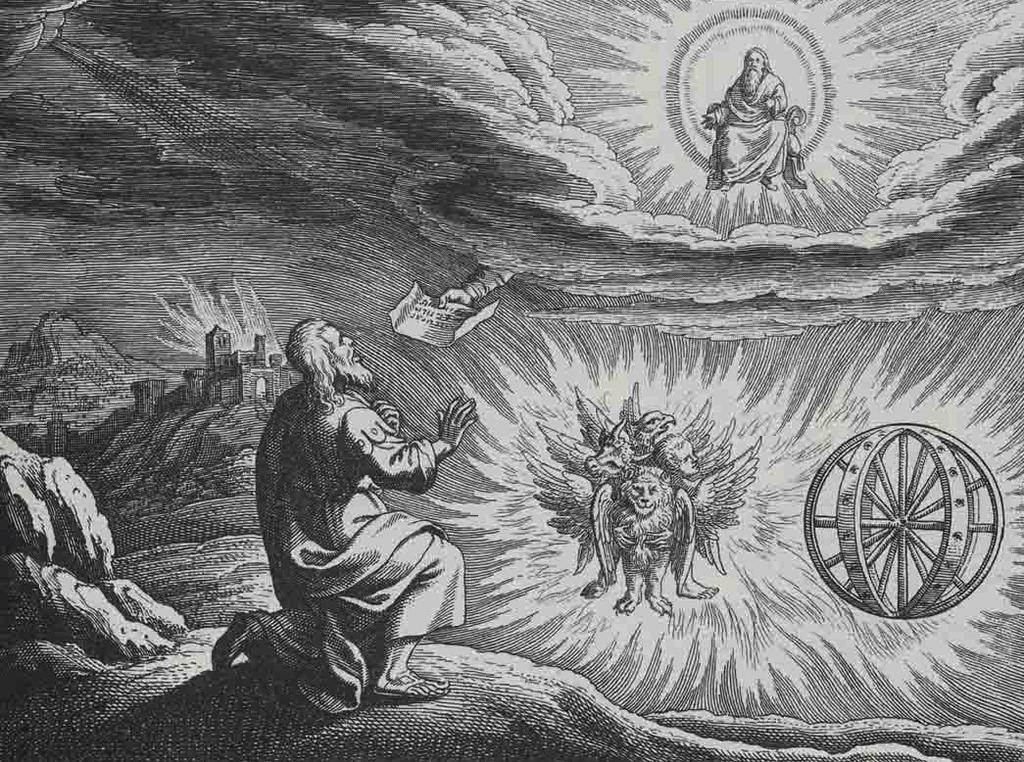
WP-en. There attributed to site http://www.biblical-art.com/., Public Domain, https://commons.wikimedia.org/w/index.php?curid=4164018


Leave a Reply